
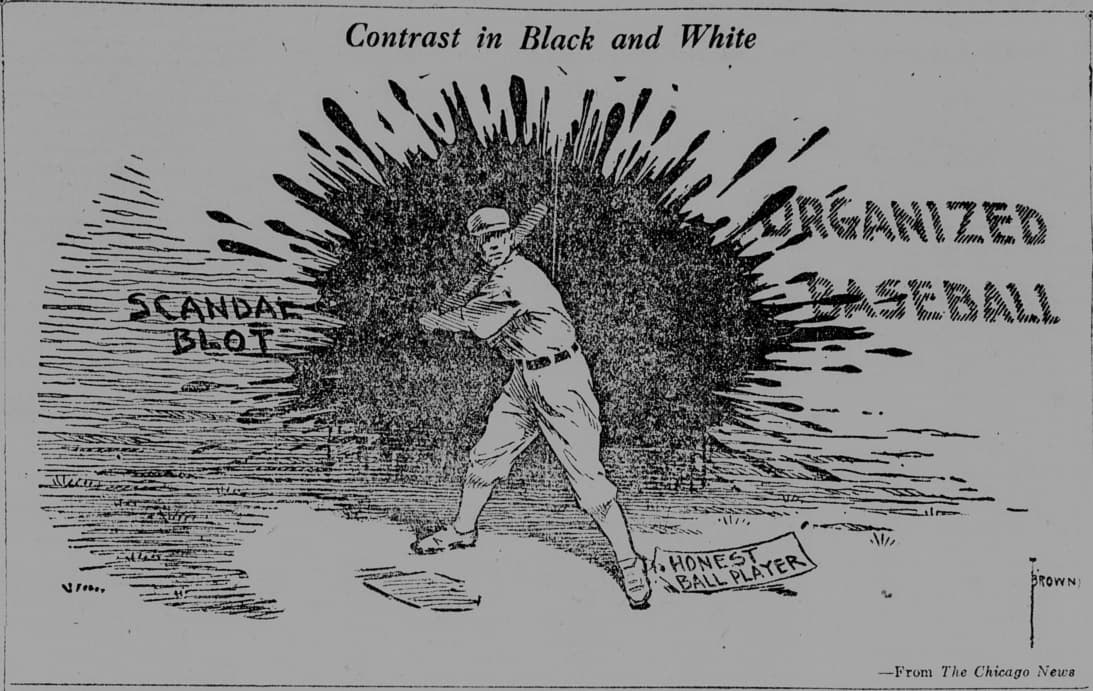
The Black Sox Scandal: Eight Players Accused of Throwing the 1919 World Series
In the annals of American sports history, few events have cast a longer shadow than the Black Sox Scandal. The 1919 World Series, a battle between the Cincinnati Reds and the Chicago White Sox, became the epicenter of a corruption crisis that shook the very foundations of Major League Baseball. Eight players from the White Sox were accused of conspiring with gamblers to fix the Series, leading to a scandal that would forever alter the landscape of professional sports in the United States [1].
The Rise of the Chicago White Sox
The Chicago White Sox were a formidable team in the early 20th century, boasting a roster filled with talent. In 1919, they finished the regular season with a remarkable 88-52 record, clinching the American League pennant [3]. The team's success was largely attributed to their star players, including the legendary "Shoeless" Joe Jackson, who was one of the most talented hitters of his era. Jackson's batting prowess, along with the skills of fellow players such as Eddie Cicotte and Buck Weaver, made the White Sox a formidable force in the league.
However, despite their talent, the White Sox were plagued by internal strife and financial difficulties. The players were frustrated with their salaries, especially in comparison to their performance on the field. This discontent would soon lead them down a dark path, as they became entangled with gamblers who preyed on their vulnerabilities.
The Seeds of Corruption
The seeds of the Black Sox Scandal were sown in the summer of 1919. The White Sox players, feeling undervalued and underpaid, were approached by a group of gamblers who offered them money to throw the World Series. The allure of easy cash proved too tempting for some players, who saw it as a way to secure their financial futures [2].
Eddie Cicotte, the ace pitcher for the White Sox, was one of the first to succumb to the temptation. He was promised $10,000 to lose the Series, a sum that was staggering for a player at the time [4]. Cicotte's willingness to participate in the scheme opened the floodgates for others, including Jackson, who, despite his immense talent, found himself drawn into the web of corruption.
As the Series approached, the players began to execute their plan. They met with gamblers in secret, discussing strategies and ensuring that their performance would align with the fix. The stage was set for one of the most notorious events in sports history.
The 1919 World Series: A Rigged Affair
The 1919 World Series began on October 1, 1919, and the White Sox faced off against the Cincinnati Reds. From the outset, it was clear that something was amiss. The White Sox, who had been dominant throughout the season, played poorly. They made uncharacteristic errors, and their pitching staff faltered under pressure [5].
Game after game, the Reds capitalized on the White Sox's lackluster performance. The White Sox lost the Series in six games, and the Reds emerged victorious. The outcome shocked fans and sportswriters alike, who had expected the White Sox to dominate. Rumors began to swirl about the legitimacy of the Series, but it wasn't until months later that the full extent of the scandal would be revealed.
The Unraveling of the Scandal
In the aftermath of the World Series, suspicions grew. Fans and journalists began to scrutinize the players' performances, and whispers of a fix spread throughout the baseball community. The situation escalated when a Chicago newspaper, the Chicago Tribune, published a series of articles alleging that the White Sox had intentionally lost the Series [2].
The allegations caught the attention of baseball's governing body, the American League. In response, Commissioner Kenesaw Mountain Landis was brought in to investigate the claims. Landis, a former federal judge, was known for his no-nonsense approach and commitment to restoring the integrity of the game. He wasted no time in launching a thorough investigation into the scandal.
As the investigation unfolded, evidence began to surface. Players were called to testify, and the details of the conspiracy emerged. Cicotte, Jackson, and their teammates were implicated in a scheme that involved payments from gamblers in exchange for their cooperation in losing the Series. The evidence was damning, and the public outcry grew louder.
The Trial and Acquittal
In 1921, the eight players accused in the scandal—Cicotte, Jackson, Weaver, and five others—faced a trial in Cook County, Illinois. The trial attracted national attention, as it was one of the first instances of a sports scandal being brought to a courtroom. The players maintained their innocence, arguing that they had not intended to lose but had simply played poorly.
The trial was a spectacle. Defense attorneys argued that the players had been unfairly targeted and that the evidence against them was circumstantial. The jury deliberated for several days before ultimately acquitting the players of all charges. The verdict sent shockwaves through the sports world, as many believed that the players had indeed conspired to fix the Series [4].
Judge Landis Takes Action
Despite the jury's acquittal, Judge Landis was not satisfied. He recognized the damage that the scandal had inflicted on the reputation of baseball and was determined to take decisive action. In a bold move, Landis announced that he would impose a lifetime ban on all eight players, regardless of the jury's decision.
On August 2, 1921, Landis issued a statement that would forever change the landscape of Major League Baseball. He declared that the players had violated the trust of the game and that their actions had irreparably harmed its integrity. The ban was unprecedented, and it sent a clear message: any player involved in gambling or corruption would face severe consequences [1].
The players were devastated. For many, baseball was not just a job; it was their passion and livelihood. The lifetime ban effectively ended their careers, and the fallout from the scandal would linger for decades. Jackson, in particular, became a symbol of the scandal, as fans debated whether he had truly participated in the fix or had been unfairly implicated.
The Legacy of the Black Sox Scandal
The Black Sox Scandal had far-reaching implications for the world of sports. It exposed the vulnerabilities of professional athletes to outside influences and highlighted the need for stricter regulations regarding gambling. In the wake of the scandal, Major League Baseball implemented new policies to protect the integrity of the game, including a ban on gambling for players and officials [5].
The scandal also had a profound impact on the relationship between fans and players. Trust was shattered, and the public became increasingly skeptical of the integrity of professional sports. The Black Sox Scandal served as a cautionary tale, reminding everyone that even the most beloved pastime could be tainted by greed and corruption.
The Cultural Impact
The Black Sox Scandal transcended the realm of sports and seeped into American culture. It inspired countless books, films, and documentaries, each exploring the complexities of the scandal and its impact on the game. One of the most notable works is "Eight Men Out," a book by Eliot Asinof that chronicles the events surrounding the scandal. The book was later adapted into a film, further cementing the story of the Black Sox in the public consciousness [4].
The scandal also sparked discussions about morality in sports. Debates about the ethics of gambling and the responsibilities of players became more prominent, as fans grappled with the implications of the scandal. The narrative of the Black Sox became a lens through which to examine broader societal issues, including greed, loyalty, and the consequences of betrayal.
The Enduring Mystery of Shoeless Joe Jackson
Among the players banned for life, "Shoeless" Joe Jackson remains a figure of intrigue. His talent was undeniable, and many fans believed he was innocent of the charges against him. Jackson's story has become a focal point in discussions about the scandal, as people continue to debate his role and whether he deserved the punishment he received [5].
In the years since the scandal, Jackson's legacy has been the subject of much speculation. Some argue that he was a victim of circumstance, while others contend that he was complicit in the fix. The ambiguity surrounding his involvement has only fueled interest in the scandal and its lasting impact on baseball.
Conclusion: A Cautionary Tale
The Black Sox Scandal serves as a cautionary tale about the fragility of integrity in sports. It reminds us that even in a world where heroes are celebrated, the potential for corruption lurks beneath the surface. The events of 1919 forced Major League Baseball to confront its vulnerabilities and implement changes that would shape the future of the game.
As we reflect on the scandal, we are reminded of the importance of accountability and transparency in sports. The legacy of the Black Sox continues to resonate, serving as a reminder that the love of the game must always be protected from the corrupting influence of greed.