
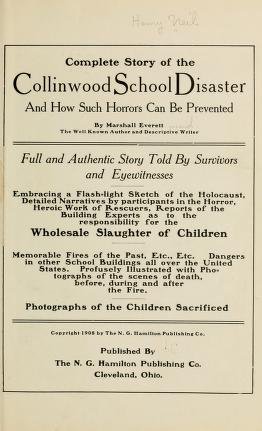
The Collinwood School Fire: A Tragedy in Cleveland, 1908
On March 4, 1908, a devastating fire erupted at Lake View School in Collinwood, a suburb of Cleveland, Ohio. The blaze broke out during school hours, trapping nearly 300 children inside. In the chaos that ensued, nearly 200 children lost their lives, making it one of the deadliest school fires in U.S. history [1]. The tragedy exposed critical flaws in school safety protocols, particularly regarding fire escapes and emergency preparedness. The Collinwood School Fire remains a haunting reminder of the consequences of inadequate safety measures in educational institutions [2].
How the Fire Started at Lake View School
The fire began shortly after 9:00 AM, when a teacher noticed smoke coming from the basement. It was later determined that the flames were ignited by a faulty furnace [3]. The school, built in 1889, had outdated heating systems that were prone to malfunction. As the fire spread rapidly, the school's wooden structure fueled the flames, creating a deadly environment for the students trapped inside [4].
Witnesses reported that the smoke quickly filled the hallways, making it difficult for children to see or breathe. Panic set in as the students realized they were in danger. Many attempted to escape through the exits, but what they found was a horrifying reality: the doors were locked. This tragic oversight would prove fatal for many [5].
Locked Exits and Panic: A Deadly Combination
The Lake View School had only two exits, and both were locked during class hours. This practice was not uncommon at the time, as schools often locked doors to prevent unauthorized entry. However, this decision proved catastrophic. As the fire raged, students rushed toward the exits, only to find them barred [2].
The situation turned dire when the flames engulfed the hallways, and the smoke thickened. Children were forced to retreat back into the classrooms, where they huddled in corners, desperately trying to escape the heat and smoke. The tragedy unfolded in mere minutes, with many children succumbing to smoke inhalation before they could even reach the exits. Eyewitness accounts described scenes of chaos, with children crying out for help as they struggled to find a way out [1].
The Death Toll: A Community in Mourning
The aftermath of the Collinwood school fire was devastating. Of the 294 students present that day, 174 perished in the blaze, with many more suffering severe injuries [4]. The community of Collinwood was thrown into mourning, as families lost their children in a matter of moments. The local and national media covered the tragedy extensively, highlighting the need for improved school safety measures [5].
In the days following the fire, the Cleveland Plain Dealer reported on the harrowing stories of survivors and the grief-stricken families. The fire not only claimed lives but also left a lasting impact on the community, which struggled to cope with the loss of so many young lives. The tragedy was a wake-up call for school safety across the nation [3].
The emotional toll on the families was profound. Parents who had sent their children off to school that morning were left to grapple with the unimaginable loss. Many families were torn apart, and the community was left to mourn collectively. Funerals were held for the victims, and the sight of small caskets lined up in churches became a heartbreaking symbol of the tragedy [2].
Investigations and Accountability: A Search for Answers
In the wake of the fire, investigations were launched to determine the cause and to hold accountable those responsible for the safety of the children. The Ohio State Fire Marshal conducted a thorough investigation, examining the school's safety protocols and the conditions that led to the disaster. The findings revealed a shocking lack of fire safety measures, including the absence of fire alarms and inadequate escape routes [3].
The investigation also highlighted the negligence of school officials who had failed to ensure that safety protocols were in place. The locked exits were a glaring oversight, and the school’s administration faced intense scrutiny. Public outcry demanded accountability, and many called for legal action against those responsible for the safety of the children [4].
As the investigation unfolded, it became clear that the tragedy was not an isolated incident. The Collinwood School Fire was part of a broader pattern of school fires across the United States, many of which resulted from similar lapses in safety measures. This realization prompted a national conversation about the need for stricter regulations and oversight of school safety [5].
Legislative Changes: A Response to Tragedy
The Collinwood School Fire served as a catalyst for significant changes in fire safety regulations across the country. In the months following the tragedy, lawmakers began to draft new legislation aimed at improving safety standards in schools. One of the key outcomes was the establishment of fire codes that mandated the installation of fire alarms, sprinkler systems, and clearly marked exits [2].
Ohio was one of the first states to implement these changes, with new laws requiring schools to conduct regular fire drills and to ensure that all exits were accessible at all times. The tragedy prompted a nationwide reevaluation of school safety protocols, leading to the adoption of similar measures in other states [3].
The National Fire Protection Association (NFPA) also played a crucial role in advocating for improved safety standards. They published guidelines that outlined best practices for fire safety in educational institutions, emphasizing the importance of regular inspections and maintenance of fire safety equipment [3].
The Legacy of the Collinwood School Fire
The legacy of the Collinwood School Fire extends far beyond the immediate aftermath of the tragedy. It became a pivotal moment in the history of school safety in the United States, highlighting the need for vigilance and proactive measures to protect children in educational settings. The fire sparked a movement that led to the establishment of national standards for fire safety in schools, which continue to evolve to this day [5].
In the years following the fire, memorials were erected to honor the victims. The community of Collinwood came together to remember the children who lost their lives, ensuring that their memory would not fade. Annual memorial services became a tradition, providing a space for families and community members to gather and reflect on the tragedy [1].
The Collinwood School Fire also served as a reminder of the importance of emergency preparedness. Schools across the nation began to implement comprehensive safety plans, including regular fire drills and training for staff on how to respond in emergencies. The lessons learned from this tragedy have influenced fire safety protocols in schools, making them safer for future generations [2].
The Impact on Fire Safety Education
In addition to legislative changes, the Collinwood School Fire had a significant impact on fire safety education. Schools began to incorporate fire safety training into their curricula, teaching students about the dangers of fire and the importance of knowing how to respond in an emergency. This education aimed to empower children with the knowledge they needed to protect themselves and their peers [3].
Fire departments across the country also took an active role in promoting fire safety education. They organized community outreach programs, teaching families about fire prevention and safety measures. The goal was to create a culture of safety that extended beyond the classroom and into the homes of children [4].
The tragedy of the Collinwood School Fire underscored the need for a comprehensive approach to fire safety, one that involved not only schools but also families and communities. This holistic approach has contributed to a decline in school fires and has helped to save countless lives [5].
Remembering the Victims: A Community's Commitment
The Collinwood community has remained committed to remembering the victims of the fire. Each year, memorial events are held to honor the lives lost and to reflect on the lessons learned from the tragedy. These gatherings serve as a reminder of the importance of safety and the need to remain vigilant in protecting children [1].
In addition to memorial services, local schools have incorporated the history of the Collinwood School Fire into their curricula. Students learn about the event as part of their education on safety and responsibility. This ensures that future generations understand the significance of the tragedy and the importance of fire safety [2].
The Collinwood School Fire is not just a historical event; it is a part of the community's identity. The stories of the children who perished that day continue to resonate, reminding everyone of the fragility of life and the importance of safeguarding the well-being of children in educational settings [3].
Conclusion: A Tragedy That Changed School Safety Forever
The Collinwood School Fire of 1908 remains one of the most tragic events in American history. The loss of so many young lives served as a wake-up call for the nation, prompting significant changes in fire safety regulations and emergency preparedness in schools. The legacy of this tragedy continues to influence fire safety practices today, ensuring that the lessons learned from Collinwood are not forgotten.
As we reflect on this devastating event, it is essential to remember the lives lost and the families affected. The Collinwood School Fire serves as a reminder of the ongoing need for vigilance in protecting children and ensuring their safety in educational environments. The community's commitment to remembering the victims and advocating for safety measures is a testament to the enduring impact of this tragedy [5].