
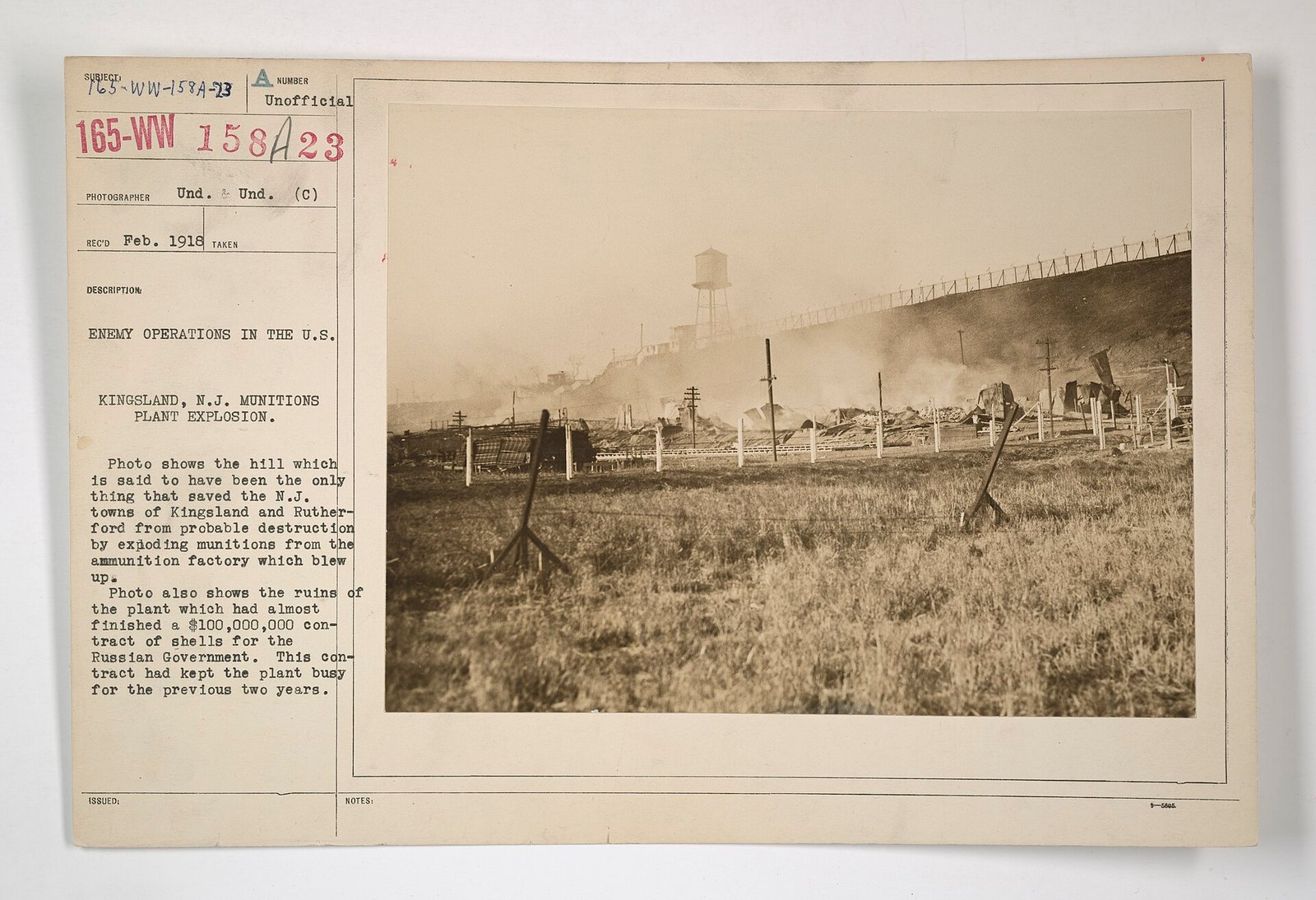
The Kingsland Explosion: A 1917 Munitions Plant Fire in New Jersey
On the night of July 30, 1917, a catastrophic explosion rocked the Kingsland munitions plant in New Jersey. The facility, operated by the E. I. du Pont de Nemours and Company, was engaged in the production of artillery shells for the United States military during World War I. As flames engulfed the plant, shells began to detonate, creating a terrifying spectacle that lasted for hours. Investigators quickly pointed to the possibility of sabotage, suggesting that German agents were responsible for the disaster. This incident not only resulted in significant loss of life and property but also intensified the already fraught relations between the United States and Germany during the war.
The Kingsland Munitions Plant: A Crucial Asset
The Kingsland munitions plant was located in the small town of Kingsland, New Jersey, which is now part of Lyndhurst. Established in 1916, the facility was a critical asset in the U.S. war effort, producing munitions for American troops fighting in Europe. The plant was strategically important, as the demand for artillery shells surged with the United States' entry into World War I in April 1917. By the summer of that year, Kingsland was operating at full capacity, churning out thousands of shells each day to support the Allied forces.
The plant's operations were typical of the time, characterized by a rush to meet wartime demands. Workers at Kingsland faced long hours and dangerous conditions, as the production of munitions involved handling volatile materials. The urgency of the war effort overshadowed safety protocols, and the risk of accidents was ever-present. The Kingsland plant was one of several munitions facilities across the United States that were critical to the war effort, reflecting a nationwide mobilization of resources and labor to support the Allied cause [3].
The Night of the Explosion
At approximately 10:30 PM on July 30, 1917, a series of explosions erupted at the Kingsland plant. Witnesses reported seeing a massive fireball light up the night sky, followed by a cacophony of detonations as shells cooked off. The fire spread rapidly, fueled by the highly flammable materials used in munitions production. Firefighters struggled to contain the blaze, which raged for hours, sending debris flying and creating a scene of chaos and destruction.
The aftermath of the explosion was devastating. The plant was left in ruins, with much of its infrastructure destroyed. Eyewitness accounts described the scene as apocalyptic, with flames shooting high into the air and the ground shaking from the force of the blasts. Tragically, several workers lost their lives, and many others were injured. The exact casualty count remains unclear, but estimates suggest that at least 20 people died, and dozens more were injured in the disaster. The explosion not only caused physical destruction but also instilled fear in the local community, as residents grappled with the implications of such a catastrophic event occurring in their midst [1].
Investigating Sabotage: The German Connection
In the wake of the Kingsland explosion, investigators quickly turned their attention to the possibility of sabotage. This theory was not unfounded, as tensions between the United States and Germany had been escalating for years. The U.S. had already experienced a series of sabotage incidents linked to German agents, most notably the Black Tom explosion in New Jersey just weeks earlier.
The Black Tom incident, which occurred on July 30, 1916, involved the destruction of a munitions depot in New Jersey, resulting in significant damage and loss of life. Investigators believed that the Kingsland explosion bore similarities to this earlier event, leading them to suspect that German operatives were once again at work. The theory of sabotage gained traction as evidence emerged that the Kingsland plant had been the target of espionage activities. The connection between the two incidents highlighted a broader pattern of German sabotage aimed at undermining the U.S. war effort [2].
Witnesses reported seeing suspicious individuals near the plant in the days leading up to the explosion. Some claimed to have seen men lurking around the facility, while others noted unusual activities that raised alarm. These accounts fueled speculation that the explosion was not merely an accident but a deliberate act of sabotage aimed at crippling the U.S. war effort. The investigation into the Kingsland explosion was part of a larger effort to uncover a network of German spies and saboteurs operating within the United States [5].
The Role of Espionage in World War I
During World War I, espionage played a critical role in shaping military strategies and operations. Both the Allies and the Central Powers employed spies to gather intelligence, disrupt supply lines, and sabotage enemy operations. The Kingsland explosion occurred against this backdrop of widespread espionage, with both sides seeking to gain an advantage through covert means.
Germany, in particular, was known for its aggressive espionage tactics. The German government had established a network of spies and saboteurs in the United States, tasked with undermining the war effort and causing chaos. The Kingsland explosion fit into a pattern of sabotage that included attacks on munitions plants, railroads, and other critical infrastructure. These acts of sabotage were intended to disrupt the production and supply of munitions to the Allied forces, thereby weakening their military capabilities [4].
The U.S. government responded to these threats by increasing security measures at munitions plants and other strategic locations. Investigations into the Kingsland explosion were part of a broader effort to identify and apprehend those responsible for sabotage activities. The Federal Bureau of Investigation (FBI) and military intelligence agencies worked together to uncover evidence and track down suspects. This collaboration marked a significant shift in U.S. domestic security policy, as the government recognized the need to protect critical infrastructure from foreign threats [3].
The Aftermath: Legal and Diplomatic Consequences
The Kingsland explosion had far-reaching consequences beyond the immediate destruction it caused. In the aftermath of the disaster, the U.S. government sought to hold Germany accountable for its alleged role in the incident. This effort was part of a larger campaign to address the issue of sabotage and espionage during the war.
In 1919, the U.S. government filed claims against Germany for damages resulting from sabotage incidents, including the Kingsland explosion. These claims were part of a broader set of reparations sought by the U.S. in the wake of the war. The issue of sabotage became a contentious point in U.S.-German relations, further straining diplomatic ties. The Kingsland explosion, along with other sabotage incidents, contributed to a growing sentiment in the U.S. that Germany posed a significant threat to national security [2].
The Kingsland explosion also highlighted the vulnerabilities of the U.S. war effort. As the country ramped up production of munitions and supplies, the threat of sabotage loomed large. The government recognized the need for increased security measures to protect critical infrastructure from enemy attacks. This realization led to the establishment of more stringent regulations and oversight of munitions production facilities. The lessons learned from the Kingsland explosion influenced policies related to industrial safety and security in the years to come, shaping the way the U.S. approached national security in the industrial age [1].
The Legacy of the Kingsland Explosion
Today, the Kingsland explosion is often overshadowed by other events of World War I, yet it remains a significant moment in U.S. history. The incident serves as a reminder of the dangers faced by those working in munitions production during the war and the lengths to which foreign agents would go to disrupt the American war effort. The explosion also played a role in shaping public perception of the war and the enemy. As reports of sabotage and espionage filled the newspapers, anti-German sentiment grew in the United States. The Kingsland explosion, along with other incidents, fueled fears of German spies operating on American soil, leading to increased scrutiny of German-Americans and a rise in xenophobia [5].
In the years following the war, the Kingsland explosion faded from public memory, overshadowed by the larger narrative of World War I. However, it remains an important chapter in the history of American industrial production and national security. The incident not only illustrated the vulnerabilities of wartime production but also highlighted the impact of espionage on domestic security. The investigations that followed the explosion laid the groundwork for future intelligence and security measures, influencing how the U.S. would handle threats to its national interests [4].
The Kingsland explosion also serves as a historical case study in the complexities of war, industry, and national security. It underscores the importance of safeguarding critical infrastructure and the potential consequences of neglecting safety protocols in the pursuit of wartime production goals. The legacy of the explosion is a cautionary tale about the intersection of industrial capability and national defense, reminding us of the ever-present threats that can arise during times of conflict.
Conclusion: A Cautionary Tale of War and Sabotage
The Kingsland explosion of 1917 serves as a cautionary tale about the vulnerabilities inherent in wartime production and the ever-present threat of sabotage. As the United States mobilized for war, the need for security and safety in munitions production became increasingly clear. The investigation into the explosion highlighted the dangers posed by espionage and the lengths to which foreign agents would go to undermine the war effort.
While the Kingsland explosion may not be as well-known as other events of World War I, its impact on U.S. policy and public perception cannot be understated. The incident remains a testament to the complexities of war, the challenges of industrial production, and the ever-present threat of sabotage. As we reflect on this event, it is essential to recognize the lessons learned and the importance of vigilance in protecting national interests, especially in times of conflict.