
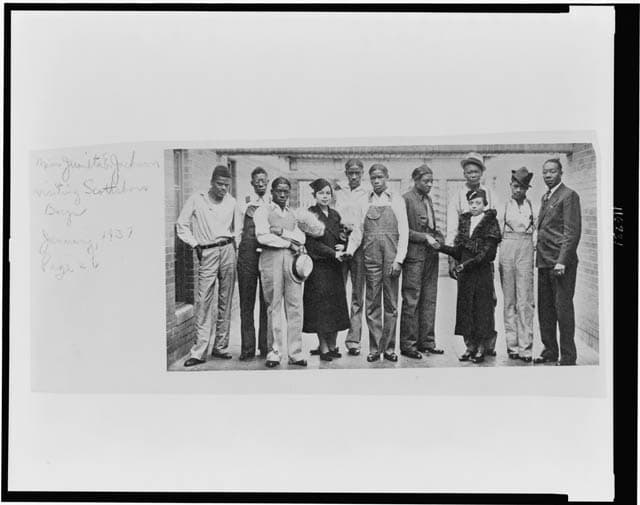
The Freight Train Encounter in Alabama: The Scottsboro Boys Case
In March 1931, a freight train traveling through Alabama became the backdrop for one of the most notorious wrongful prosecution cases in American history. Nine Black teenagers, later known as the Scottsboro Boys, were accused of raping two white women, Ruby Bates and Victoria Price. The accusations led to their arrest and a series of rushed trials that would capture national and international attention, ultimately resulting in landmark Supreme Court decisions that reshaped criminal due process in the United States [1].
The Arrests: A Fateful Encounter in March 1931
The incident began on March 25, 1931, when the nine boys, aged 13 to 19, hopped onto a freight train in Paint Rock, Alabama, seeking work in Chattanooga. Shortly after boarding, they encountered two white women, Ruby Bates and Victoria Price, who claimed they were also traveling on the train. The situation escalated when the women accused the boys of assaulting them. Following the accusations, the train was stopped in Scottsboro, Alabama, and the boys were arrested by local authorities [2].
The allegations against the Scottsboro Boys were serious and sensational. Bates and Price claimed they had been raped by the group, leading to an immediate and fervent response from the local community. The arrests were marked by racial tensions that were already high in the segregated South. The boys were quickly charged with rape, and the stage was set for a series of trials that would unfold in the following months. The rapidity of the arrests and the charges reflected the deep-seated racism of the time, where the mere accusation of a Black man against a white woman could lead to dire consequences [3].
The Trials: Rushed Justice in Scottsboro
The first trial of the Scottsboro Boys took place in April 1931, just weeks after their arrest. The proceedings were chaotic and marked by a lack of legal representation. The boys were assigned an attorney who was ill-prepared and overwhelmed. The trial lasted only a few days, and the evidence presented was scant. Despite the absence of physical evidence and the dubious nature of the women's testimonies, the all-white jury convicted the boys in a matter of hours [4].
The trials drew national attention, particularly from civil rights organizations. The NAACP and the International Labor Defense (ILD) became involved, advocating for the boys and highlighting the injustices they faced. The ILD's involvement was particularly significant, as they aimed to expose the racial bias inherent in the trials and the broader legal system. The trials were not just about the fate of the nine boys; they became a battleground for civil rights and social justice [5].
The first trial ended with a conviction on April 6, 1931, and the boys were sentenced to death. The speed of the trial and the subsequent verdict shocked many observers, prompting widespread condemnation from various quarters. The lack of due process and the blatant racial discrimination were evident, leading to calls for a retrial. The case became a focal point for those advocating for civil rights, as it underscored the systemic injustices faced by Black Americans in the legal system [1].
International Outcry: The Scottsboro Boys Case Gains Attention
As news of the Scottsboro Boys' plight spread, it ignited outrage both domestically and internationally. The case became a symbol of racial injustice in the United States, prompting protests and calls for justice from various civil rights groups. In 1932, the case was featured in the Communist Party's publication, which further amplified its visibility. The involvement of leftist organizations brought a new dimension to the case, framing it as part of a broader struggle against capitalism and racial oppression [2].
Public sentiment was divided. While many rallied for the boys' release, others were staunchly opposed, fueled by deep-seated racism and a desire to uphold the status quo of racial segregation. The case highlighted the stark realities of the Jim Crow South, where the legal system often failed to protect the rights of Black individuals. The Scottsboro Boys became emblematic of the broader struggle against racial injustice, drawing attention to the pervasive discrimination that existed in American society [3].
The international response was also significant. The case attracted the attention of activists and intellectuals around the world, who viewed it as a glaring example of American hypocrisy regarding civil rights. Protests erupted in various countries, and the Scottsboro Boys became symbols of the fight against racial injustice. The case was discussed in international forums, and the boys' plight resonated with those advocating for human rights globally [4].
The Supreme Court Steps In: Powell v. Alabama
The Scottsboro Boys' legal battles continued, culminating in a significant Supreme Court case, Powell v. Alabama, in 1932. The Court ruled that the boys had been denied their right to counsel, a violation of their 14th Amendment rights. This landmark decision established that states are required to provide legal representation to defendants in capital cases who cannot afford an attorney. The ruling was a direct response to the injustices faced by the Scottsboro Boys and highlighted the need for reform in the legal system [5].
The implications of Powell v. Alabama were profound. It marked a turning point in the American legal system, emphasizing the importance of due process and the right to a fair trial. The ruling set a precedent that would influence future cases involving the rights of defendants, particularly in cases involving racial discrimination. The decision underscored the necessity of legal representation as a fundamental right, ensuring that defendants would no longer face the courts without adequate legal support [1].
The Supreme Court's intervention was a critical moment in the Scottsboro Boys case. It not only provided a glimmer of hope for the boys but also galvanized the civil rights movement. The ruling was celebrated by activists who saw it as a victory against systemic racism and a step toward greater equality in the legal system. However, the journey for the Scottsboro Boys was far from over, as they still faced retrials and continued legal battles [2].
A Second Chance: Retrials and Continued Struggles
Following the Supreme Court's decision, the Scottsboro Boys were retried in 1933. The second trial was marked by a more robust defense, but the outcome remained grim. Despite the lack of credible evidence against them, the boys were once again convicted. The retrials continued over the years, with various outcomes, but the overarching theme remained the same: systemic racism and injustice. The retrials were a reflection of the deep-seated biases that permeated the legal system, as the boys faced juries that were often unwilling to see beyond their race [3].
The trials also revealed the complexities of the legal system in the South during this era. The Scottsboro Boys were caught in a web of racial prejudice, and their cases became emblematic of the struggles faced by Black Americans in the judicial system. The legal battles continued for years, with some of the boys eventually being released, while others remained imprisoned for decades. The lengthy process highlighted the challenges of seeking justice in a system that was rigged against them [4].
In 1937, the Alabama Supreme Court overturned the convictions of the Scottsboro Boys, citing the lack of evidence and the failure to provide a fair trial. However, the boys were retried again, and the cycle of injustice continued. The case became a protracted legal battle, with the boys' lives hanging in the balance as they navigated a system that seemed determined to uphold racial inequality [5].
The Role of Media: Shaping Public Perception
The media played a crucial role in shaping public perception of the Scottsboro Boys case. Newspapers across the country reported on the trials, often sensationalizing the events. The coverage varied widely, with some outlets advocating for the boys and others perpetuating racist narratives that fueled public outrage. The media's portrayal of the case reflected the broader societal attitudes toward race and justice, influencing public opinion in both positive and negative ways [1].
Prominent figures, including writers and intellectuals, sought to highlight the injustices faced by the boys. The involvement of high-profile individuals helped to elevate the case to national prominence, drawing attention to the broader issues of racial inequality and injustice in the United States. Writers like Langston Hughes and Richard Wright used their platforms to advocate for the Scottsboro Boys, framing their plight as part of the larger struggle for civil rights [2].
The media's role was not limited to reporting; it also served as a catalyst for activism. As the case gained traction, civil rights organizations mobilized to demand justice for the Scottsboro Boys. The coverage of the trials sparked protests and demonstrations, with activists calling for an end to racial discrimination in the legal system. The media's ability to shape public perception was instrumental in bringing attention to the injustices faced by the boys and the systemic racism that permeated American society [3].
The Legacy of the Scottsboro Boys Case
The Scottsboro Boys case left an indelible mark on American history. It exposed the deep-seated racism within the legal system and highlighted the urgent need for reform. The Supreme Court's ruling in Powell v. Alabama was a significant step toward ensuring that all defendants, regardless of race or socioeconomic status, have access to legal representation. The case became a touchstone for discussions about civil rights and the need for systemic change in the legal system [4].
In the years following the trials, the Scottsboro Boys became symbols of the fight for civil rights. Their story was retold in various forms, including literature, film, and theater, serving as a reminder of the injustices that persist in society. The case also inspired future generations of activists who continued to advocate for racial equality and justice. The legacy of the Scottsboro Boys is evident in the ongoing struggles for civil rights, as their story resonates with those fighting against systemic racism today [5].
The case also prompted discussions about the intersection of race and class in the American legal system. It highlighted the ways in which marginalized communities are disproportionately affected by legal injustices. The Scottsboro Boys' experiences served as a rallying cry for those advocating for comprehensive legal reforms aimed at dismantling systemic racism and ensuring equal treatment under the law [1].
The Final Years: Redemption and Recognition
As time passed, some of the Scottsboro Boys were eventually exonerated, while others continued to fight for justice. In 2013, the Alabama Legislature passed a resolution exonerating the Scottsboro Boys, acknowledging the injustices they faced. This recognition came decades after the trials and served as a small measure of justice for the surviving members and their families. The resolution was a significant step in acknowledging the wrongs of the past and the need for accountability in the legal system [2].
The legacy of the Scottsboro Boys continues to resonate today. Their story is a testament to the resilience of those who fought against injustice and the ongoing struggle for civil rights in America. The case remains a critical part of the narrative surrounding racial inequality and the fight for justice in the United States. The recognition of the Scottsboro Boys serves as a reminder of the importance of acknowledging historical injustices and working toward a more equitable society [3].
In recent years, the Scottsboro Boys have been the subject of renewed interest, with documentaries and educational programs highlighting their story. The case has become a focal point for discussions about race, justice, and the need for reform in the legal system. As society grapples with the legacy of racism and inequality, the story of the Scottsboro Boys serves as a powerful reminder of the ongoing struggle for justice and the importance of standing up against injustice [4].
The Enduring Impact of the Scottsboro Boys Case
The Scottsboro Boys case serves as a powerful reminder of the injustices faced by Black Americans throughout history. It highlights the importance of due process and the need for systemic reform within the legal system. As we reflect on this chapter of American history, it is essential to recognize the ongoing struggles for racial equality and justice that continue to this day [5].
The story of the Scottsboro Boys is not just a historical account; it is a call to action for future generations to remain vigilant in the fight against injustice. Their legacy lives on, inspiring individuals to challenge the status quo and advocate for a more equitable society. The case remains a critical part of the ongoing dialogue about race and justice in America, reminding us that the fight for equality is far from over [1].
As we continue to confront issues of racial injustice and inequality, the lessons learned from the Scottsboro Boys case remain relevant. The need for legal reform, the importance of representation, and the fight against systemic racism are issues that persist in contemporary society. The story of the Scottsboro Boys serves as a beacon of hope and a reminder of the power of activism in the pursuit of justice [2].