
The Sultana: America’s Worst Maritime Disaster — and Almost Nobody Remembers It
On the night of April 27, 1865, the Sultana, a steamboat on the Mississippi River, met a catastrophic fate that would claim the lives of over 1,100 people. This disaster, which stands as the worst maritime tragedy in American history, is often overshadowed by the assassination of President Abraham Lincoln just days before. The Sultana was carrying a cargo of freed Union prisoners of war, many of whom had endured the horrors of captivity, only to face a tragic end on the river that had once been a symbol of freedom.
The Sultana's Journey
The Sultana was a side-wheel steamboat built in 1863, primarily designed for passenger and freight transport along the Mississippi River. By 1865, the vessel had become a vital link in the transportation of soldiers and supplies during the Civil War. After the war, it was repurposed to carry returning Union soldiers, particularly those released from Confederate prison camps. The boat was not only a means of transport but also a beacon of hope for many who had suffered through the brutalities of war and imprisonment.
In April 1865, the Sultana was docked in Vicksburg, Mississippi, where it was to take on a load of passengers. The ship was significantly overcrowded, carrying more than 2,100 passengers, far exceeding its intended capacity of around 376. Among these passengers were approximately 1,800 recently freed Union soldiers who had been held captive at Andersonville and other notorious Confederate prisons. They were eager to return home, but their journey would soon take a tragic turn.
The Overcrowding Crisis
The overcrowding of the Sultana was not merely a result of poor planning; it was exacerbated by a series of systemic failures and corrupt practices. The ship's owner, J. W. McGowan, was motivated by profit and had bribed inspectors to overlook the vessel's unsafe conditions. This corruption was rampant in the post-war era, where the demand for transportation was high, and safety regulations were often ignored. The Sultana's captain, James Cass, was also complicit in this negligence, as he chose to take on more passengers than the boat could safely accommodate.
The conditions aboard the Sultana were dire. Many of the returning soldiers were suffering from illnesses such as dysentery and smallpox, which had ravaged the prison camps. The cramped quarters meant that disease spread rapidly among the passengers. The ship was not equipped to handle such a large number of people, and the lack of proper sanitation facilities only compounded the problem. As the Sultana prepared to depart, the atmosphere was one of hope mixed with uncertainty.
The Fateful Night
As the Sultana set sail on the evening of April 26, 1865, the passengers were filled with a mix of relief and anticipation. They were finally heading home after months of suffering. However, the ship's journey would be cut tragically short. The Sultana's boilers, which had been poorly maintained and were already under strain from the heavy load, were ticking time bombs.
On the night of April 27, just after 2 a.m., disaster struck. One of the ship's boilers exploded with a deafening roar, sending a massive plume of steam and debris into the air. The explosion was so powerful that it blew a hole in the side of the vessel, causing it to list dangerously. Chaos erupted on board as passengers scrambled to escape the inferno. Many were thrown into the icy waters of the Mississippi, while others were trapped in the burning wreckage.
The aftermath of the explosion was horrific. Survivors described scenes of panic and despair as people fought for their lives in the dark waters. The Sultana quickly began to sink, and many of those who had survived the initial blast were unable to escape the sinking ship. The death toll would ultimately reach over 1,100, making it the deadliest maritime disaster in American history [1][2][3].
The Response and Aftermath
In the wake of the disaster, the response was swift but inadequate. Local residents and nearby boats rushed to the scene to rescue survivors, but the chaos made rescue efforts difficult. Many of the bodies were never recovered, and the river was littered with debris and the remains of the ship. The tragedy was compounded by the fact that many of the victims were soldiers who had fought bravely for their country, only to die in such a senseless manner.
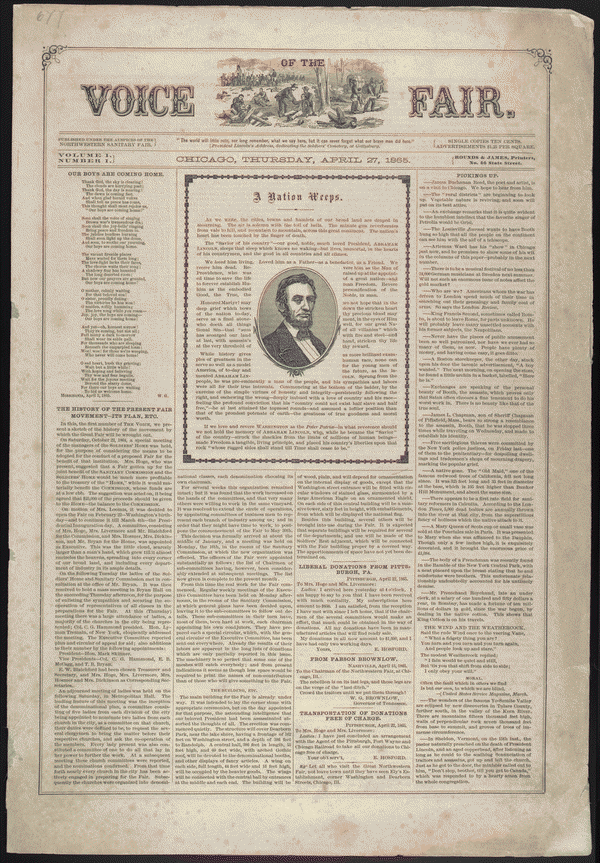
The news of the Sultana disaster was largely overshadowed by the assassination of President Lincoln just days earlier. While the nation mourned the loss of its leader, the tragedy of the Sultana was relegated to the background. This lack of attention has contributed to the obscurity of the disaster in the annals of American history [4].
Investigating the Disaster
In the aftermath of the explosion, an investigation was launched to determine the cause of the disaster. The inquiry revealed a shocking level of negligence and corruption. Inspectors had been bribed to overlook the Sultana's unsafe conditions, and the vessel's owners were found to have knowingly overloaded the ship. However, despite the evidence of wrongdoing, no one was held accountable for the tragedy [5].
The findings of the investigation highlighted systemic issues within the maritime industry. The lack of stringent safety regulations and the prevalence of bribery created an environment where profit was prioritized over safety. This tragedy served as a wake-up call for the nation, prompting calls for reform in maritime safety standards. The Sultana disaster underscored the need for a comprehensive review of safety protocols, which had been largely ignored during the war years.
The Legacy of the Sultana
Despite the enormity of the Sultana disaster, it has largely been forgotten in the collective memory of the United States. The tragedy was overshadowed by the events surrounding Lincoln's assassination, and the subsequent lack of accountability for those responsible contributed to its obscurity. The Sultana's story is a poignant reminder of the sacrifices made by those who served in the Civil War and the dangers they faced even after the conflict had ended.
In recent years, efforts have been made to commemorate the victims of the Sultana disaster. Memorials and historical markers have been erected to honor those who lost their lives, and historians have begun to shed light on this tragic event. The Sultana disaster serves as a cautionary tale about the importance of safety regulations and the need for accountability in the face of negligence. It also highlights the broader societal issues of the time, including the treatment of veterans and the conditions they faced upon returning home.
The story of the Sultana is not just about the tragedy itself; it is also about the resilience of the human spirit. Many survivors went on to lead remarkable lives, sharing their experiences and advocating for better treatment of veterans. Their voices, however, were often drowned out by the larger narrative of the post-war era, which focused on rebuilding the nation and reconciling the divisions caused by the Civil War.
A Forgotten Tragedy
The Sultana disaster is a stark reminder of how easily history can forget its tragedies. The loss of over 1,100 lives, most of whom were Union soldiers, is a story that deserves to be told and remembered. In a nation that prides itself on honoring its heroes, the Sultana stands as a testament to the sacrifices made during the Civil War and the need for vigilance in ensuring the safety of those who serve.
As we reflect on the Sultana disaster, we must also recognize the broader implications of this tragedy. It highlights the importance of accountability in all facets of society, especially when lives are at stake. The lessons learned from the Sultana should resonate with us today, reminding us of the need for vigilance in protecting the lives of those who serve and the importance of honoring their sacrifices.
The Sultana disaster remains one of the most tragic and overlooked events in American history. The loss of life, the negligence that led to the explosion, and the subsequent lack of accountability are all aspects of this story that deserve greater recognition. As we continue to explore our nation's past, it is crucial to remember the Sultana and the lives lost on that fateful night. The tragedy serves as a reminder of the fragility of life and the importance of ensuring safety and accountability in all endeavors.
In remembering the Sultana, we honor the memory of those who perished and reaffirm our commitment to preventing such tragedies in the future. Their stories, though long forgotten by many, deserve to be told and remembered as part of the rich tapestry of American history. The Sultana disaster is not just a footnote in the annals of maritime history; it is a powerful narrative that speaks to the human experience, the consequences of greed, and the need for reform in the face of tragedy.
As we delve deeper into the Sultana's legacy, we must also consider the broader context of maritime safety in the United States. The disaster prompted significant changes in regulations, leading to the establishment of more rigorous safety standards for passenger vessels. These reforms were essential in preventing similar tragedies in the future, highlighting the importance of learning from past mistakes.
The Sultana disaster serves as a poignant reminder that history is often shaped by the narratives we choose to remember. In a world where information is readily available, it is our responsibility to ensure that the stories of those who suffered are not forgotten. The Sultana's legacy is a call to action, urging us to honor the past while striving for a safer and more just future.