
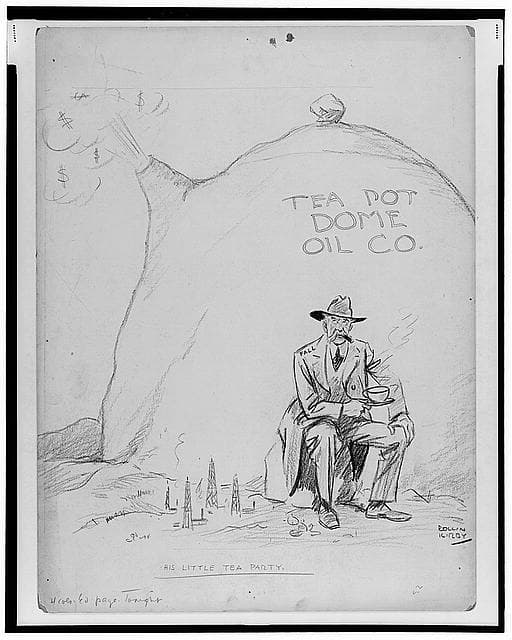
The Teapot Dome Scandal: A Dark Chapter in American History
In the early 1920s, the United States was basking in the glow of post-World War I prosperity. However, beneath this veneer of affluence, a scandal was brewing that would shake the foundations of American politics. The Teapot Dome scandal, named after a rock formation in Wyoming, involved secret oil leases, bribery, and the first cabinet member to serve time in prison for a crime committed while in office. This scandal not only tarnished the reputation of the Harding administration but also reshaped the public's perception of government integrity.
The Players: Who Was Involved?
At the center of the Teapot Dome scandal was Albert B. Fall, the Secretary of the Interior under President Warren G. Harding. Fall was a seasoned politician from New Mexico, known for his strong connections in the Senate and his ambition to elevate his status within the federal government. His role as Secretary of the Interior placed him in charge of managing the nation’s natural resources, including oil reserves that were crucial for the Navy [1].
Warren G. Harding, the 29th President of the United States, was a man of charm and charisma but lacked the political acumen to manage his administration effectively. His presidency is often remembered for its scandals, of which Teapot Dome was the most significant. Other key figures included Harry F. Sinclair, a wealthy oilman who played a pivotal role in the scandal, and Edward Doheny, another oil magnate who sought to profit from the government’s oil reserves [2].
The Oil Reserves: A National Asset
The Teapot Dome oil field in Wyoming and the Elk Hills oil field in California were part of the Naval Petroleum Reserves, established to ensure that the U.S. Navy had a reliable supply of oil during wartime. These reserves were meant to be safeguarded for national security, but in the early 1920s, they became pawns in a game of political corruption [3].
In 1920, the Navy's oil reserves were transferred to the Department of the Interior, which Fall managed. This shift raised eyebrows, as it was unusual for such valuable assets to be placed under the control of a cabinet member. The stage was set for a scandal that would expose the dark underbelly of American politics.
The Secret Leases: A Deal with the Devil
In 1921, Albert Fall began negotiating secret oil leases with private companies. He granted Harry Sinclair's Mammoth Oil Company exclusive rights to drill in Teapot Dome and Edward Doheny's Pan American Petroleum Company rights to the Elk Hills reserve. These leases were awarded without competitive bidding, raising suspicions of impropriety [4].
Fall's motivations were soon called into question. He received substantial financial benefits from these deals, including loans and gifts from the oil executives involved. In total, Fall received over $400,000 in cash and gifts from Sinclair and Doheny, a staggering amount in the 1920s [5]. The leases were shrouded in secrecy, and the public was largely unaware of the transactions taking place.
How the Secret Leases Came to Light
The arrangement did not stay secret for long. In April 1922, press reports — including coverage in The Wall Street Journal — revealed that Sinclair's company had obtained drilling rights to the Teapot Dome reserve without competitive bidding. Wyoming Senator John B. Kendrick introduced a resolution demanding that the Interior and Navy departments explain the leases, and the matter was referred to the Senate Committee on Public Lands, where Senator Thomas J. Walsh of Montana led a methodical two-year investigation [1].
In 1923, the Senate began hearings to investigate the oil leases. The hearings revealed that Fall had not only acted unethically but had also violated laws governing the management of federal resources. As the investigation progressed, it became clear that the scandal was far-reaching, implicating high-ranking officials and businessmen [2].
The Senate Investigation: A Public Spectacle
The Senate hearings were a media sensation, drawing attention from across the nation. Senators grilled Fall and the oil executives involved, demanding answers about the secretive deals. Fall's demeanor during the hearings was defiant; he denied any wrongdoing, claiming that the leases were in the best interest of the country [3].
However, the evidence against him was overwhelming. Witnesses testified about the bribes and gifts that had exchanged hands, painting a picture of a corrupt system that prioritized personal gain over public service. The hearings revealed not just the actions of Fall but also the complicity of other government officials who had turned a blind eye to the corruption [4].
The Fallout: Legal Consequences
As the investigation continued, the public's outrage grew. In 1924, the Justice Department launched a criminal investigation into Fall's actions. The evidence gathered during the Senate hearings was used to build a case against him. In 1929, Fall became the first former cabinet member in U.S. history to be convicted of a crime committed while in office [5].
Fall was found guilty of accepting bribes and was sentenced to one year in prison. He was also fined $100,000, a significant penalty at the time. The scandal had far-reaching implications, leading to a loss of trust in the Harding administration and a demand for greater transparency in government dealings [2].
The Legacy of Teapot Dome
The Teapot Dome scandal had lasting effects on American politics and governance. It highlighted the need for reforms to prevent corruption and ensure accountability among government officials. In the wake of the scandal, Congress enacted stricter regulations governing the leasing of federal lands and resources [3].
The scandal also marked a turning point in public perception of government. Citizens became increasingly skeptical of politicians and their motives, leading to a demand for greater oversight and transparency. The Teapot Dome scandal served as a cautionary tale about the dangers of unchecked power and the importance of ethical governance [4].
The Enduring Impact on American Politics
The Teapot Dome scandal remains a significant chapter in U.S. history, illustrating the potential for corruption within government. It serves as a reminder of the importance of accountability and the need for vigilance in protecting public resources. The legacy of the scandal continues to resonate today, as issues of political corruption and ethical governance remain at the forefront of American political discourse [5].
In the years following the scandal, subsequent administrations faced scrutiny over their dealings, and the public's demand for transparency only grew. The Teapot Dome scandal set a precedent for future investigations into government corruption, leading to a more informed and engaged citizenry [1].
The Broader Context: Political Corruption in the 1920s
To fully appreciate the significance of the Teapot Dome scandal, it is essential to understand the broader context of political corruption in the 1920s. This era was marked by a laissez-faire attitude toward business and minimal government regulation. The prevailing belief was that the government should not interfere with the economy, leading to an environment ripe for corruption and unethical behavior [2].
The Harding administration, characterized by its "return to normalcy" after World War I, was plagued by various scandals, including the infamous Ohio Gang, a group of Harding's friends and political allies who were implicated in various corrupt practices. The Teapot Dome scandal was merely the most prominent example of a culture of corruption that permeated the administration [3].
The Role of the Media: Investigative Journalism
The role of the media in exposing the Teapot Dome scandal cannot be overstated. Investigative journalism played a crucial role in bringing the corruption to light. Newspaper reporting — including the Wall Street Journal's early account of the secret Sinclair lease — helped push the arrangement into public view, and the press kept the story before the public as the Senate inquiry ground on. Their efforts exemplified the importance of a free press in holding government officials accountable and ensuring transparency [4].
The media's coverage of the scandal not only informed the public but also galvanized public opinion against the corrupt practices of government officials. This shift in public sentiment was instrumental in prompting congressional inquiries and ultimately leading to legal consequences for those involved [5].
The Aftermath: Reforms and Regulations
In the wake of the Teapot Dome scandal, Congress took significant steps to reform the leasing of federal lands and resources. The Mineral Leasing Act of 1920 was amended to include stricter regulations governing the leasing process, ensuring that competitive bidding would be required for future leases [1].
Additionally, the scandal prompted the establishment of the Bureau of Land Management, which aimed to oversee the management of public lands and resources more effectively. These reforms were designed to restore public trust in government and prevent similar scandals from occurring in the future [2].
The Teapot Dome Scandal in Popular Culture
The Teapot Dome scandal has also left an indelible mark on American popular culture. It has been referenced in various films, books, and television shows, serving as a symbol of political corruption and the need for ethical governance. The story of Albert Fall and the oil magnates has become a cautionary tale, illustrating the dangers of greed and the consequences of unethical behavior in public office [3].
In literature, the scandal has been depicted in works that explore the complexities of political power and the moral dilemmas faced by those in positions of authority. These narratives often serve to remind readers of the importance of integrity and accountability in government [4].
Conclusion: A Cautionary Tale
The Teapot Dome scandal is not just a story of greed and corruption; it is a cautionary tale about the fragility of democracy and the importance of integrity in public office. As we reflect on this dark chapter in American history, it is essential to remember the lessons learned and to remain vigilant against the forces that seek to undermine the principles of good governance.
The scandal serves as a reminder that the actions of a few can have profound implications for the many. As citizens, it is our responsibility to hold our leaders accountable and to demand transparency and integrity in all aspects of government. The legacy of Teapot Dome continues to shape our understanding of political ethics and the need for a government that serves the interests of the people.