
The Tipping Point: Taxation and the Frontier Distillers
In the early 1790s, the United States was still finding its footing as a new nation. The federal government, under the leadership of Treasury Secretary Alexander Hamilton, sought to stabilize the economy through various means, including the implementation of an excise tax on whiskey. This tax, introduced in 1791, was met with fierce resistance from frontier distillers in western Pennsylvania, who viewed it as an unfair burden [1]. The situation escalated, leading to a significant confrontation in 1794 that would test the authority of the federal government and the resolve of President George Washington.
The whiskey tax was part of Hamilton's broader financial plan to address the national debt incurred during the Revolutionary War. By taxing domestically produced whiskey, Hamilton aimed to generate revenue while also encouraging the production of grain for consumption rather than distillation. However, many frontier farmers relied on whiskey production as a primary source of income. For them, the tax represented not just a financial burden but an infringement on their rights and livelihoods. As discontent simmered, protests erupted across the region, culminating in a rebellion that would challenge the nascent federal authority [2].
The Seeds of Rebellion
The discontent among whiskey producers was rooted in a combination of economic hardship and a sense of alienation from the federal government. Many of these farmers lived far from the centers of political power in Philadelphia and New York, feeling disconnected from the decisions made by leaders who seemed indifferent to their struggles. The whiskey tax was perceived as a direct attack on their way of life, leading to widespread defiance [3].
In 1792, protests began to take shape. Farmers organized meetings to discuss their grievances, and by 1793, resistance escalated into acts of violence. Tax collectors were threatened, and some were even tarred and feathered. The situation reached a boiling point in 1794 when a group of armed men attacked the home of a tax collector in Pennsylvania, signaling a shift from protest to outright rebellion. This act of defiance was not just a local issue; it caught the attention of the federal government, which viewed it as a serious challenge to its authority [4].
Washington's Response: Assembling the Troops
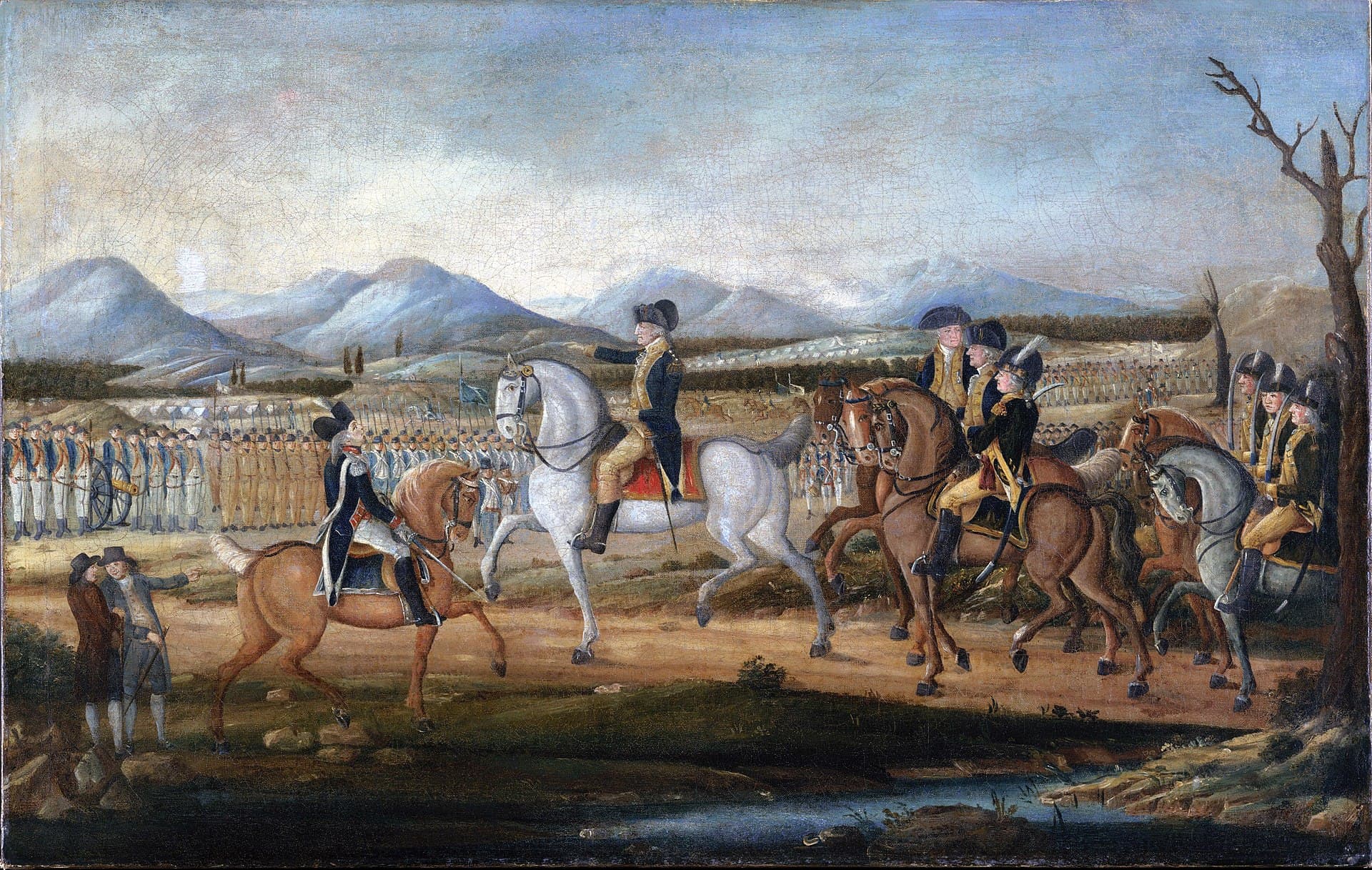
Faced with the growing unrest, President Washington recognized the need for a decisive response. He understood that allowing the rebellion to continue unchecked could undermine the authority of the federal government and set a dangerous precedent. In August 1794, he made the unprecedented decision to mobilize federal troops to quell the insurrection. Washington's call to arms was not taken lightly; he would lead an army of approximately 13,000 soldiers into Pennsylvania, a move that demonstrated the seriousness with which he viewed the rebellion [5].
The decision to march an army into the frontier was fraught with implications. It signaled to the citizens of the United States that the federal government would not tolerate insurrection. Washington's leadership was critical; he was not only the President but also a revered military leader who had led the Continental Army during the Revolutionary War. His presence lent legitimacy to the federal response and underscored the importance of maintaining order in the young republic.
The March to Pennsylvania
As Washington prepared to lead the troops, he faced criticism from various quarters. Some viewed the use of military force as excessive, arguing that dialogue and negotiation should take precedence over violence. However, Washington remained steadfast in his belief that the rule of law must be upheld. He believed that the rebellion, if left unchecked, could inspire similar uprisings in other parts of the country, threatening the fragile unity of the nation [1].
The march itself was a logistical challenge. Troops were gathered from several states, and the journey to western Pennsylvania was arduous. The army faced difficult terrain and inclement weather, but Washington's determination kept morale high. The President's leadership style was characterized by a sense of duty and responsibility, and he was committed to demonstrating that the federal government would not back down in the face of rebellion.
The Showdown: The Gathering Storm
As Washington's army approached the heart of the rebellion, tensions escalated. The insurgents, numbering in the hundreds, were prepared to defend their rights against what they saw as an oppressive government. The situation was precarious; both sides were on edge, and the potential for violence loomed large. However, Washington's strategy was not to engage in a full-scale battle. Instead, he aimed to intimidate the rebels into submission [2].
In the lead-up to the confrontation, Washington issued a proclamation calling for the insurgents to disperse and return to their homes. He emphasized that the government sought to restore order and that the use of force would only be a last resort. The proclamation was a calculated move, aimed at demonstrating the government's willingness to negotiate while also making it clear that resistance would not be tolerated.
The Turning Point: A Peaceful Resolution
As the federal troops entered the region, the rebellion began to lose momentum. Many of the insurgents were farmers who had initially taken up arms out of frustration rather than a desire for violence. The sight of a large federal army marching into their territory was a sobering reality check. The overwhelming show of force, combined with Washington's call for peace, led to a gradual disbanding of the rebel forces [3].
By the time the federal troops reached the area where the rebellion had originated, the insurrection had largely fizzled out. Many of the leaders of the rebellion had fled, and those who remained were unwilling to engage in further conflict. Washington's approach had worked; the rebellion ended without major bloodshed, a testament to the effectiveness of his leadership and the power of federal authority.
Aftermath: The Legacy of the Whiskey Rebellion
The Whiskey Rebellion had far-reaching implications for the United States. It marked the first significant test of federal authority under the new Constitution and set a precedent for how the government would respond to civil unrest. Washington's decision to use military force was controversial, but it ultimately reinforced the idea that the federal government had the right to impose laws and collect taxes [4].
In the aftermath of the rebellion, the government took steps to address some of the grievances that had fueled the insurrection. The whiskey tax remained in place, but the government also sought to engage with the frontier communities to better understand their concerns. This approach reflected a recognition that effective governance required not just authority but also communication and compromise [5].
The rebellion also had political ramifications. It highlighted the growing divide between rural and urban interests, a theme that would continue to shape American politics in the years to come. The Federalists, who supported the government's response to the rebellion, found themselves at odds with the Democratic-Republicans, who criticized the use of military force and advocated for more localized governance.
The Role of Media and Public Perception
The media played a crucial role in shaping public perception of the Whiskey Rebellion. Newspapers of the time reported on the events with varying degrees of bias, reflecting the political affiliations of their owners. Federalist newspapers tended to support the government's actions, portraying the rebellion as a threat to national stability. In contrast, Democratic-Republican publications criticized the use of force, framing it as an overreach of government power [1].
This media landscape contributed to the polarization of public opinion regarding the rebellion. While some citizens rallied behind Washington's efforts to restore order, others viewed the government's response as heavy-handed. The differing narratives surrounding the rebellion would have lasting implications for American political discourse, influencing how future generations understood the balance between authority and individual rights.
The Historical Significance of the Whiskey Rebellion
The Whiskey Rebellion remains a significant event in American history for several reasons. It illustrated the challenges faced by the federal government in maintaining order and enforcing laws in a diverse and often divided nation. The rebellion also highlighted the tensions between federal authority and individual liberties, a theme that would continue to resonate throughout American history [2].
Moreover, the rebellion served as a precursor to later conflicts over taxation and governance. The issues that fueled the Whiskey Rebellion—economic hardship, political alienation, and resistance to federal authority—would reemerge in various forms in subsequent decades. From the Civil War to the labor movements of the late 19th century, the legacy of the Whiskey Rebellion can be seen in the ongoing struggles over the role of government in the lives of its citizens [3].
Conclusion: A Nation Tested
The Whiskey Rebellion was a defining moment for the United States, testing the resolve of its leaders and the strength of its institutions. Washington's decision to lead an army against his fellow citizens was a bold move that underscored the importance of federal authority. Ultimately, the rebellion ended without major bloodshed, but its legacy would shape the nation's understanding of governance, rights, and the balance of power for generations to come [4].
As the United States continued to evolve, the lessons learned from the Whiskey Rebellion would inform future debates about the role of government, the rights of individuals, and the responsibilities of citizens in a democratic society. The rebellion was not just a moment of conflict; it was a critical juncture in the ongoing story of a nation striving to define itself amidst challenges and change.