
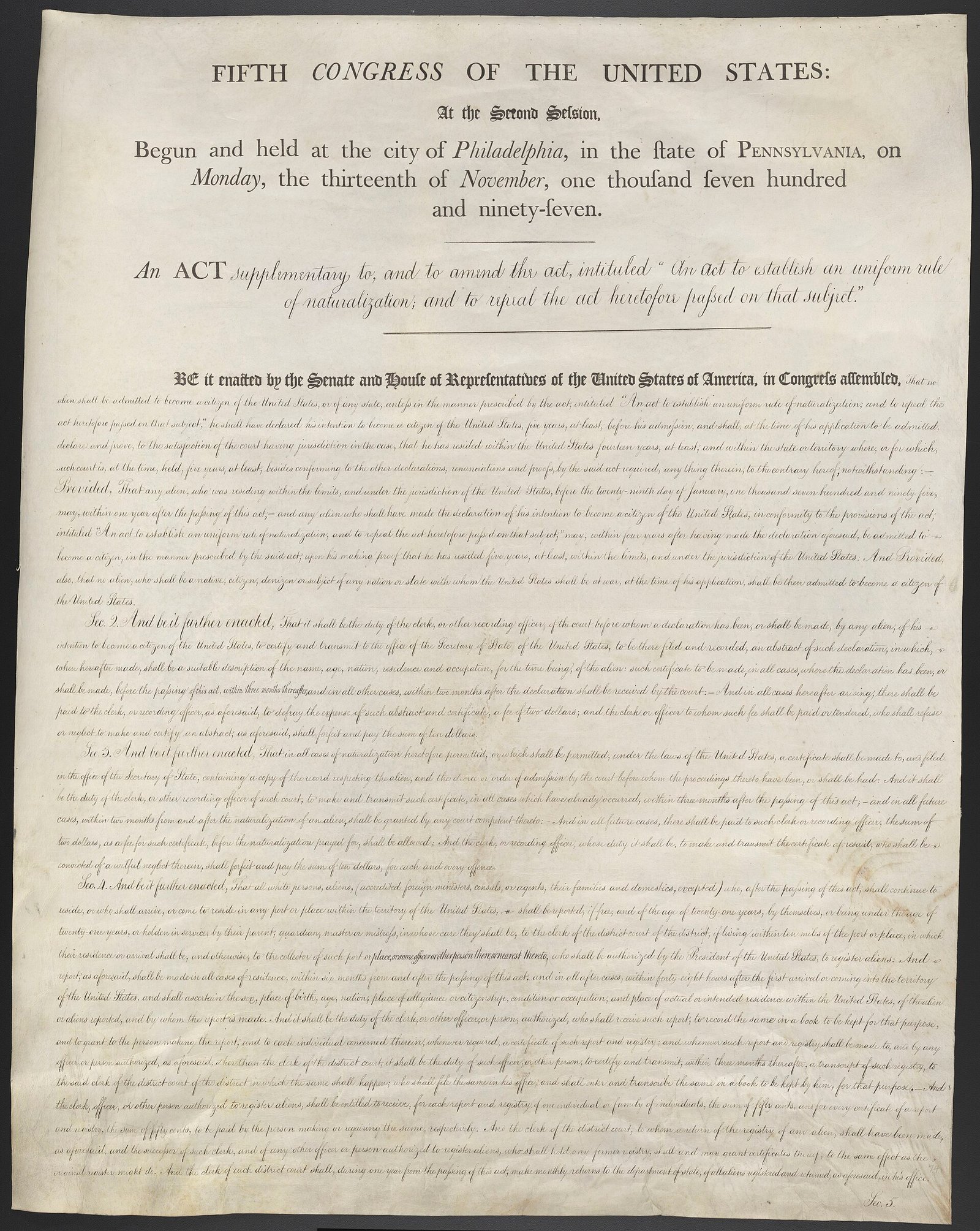
The Alien and Sedition Acts of 1798: A Federalist Crackdown on Dissent
In 1798, the United States faced a political crisis that led to the passage of the Alien and Sedition Acts. These laws, enacted by the Federalist-controlled Congress, aimed to suppress dissent and curb the influence of immigrants, particularly those who supported the rival Jeffersonian party. The Sedition Act, in particular, made it a crime to criticize the government, leading to a series of prosecutions that ignited fierce debates about civil liberties and the limits of government power. The backlash against these acts would culminate in the Virginia and Kentucky Resolutions, which asserted states' rights and laid the groundwork for future political conflicts.
The Context: Political Tensions in Late 18th Century America
The late 18th century was a tumultuous time for the United States. Following the Revolutionary War, the nation was divided along political lines, primarily between the Federalists, led by President John Adams, and the Democratic-Republicans, led by Thomas Jefferson. The Federalists advocated for a strong central government and were generally pro-British, while the Jeffersonians favored states' rights and were sympathetic to the French Revolution.
By 1798, tensions were heightened due to the Quasi-War with France, an undeclared naval conflict fueled by fears of French influence and the growing number of immigrants from France and other countries. The Federalists viewed these immigrants as potential threats to national security and political stability. In this climate of fear and suspicion, the Alien and Sedition Acts were introduced. The political landscape was further complicated by the rise of partisan journalism, which often inflamed public opinion against the opposing party [1][2].
The Alien Act: Targeting Immigrants
The Alien Act, passed in June 1798, aimed to strengthen the federal government's ability to deport foreigners deemed dangerous. It increased the residency requirement for citizenship from five to fourteen years, making it more difficult for immigrants to become citizens and vote. This act was particularly aimed at immigrants who were seen as sympathetic to the French Revolution and, by extension, the Democratic-Republicans.
The Alien Act allowed the president to deport any alien considered "dangerous to the peace and safety of the United States" without a trial. This provision raised serious concerns about the potential for abuse of power, as it gave the executive branch sweeping authority to remove individuals from the country based on vague criteria. Critics argued that this act was a blatant attempt to silence political opposition and suppress the voices of immigrants who might support the Jeffersonian agenda [1][2].
The law's implementation was marked by a series of deportations, though the actual number of individuals affected was relatively small. Still, the threat of deportation loomed large over immigrant communities, fostering an atmosphere of fear and compliance. The Alien Act was not merely a legal measure; it was a political tool used to consolidate Federalist power by targeting those who opposed their policies and ideals. This act set a precedent for future immigration laws that would similarly restrict the rights of foreigners in the United States [3][5].
The Sedition Act: Criminalizing Dissent
The Sedition Act, passed in July 1798, was even more controversial. It made it a crime to publish "false, scandalous, and malicious writing" against the government, Congress, or the president. This law effectively criminalized criticism of the government, leading to a chilling effect on free speech. The act was seen as a direct attack on the First Amendment rights of citizens, particularly journalists and political opponents of the Federalists.
Under the Sedition Act, numerous individuals were prosecuted for their writings. Notably, Matthew Lyon, a Democratic-Republican congressman from Vermont, was convicted for publishing articles that criticized President Adams and the Federalist party. Lyon was sentenced to four months in prison and fined $1,000, a significant sum at the time. Other notable figures, such as the printer Benjamin Franklin Bache, were also targeted for their opposition to the Federalist agenda [3][5].
The Sedition Act led to a wave of prosecutions that disproportionately affected Democratic-Republicans. By the time the act was allowed to expire in 1801, several dozen individuals had been charged, and many were convicted. The act not only stifled dissent but also deepened the political divide in the country, as Jeffersonians rallied against what they viewed as tyranny. The prosecutions under the Sedition Act were often seen as politically motivated, further inflaming tensions between the two parties [1][3].
The Virginia and Kentucky Resolutions: A Response to Federal Overreach
In response to the Alien and Sedition Acts, Thomas Jefferson and James Madison drafted the Virginia and Kentucky Resolutions in 1798 and 1799, respectively. These resolutions asserted that states had the right to nullify federal laws that they deemed unconstitutional. Jefferson, writing in the Kentucky Resolution, argued that the federal government had overstepped its bounds and that states could refuse to enforce laws that violated the Constitution.
The Virginia Resolution, authored by Madison, similarly emphasized the importance of state sovereignty and the need for a check on federal power. Both resolutions were a direct challenge to the authority of the Federalist government and articulated a philosophy of states' rights that would resonate throughout American history. They argued that the Alien and Sedition Acts were unconstitutional and that the states had the authority to protect their citizens from federal overreach [4].
The resolutions sparked a significant political debate. While they were not formally adopted by all states, they laid the groundwork for future discussions about the balance of power between state and federal governments. The idea that states could nullify federal laws would later play a significant role in the lead-up to the Civil War. The Virginia and Kentucky Resolutions also inspired later movements advocating for states' rights, highlighting the ongoing struggle between federal authority and state sovereignty [4].
The 1800 Election: A Turning Point
The political fallout from the Alien and Sedition Acts significantly influenced the presidential election of 1800. The election pitted incumbent President John Adams against Thomas Jefferson, who had emerged as the leader of the opposition to the Federalists. The Federalists' use of the Sedition Act to silence dissent had galvanized the Democratic-Republican base, and many voters were outraged by the perceived overreach of the Adams administration.
Jefferson's campaign capitalized on the widespread discontent with the Alien and Sedition Acts. He promised to repeal these laws and restore civil liberties. The election was marked by intense partisanship, with both sides accusing each other of undermining the republic. Ultimately, Jefferson won the election, marking a significant shift in American politics as power transitioned from the Federalists to the Democratic-Republicans [1][5].
The aftermath of the 1800 election saw the repeal of the Sedition Act and a general decline in the Federalist party's influence. Jefferson's administration sought to dismantle many of the policies enacted by the Federalists, including the Alien Act. The election was a pivotal moment in American history, as it demonstrated the resilience of democratic principles and the importance of civil liberties in the face of government overreach. The transition of power was peaceful, setting a precedent for future elections and solidifying the idea that political change could occur without violence [2][5].
The Legacy of the Alien and Sedition Acts
The Alien and Sedition Acts have left a lasting legacy in American political discourse. They serve as a cautionary tale about the potential for government overreach in times of crisis. The acts highlighted the tension between national security and individual rights, a theme that continues to resonate in contemporary debates over civil liberties. The Sedition Act, in particular, raised fundamental questions about the limits of free speech and the role of government in regulating dissent.
While the act was allowed to expire in 1801, the principles it challenged remain relevant today. The debates surrounding the Alien and Sedition Acts laid the groundwork for future discussions about the First Amendment and the rights of citizens to criticize their government without fear of reprisal [1][2][3]. The Sedition Act's legacy can be seen in various historical moments when governments have attempted to suppress dissent, from the Espionage Act of 1917 to the more recent controversies surrounding free speech in the digital age.
The Virginia and Kentucky Resolutions also had a lasting impact on American political thought. They introduced the concept of nullification, which would resurface in later political conflicts, including the Nullification Crisis of the 1830s and the debates over states' rights leading up to the Civil War. The resolutions emphasized the importance of state sovereignty and the need for a balance of power between state and federal governments [4]. This ongoing dialogue about the limits of federal authority continues to shape American political debates, particularly in discussions about healthcare, education, and environmental regulations.
The Enduring Impact of the Alien and Sedition Acts
The Alien and Sedition Acts of 1798 represent a critical moment in American history when the balance between government authority and individual rights was tested. The Federalists' attempts to stifle dissent through these laws ultimately backfired, leading to a political backlash that reshaped the nation's political landscape. The legacy of these acts continues to influence discussions about civil liberties, government power, and the rights of citizens in the United States.
As the nation continues to grapple with issues of free speech and government authority, the lessons learned from the Alien and Sedition Acts remain relevant. The struggle for civil liberties and the protection of dissenting voices is an ongoing challenge in a democratic society, reminding us of the importance of vigilance in safeguarding our rights. The Alien and Sedition Acts serve as a historical reminder of the fragility of civil liberties, particularly during times of national crisis, and the need for citizens to remain engaged in the political process to protect their rights [1][2][3].
The debates surrounding the Alien and Sedition Acts also foreshadowed the broader ideological battles that would shape the United States in the years to come. The conflict between Federalists and Democratic-Republicans laid the groundwork for the emergence of political parties in the United States, establishing a framework for political discourse that persists to this day. The principles of free speech, states' rights, and the limits of government power continue to be central themes in American political life, reflecting the enduring impact of the Alien and Sedition Acts on the nation's history.