
The Amistad Revolt of 1839: A Fight for Freedom at Sea
On June 30, 1839, a group of 53 enslaved Africans aboard the Spanish ship La Amistad seized control of the vessel off the coast of Cuba. This act of rebellion, known as the Amistad revolt, set off a series of events that would lead to a landmark Supreme Court case and ignite discussions about slavery in the United States. The Africans, who had been kidnapped and sold into slavery, sought not only their freedom but also justice in a legal system that often favored slaveholders over the rights of the enslaved [1].
The Amistad revolt began when the Africans, captured from their homeland and transported to Cuba, found themselves in a desperate situation. Led by a man named Sengbe Pieh, also known as Joseph Cinqué, they overpowered their captors, killing the ship's captain and cook in the process. The enslaved Africans then attempted to navigate the ship back to Africa, but their journey was cut short when they were intercepted by the U.S. Navy near Long Island, New York. The ship was towed into port, and the Africans were taken into custody, leading to a protracted legal battle that would ultimately reach the Supreme Court [2].
The revolt aboard La Amistad was not just a singular act of defiance; it was emblematic of the broader struggle against the institution of slavery that was deeply entrenched in American society. The actions of the Africans highlighted their desire for autonomy and the inherent human right to freedom. This incident would resonate far beyond the immediate circumstances, becoming a significant touchstone in the fight against slavery in the United States [3].
The Legal Battle Begins: Trials in Connecticut
Following their capture, the Africans were held in Connecticut, where their case quickly became a focal point for abolitionists and legal experts. The initial hearings took place in New Haven, where the question of their status as free individuals or property was debated. The U.S. government, representing the interests of the Spanish owners of La Amistad, argued that the Africans were slaves and should be returned to their captors. However, abolitionists contended that the Africans had been illegally enslaved and deserved to be free [4].
The trials in Connecticut drew significant public attention. Abolitionist groups rallied to support the Africans, arguing that their revolt was a legitimate fight for freedom. The case was complicated by the fact that the Africans had been taken from their homes in Africa and sold illegally in Cuba, which raised questions about the legality of their enslavement. The legal proceedings included testimonies from the Africans themselves, who recounted their harrowing experiences and the brutality they had endured. Their accounts painted a vivid picture of the inhuman conditions they faced during their journey across the Atlantic, which was known as the Middle Passage, a horrific experience that claimed countless lives [5].
As the trials progressed, the case attracted the attention of prominent figures, including former President John Quincy Adams. Adams, a staunch opponent of slavery, agreed to represent the Africans before the Supreme Court. His involvement added a layer of political significance to the case, as it highlighted the growing tensions surrounding the issue of slavery in America. The legal battles in Connecticut became a microcosm of the national debate over slavery, drawing in public opinion and media coverage that would further galvanize the abolitionist movement.
The legal proceedings also sparked discussions about the moral implications of slavery. Many abolitionists argued that the very foundation of the United States was built on principles of liberty and justice, which were fundamentally at odds with the institution of slavery. The Amistad case became a rallying point for those who believed that the nation must confront its moral failings.
John Quincy Adams and the Supreme Court Case
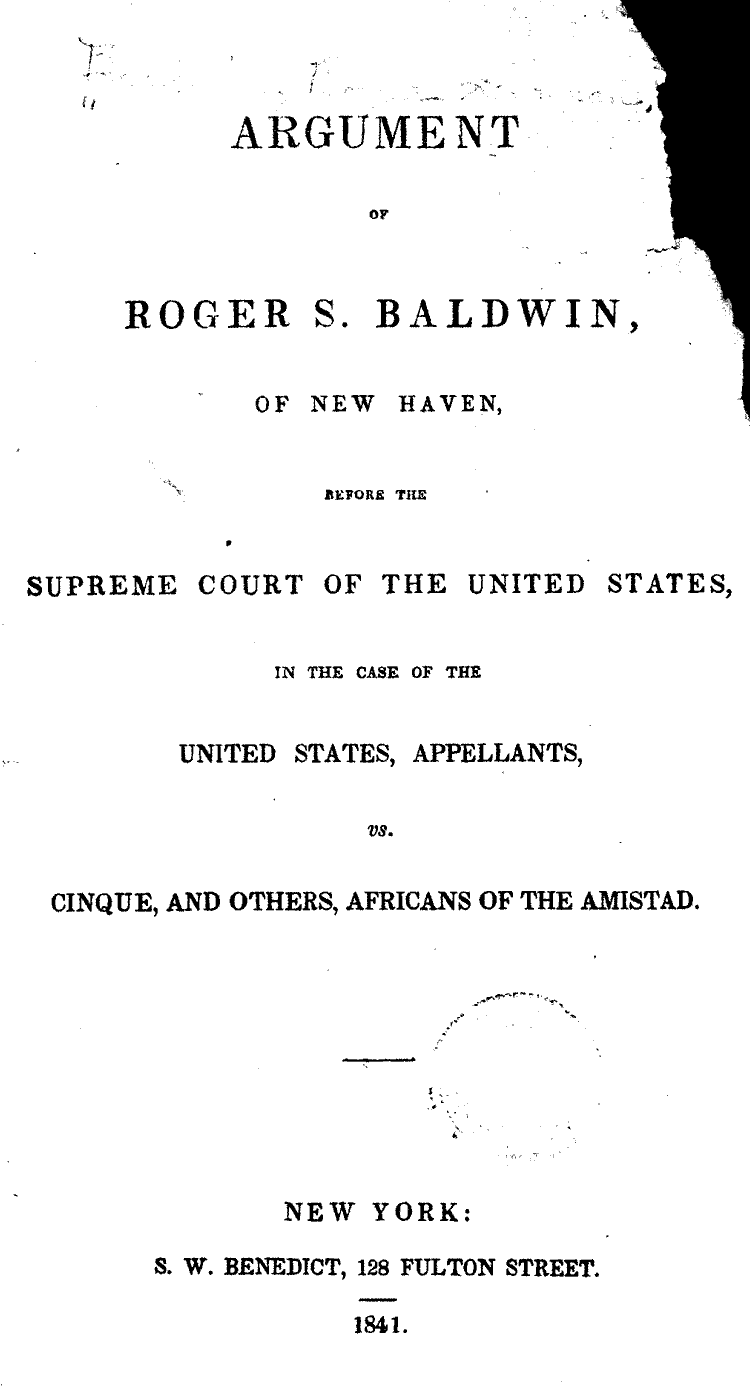
The case eventually reached the U.S. Supreme Court in 1841, where it was formally titled United States v. The Amistad. John Quincy Adams argued passionately on behalf of the Africans, emphasizing their right to freedom and the illegality of their capture. He contended that the Africans had been wrongfully enslaved and that their revolt was a justified response to oppression [1].
Adams' argument was rooted in the principles of liberty and justice. He appealed to the justices' sense of morality, urging them to recognize the humanity of the Africans and the injustice of their situation. He argued that the Africans had acted in self-defense and that their actions should not be punished but rather understood as a quest for freedom. His eloquent defense underscored the legal and ethical dilemmas surrounding slavery, challenging the justices to reconsider their views on the status of enslaved individuals [2].
The Supreme Court's deliberations were intense, reflecting the deep divisions within the country over the issue of slavery. Ultimately, the Court ruled in favor of the Africans, declaring that they were not property but free individuals. The decision was a significant victory for the abolitionist movement and underscored the moral complexities surrounding slavery in the United States. The ruling not only affirmed the rights of the Amistad Africans but also set a precedent for future cases involving enslaved individuals and their quest for freedom [3].
The implications of the Supreme Court's decision extended beyond the immediate case. It provided a legal framework that could be used to challenge the institution of slavery, inspiring abolitionists to continue their fight against the practice. The ruling also highlighted the contradictions within American law, where the ideals of freedom and equality were often undermined by the realities of slavery.
The Aftermath: Freedom and Legacy of the Amistad Survivors
Following the Supreme Court's ruling on March 9, 1841, the surviving Africans were finally granted their freedom. The decision allowed them to return to their homeland, a journey made possible through the efforts of abolitionists and sympathetic individuals who raised funds for their passage. The Amistad survivors eventually returned to Africa, where they were reunited with their families and communities. Their return was not just a personal victory; it symbolized a broader triumph over the forces of oppression and injustice [4].
The Amistad case had far-reaching implications beyond the immediate fate of the Africans. It galvanized the abolitionist movement, inspiring activists to continue their fight against slavery and advocate for the rights of enslaved individuals. The case also highlighted the legal and moral contradictions inherent in a society that professed to value liberty while simultaneously upholding the institution of slavery. The Amistad revolt became a powerful narrative that abolitionists used to rally support for their cause, illustrating the desperate struggle for freedom faced by countless individuals.
In the years following the Amistad case, the issue of slavery continued to dominate American politics. The tensions between pro-slavery and anti-slavery factions escalated, ultimately leading to the Civil War. The Amistad revolt and subsequent Supreme Court case served as a catalyst for broader discussions about human rights and the moral imperative to abolish slavery in the United States. The case became a touchstone for debates about civil rights and justice, influencing the trajectory of American history.
The Cultural Impact of the Amistad Revolt
The Amistad revolt has been memorialized in various forms of art and literature, serving as a powerful symbol of resistance against oppression. The story of the Amistad has been depicted in films, books, and plays, capturing the courage of the Africans who fought for their freedom. One notable film, directed by Steven Spielberg and released in 1997, brought the story of the Amistad to a wider audience, highlighting the historical significance of the revolt and the legal battles that followed. The film reignited interest in the Amistad case, prompting discussions about its relevance to contemporary issues of race and justice [5].
The cultural impact of the Amistad case extends beyond entertainment; it has also influenced discussions about race, justice, and human rights in America. The case is often cited in educational settings as an example of the struggle for freedom and the importance of standing up against injustice. The legacy of the Amistad revolt continues to resonate today, reminding us of the ongoing fight for equality and the need to confront the injustices of the past. It serves as a reminder that the fight for civil rights is not merely a historical issue but an ongoing struggle that requires vigilance and activism.
Moreover, the Amistad case has inspired numerous scholarly works that explore its implications for understanding the history of slavery and the abolitionist movement in the United States. Historians have examined the legal, social, and cultural dimensions of the case, contributing to a richer understanding of its significance. The Amistad revolt has become a focal point for discussions about the complexities of freedom, justice, and the human experience.
The Role of Abolitionists in the Amistad Case
Abolitionists played a crucial role in the Amistad case, advocating for the rights of the Africans and raising awareness about the injustices of slavery. Organizations such as the American Anti-Slavery Society mobilized support for the Amistad survivors, organizing rallies and fundraising efforts to cover legal fees and travel expenses. Prominent abolitionists, including Frederick Douglass and William Lloyd Garrison, lent their voices to the cause, emphasizing the moral imperative to end slavery. Their involvement not only helped secure the freedom of the Amistad survivors but also highlighted the growing movement against slavery in the United States [4].
The efforts of abolitionists were instrumental in shaping public opinion regarding the Amistad case. They utilized newspapers, pamphlets, and public speeches to disseminate information about the plight of the Africans, framing their struggle as a moral issue that demanded immediate attention. The case became a rallying point for abolitionists, inspiring them to continue their fight for justice and equality. The activism surrounding the Amistad case demonstrated the power of grassroots movements in effecting change and challenging entrenched systems of oppression.
The involvement of abolitionists also underscored the interconnectedness of various social justice movements. The Amistad case resonated with other struggles for human rights, including women's suffrage and labor rights, as activists recognized the need for solidarity in the fight against injustice. The case became a symbol of hope for those advocating for a more equitable society, illustrating the potential for collective action to challenge systemic inequalities.
The Amistad Case and International Law
The Amistad case also raised important questions about international law and the rights of individuals under such laws. The Africans had been captured in Africa and sold into slavery in Cuba, raising issues of jurisdiction and the legality of their enslavement. The Supreme Court's ruling acknowledged the illegality of the slave trade and affirmed the principle that individuals cannot be treated as property. This legal recognition was significant in the context of international law, as it set a precedent for future cases involving human rights and the protection of individuals from exploitation [1].
The Amistad case set a crucial precedent for future legal battles surrounding slavery and human rights. It underscored the importance of international law in protecting individuals from exploitation and abuse. The ruling also highlighted the need for nations to adhere to principles of justice and human rights, regardless of prevailing social norms. The Amistad case became a reference point for discussions about human rights, influencing legal frameworks and policies in the years to come [2].
Furthermore, the case illustrated the complexities of navigating international law in the context of slavery. As the global abolitionist movement gained momentum, the Amistad case served as a reminder of the challenges faced by those advocating for human rights across borders. The legal battles surrounding the case contributed to a broader understanding of the need for international cooperation in addressing issues of slavery and human trafficking, which remain relevant concerns today [3].
The Amistad's Place in American History
The Amistad revolt and subsequent Supreme Court case occupy a significant place in American history. They serve as a reminder of the complexities of the nation's past and the ongoing struggle for justice and equality. The case is often included in discussions about the abolitionist movement, the Civil War, and the fight for civil rights. It highlights the importance of confronting historical injustices and recognizing the resilience of those who fought for their freedom [4].
The Amistad story is not just a historical event; it is a testament to the resilience of the human spirit and the quest for freedom. It underscores the importance of standing up against oppression and advocating for justice, principles that continue to resonate in contemporary society. The legacy of the Amistad revolt serves as a powerful reminder of the need to remain vigilant in the fight for equality and to challenge systems of oppression that persist in various forms.
In educational contexts, the Amistad case is often used as a case study to explore themes of justice, human rights, and the moral implications of slavery. It provides a framework for understanding the complexities of American history and the ongoing struggle for civil rights. The case encourages critical discussions about the legacy of slavery and the importance of acknowledging and addressing historical injustices [5].
The Enduring Legacy of the Amistad Revolt
The Amistad revolt of 1839 and the subsequent Supreme Court case represent a pivotal moment in the history of the United States. The courage of the Africans who seized the ship and fought for their freedom, along with the legal battles that ensued, brought attention to the moral and legal contradictions of slavery. The involvement of figures like John Quincy Adams and the support of abolitionists underscored the growing movement against slavery and the fight for human rights [1].
Today, the legacy of the Amistad case continues to inspire discussions about justice, equality, and the ongoing struggle against oppression. It serves as a powerful reminder of the importance of standing up for what is right and advocating for the rights of all individuals, regardless of their background. The Amistad revolt remains a symbol of hope and resilience, illustrating the enduring human spirit's quest for freedom and justice.
As society continues to grapple with issues of racial inequality and social justice, the lessons of the Amistad case remain relevant. It challenges us to confront the legacies of the past and to work towards a more just and equitable future. The Amistad revolt is not merely a historical event; it is a call to action for all those who believe in the principles of liberty and justice for all.