
The Scopes Trial: A Clash Over Evolution in Dayton, Tennessee
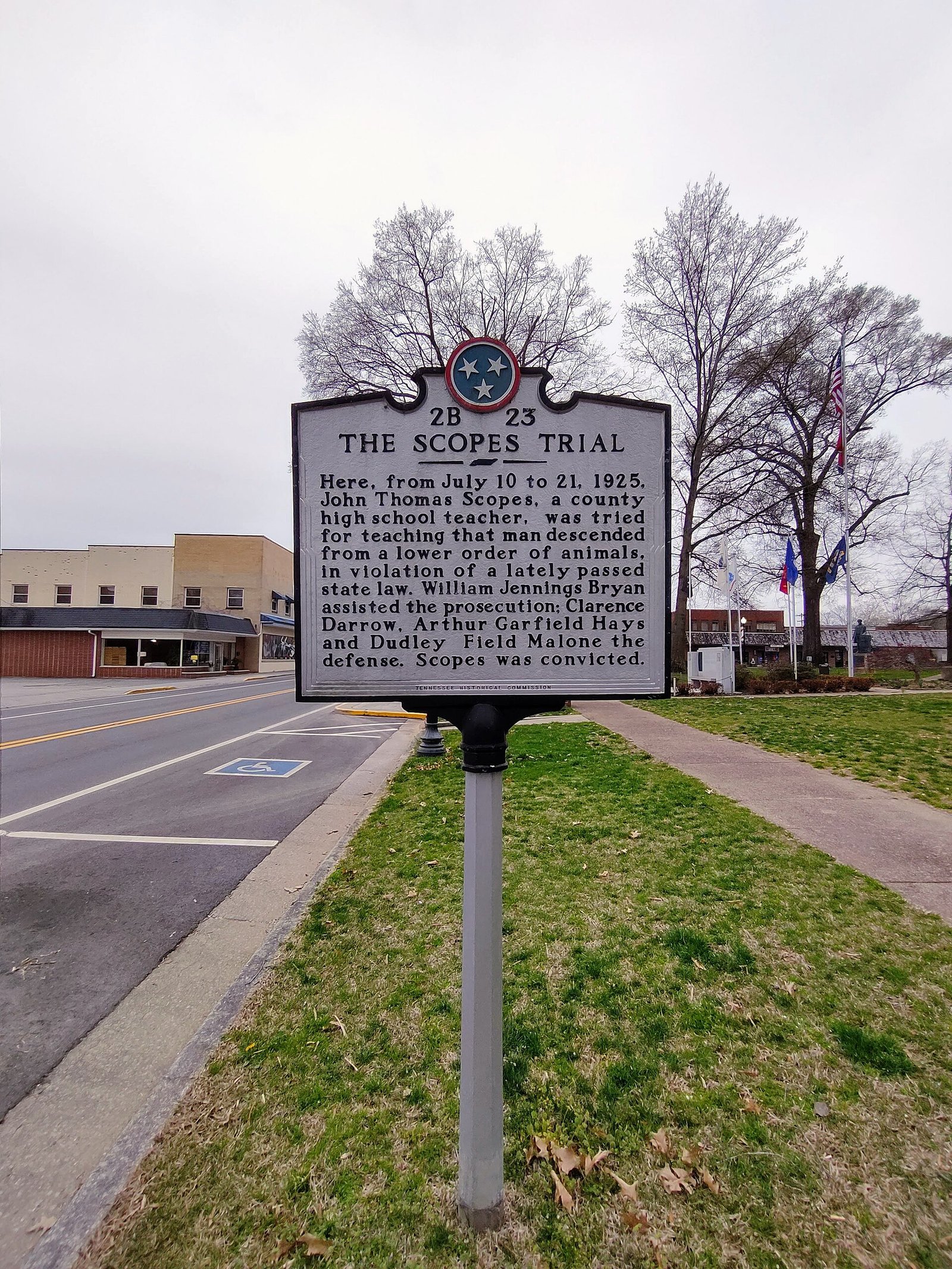
In the summer of 1925, Dayton, Tennessee, became the epicenter of a national debate over science and religion during the infamous Scopes Trial, often dubbed the "monkey trial." John T. Scopes, a high school teacher, was charged with violating Tennessee's Butler Act, which prohibited the teaching of evolution in public schools. The trial attracted significant media attention, pitting two of the era's most prominent figures against each other: William Jennings Bryan, a three-time presidential candidate and staunch advocate for biblical literalism, and Clarence Darrow, a renowned defense attorney and champion of civil liberties. This courtroom drama was not just a legal battle; it was a cultural clash that reflected the tensions of the 1920s in America.
The Context of the Scopes Trial: Why Dayton?
The choice of Dayton as the trial's location was not coincidental. The town's leaders sought to capitalize on the publicity surrounding the trial to boost local business and tourism. In the early 1920s, Dayton was struggling economically, and the arrival of national media and spectators was seen as an opportunity to revitalize the community. The trial was initially a publicity stunt orchestrated by local businessman George W. Rappalyea, who believed that a high-profile case could bring attention and revenue to the town. Rappalyea, along with other local leaders, approached Scopes to volunteer as a defendant, knowing that the case would draw significant media coverage and public interest [1].
The Butler Act, passed in March 1925, made it illegal for public school teachers in Tennessee to teach any theory that contradicted the biblical account of man's creation. This law was a direct response to the growing influence of the theory of evolution, particularly after the publication of Charles Darwin's "On the Origin of Species" in 1859. The law represented a broader cultural struggle between modernist and traditionalist views in American society. Dayton's selection as the trial site was emblematic of this struggle, as the town became a battleground for competing ideologies [2].
The Butler Act: Legal Foundations of the Trial
The Butler Act was a product of its time, reflecting the fears of many Americans who believed that the teaching of evolution undermined traditional religious values. The law specifically stated that "it shall be unlawful for any teacher in any of the universities, colleges, high schools, or other public schools of the state of Tennessee to teach any theory that denies the story of the Divine Creation of man as taught in the Bible, and to teach instead that man has descended from a lower order of animals" [3]. This legal framework set the stage for the Scopes Trial, as it directly challenged the scientific community's understanding of human origins.
Scopes, who had been teaching evolution in his biology class, was arrested on May 5, 1925, after a local resident, concerned about the teachings, reported him to the authorities. The trial began on July 10, 1925, and quickly became a media sensation, with reporters flocking to Dayton to cover the proceedings. The trial was not just a legal battle; it was a public spectacle that drew attention from across the nation and even internationally.
The Courtroom Drama: Bryan vs. Darrow
The trial featured two of the most prominent figures of the time: William Jennings Bryan and Clarence Darrow. Bryan, a devout Christian and a leading figure in the fundamentalist movement, represented the prosecution. He viewed the trial as a chance to defend biblical teachings and the moral fabric of American society. Darrow, on the other hand, was a fierce advocate for civil liberties and a critic of religious dogma. He saw the trial as an opportunity to challenge the anti-evolutionary sentiment that was gaining traction in the United States [4].
The courtroom became a stage for their ideological battle. Darrow's defense strategy aimed to highlight the absurdity of the Butler Act and the implications of banning the teaching of evolution. He sought to demonstrate that the law was not only an infringement on academic freedom but also a violation of the principles of free thought and inquiry that underpinned American democracy. In a dramatic turn of events, Darrow called Bryan to the stand as a witness for the prosecution, a move that shocked many observers. This allowed Darrow to cross-examine Bryan about his literal interpretation of the Bible and the implications of such beliefs on modern science [5].
The trial was marked by theatrical moments, including Darrow's famous questioning of Bryan about the creation story in Genesis. Darrow asked Bryan if he believed that the Earth was created in six days, to which Bryan replied affirmatively. Darrow then pressed him on whether he believed that the Earth was only a few thousand years old, exposing the tension between scientific evidence and religious belief. This exchange captivated the audience and highlighted the deep divisions within American society regarding science and faith.
The Verdict and Its Aftermath
On July 21, 1925, the jury found Scopes guilty of violating the Butler Act and imposed a fine of $100. However, the verdict was largely seen as a foregone conclusion, given the political climate and the public sentiment surrounding the trial. Scopes' conviction was later overturned on a technicality, but the Butler Act remained in effect until it was repealed in 1967. The trial did not result in a clear victory for either side; instead, it underscored the ongoing cultural conflict between modernity and tradition in America [1].
In the years following the trial, the Scopes case became a symbol of the struggle between science and religion. It sparked a national conversation about the role of education and the teaching of evolution in public schools. The trial also influenced public opinion, with many Americans beginning to question the validity of laws that restricted academic freedom. The Scopes Trial was a catalyst for future legal battles over the teaching of evolution, culminating in the landmark Supreme Court case of Edwards v. Aguillard in 1987, which ruled that teaching creationism in public schools violated the Establishment Clause of the First Amendment [2].
Hollywood's Role in Shaping the Scopes Trial Narrative
The Scopes Trial's legacy was further shaped by Hollywood, which transformed the events into a cultural phenomenon. The trial inspired numerous films, plays, and books, most notably the 1960 film "Inherit the Wind," which fictionalized the events of the trial and presented a dramatized version of the conflict between science and religion. While the film was not a direct retelling of the trial, it captured the essence of the ideological battle and contributed to the mythologization of the Scopes Trial in American culture [5].
Hollywood's portrayal of the trial often emphasized the dramatic courtroom exchanges between Bryan and Darrow, framing them as archetypal figures representing faith and reason, respectively. This narrative resonated with audiences and solidified the trial's place in American memory as a pivotal moment in the struggle for academic freedom and the separation of church and state. However, these portrayals often oversimplified the complexities of the actual events and the motivations of the individuals involved.
The trial's representation in popular culture has had lasting implications for how Americans view the relationship between science and religion. The Scopes Trial became a symbol of the broader cultural wars that continue to shape American society, with debates over evolution and creationism still relevant in contemporary discussions about education and public policy. The myth of the Scopes Trial endures, often overshadowing the nuances of the actual events and the individuals involved [3].
The Legacy of the Scopes Trial in American Education
The Scopes Trial had a profound impact on American education, particularly in the way evolution is taught in public schools. In the years following the trial, many states enacted laws that restricted the teaching of evolution, reflecting the ongoing tension between scientific inquiry and religious belief. However, the trial also sparked a movement for educational reform, with advocates pushing for the inclusion of evolution in school curricula.
As the 20th century progressed, the teaching of evolution became more widely accepted in American schools, although challenges persisted. The trial served as a rallying point for those advocating for scientific education and the importance of critical thinking in the classroom. The debate over evolution and creationism continued to resurface in various forms, leading to legal battles and public controversies that echoed the themes of the Scopes Trial [4].
In recent years, the teaching of evolution has faced renewed challenges, with some states attempting to introduce "intelligent design" or other creationist theories into science curricula. These developments demonstrate that the issues raised during the Scopes Trial remain relevant, as the struggle over the role of science and religion in education continues to shape public discourse in the United States.
Conclusion: The Scopes Trial's Enduring Relevance
The Scopes Trial was more than just a legal battle; it was a cultural event that reflected the tensions between science and religion in 1920s America. The trial's legacy continues to resonate today, as debates over evolution and creationism persist in public discourse and education. The Scopes Trial serves as a reminder of the ongoing struggle for academic freedom and the importance of critical inquiry in the face of dogma.
As society grapples with issues of science, faith, and education, the lessons of the Scopes Trial remain relevant. The courtroom drama that unfolded in Dayton, Tennessee, in 1925 was not merely a historical event; it was a pivotal moment that continues to shape the landscape of American education and the relationship between science and religion.