
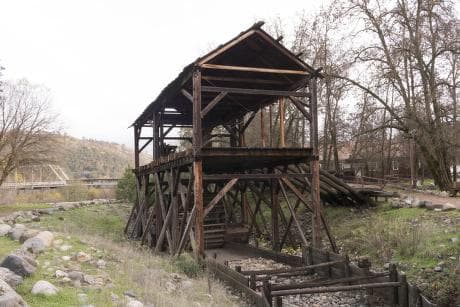
The Discovery at Sutter's Mill: A Catalyst for Change in 1848
On January 24, 1848, James Marshall, a carpenter working for John Sutter, discovered gold at Sutter's Mill in Coloma, California. This seemingly simple find would ignite the California Gold Rush, drawing hundreds of thousands of hopeful prospectors and fortune-seekers to the West. The ensuing rush transformed California from a sparsely populated territory into a bustling hub of activity, conflict, and economic opportunity in just a few short years.
As news of the discovery spread, it set off a wave of migration that would forever alter the landscape of California and the lives of its inhabitants. The Gold Rush not only reshaped the demographics of the region but also had profound impacts on Native American communities and the environment.
The Gold Rush Begins: From Discovery to Mass Migration
The initial discovery of gold at Sutter's Mill was not widely known until later that year. It was only after the publication of an article in the *California Star* in March 1848 that the news began to circulate more broadly. By mid-1849, the Gold Rush was in full swing, with an estimated 300,000 people migrating to California in search of wealth. This mass migration was fueled by the promise of gold and the tales of instant riches that spread like wildfire across the United States and beyond [1][2].
The influx of miners, known as "forty-niners," came from various backgrounds and regions, including the eastern United States, Europe, Asia, and South America. Many traveled overland via the California Trail, while others opted for the perilous sea route around Cape Horn or through the Isthmus of Panama. The journey was fraught with challenges, including harsh weather, disease, and conflicts with Native Americans [2][4].
The overland route was particularly treacherous. Many travelers faced the Sierra Nevada mountains, where snow and freezing temperatures could lead to dire consequences. Some families, seeking a better life, lost everything along the way, while others succumbed to illness or accidents. The sheer scale of migration was unprecedented, and it was not just men who ventured west; entire families sought new beginnings, driven by the hope of prosperity [2][3].
Who Profited from the Gold Rush?
While many miners sought their fortunes in the goldfields, the true beneficiaries of the Gold Rush were often not the miners themselves. Merchants and entrepreneurs quickly capitalized on the influx of people. They provided essential goods and services, from food and clothing to tools and mining equipment. These entrepreneurs often charged exorbitant prices, knowing that desperate miners had few alternatives [5].
One notable figure was Levi Strauss, who arrived in San Francisco in 1850 and began selling durable trousers to miners. His company would eventually evolve into the well-known Levi Strauss & Co. Similarly, other merchants and service providers, including saloon owners and hotel operators, found lucrative opportunities during this period. The Gold Rush created a new economy in California, with San Francisco emerging as a major commercial center [5].
The mining camps themselves became bustling hubs of activity, where miners shared stories of their exploits and failures. However, the reality for many was stark; the gold was not as easily accessible as they had hoped. The initial surface gold was quickly depleted, leading miners to dig deeper into the earth. The competition for gold became fierce, and many miners left California without striking it rich [2][4].
Additionally, the Gold Rush attracted not only miners but also opportunists looking to exploit the situation. Some individuals engaged in fraudulent schemes, selling fake mining claims or worthless mining equipment. The promise of wealth led to a chaotic environment, where trust was scarce, and the law was often absent [2][5].
The Impact on Native American Communities
The Gold Rush had devastating effects on Native American communities in California. As miners flooded into the region, they encroached on Native lands, leading to violent conflicts and displacement. The influx of settlers disrupted traditional ways of life, as Native peoples were forced to abandon their homes and hunting grounds [1][2].
The California government, influenced by the demands of miners and settlers, enacted policies that further marginalized Native populations. The 1850 Act for the Government and Protection of Indians allowed for the forced labor of Native Americans, effectively enslaving many in the name of "civilizing" them. This led to widespread abuse, exploitation, and a significant decline in Native populations due to violence, disease, and loss of land [1][2][4].
As the Gold Rush progressed, many Native American tribes faced existential threats. The introduction of new diseases by settlers decimated populations that had no immunity to such illnesses. Additionally, the environmental degradation caused by mining operations further diminished the resources that Native communities relied on for survival [2][3].
The consequences of the Gold Rush for Native communities were profound and long-lasting. By the end of the 19th century, many tribes had been decimated, and their cultures severely impacted. The legacy of this violence and displacement continues to resonate today, as Native Americans in California work to reclaim their heritage and rights [2][3].
Environmental Consequences of the Gold Rush
The environmental impact of the California Gold Rush was significant and often destructive. Miners employed various methods to extract gold, including hydraulic mining, which involved using high-pressure water jets to dislodge rock and soil. This technique not only devastated landscapes but also caused severe erosion and sedimentation in rivers, affecting local ecosystems [2][3].
The extensive mining operations led to the pollution of waterways with heavy metals and toxic chemicals, which had lasting effects on fish populations and other wildlife. The destruction of forests and habitats further contributed to the decline of biodiversity in the region. The environmental consequences of the Gold Rush are still evident today, as California grapples with the legacy of these practices [2][4].
In addition to the immediate ecological damage, the Gold Rush set a precedent for resource extraction that would continue to affect California's environment for generations. The prioritization of gold over ecological health led to a mindset that often disregarded the long-term consequences of such exploitation. This has resulted in ongoing debates about land use, conservation, and the rights of indigenous peoples to their ancestral lands [2][3].
The Path to Statehood: California’s Rapid Transformation
The Gold Rush accelerated California's path to statehood. As the population surged, so did the demand for governance and infrastructure. In 1850, California was admitted to the Union as the 31st state, just two years after the Gold Rush began. This rapid transformation was unprecedented in American history [1][2].
The new state government faced numerous challenges, including lawlessness and violence among miners and settlers. Vigilante groups emerged to fill the power vacuum, often taking the law into their own hands. The need for a stable legal system became apparent, leading to the establishment of courts and law enforcement agencies [1][2].
California's admission as a state also had significant political implications. It disrupted the balance of power between free and slave states, contributing to the tensions that would eventually lead to the Civil War. The Gold Rush not only reshaped California but also had far-reaching effects on the nation as a whole [1][2].
The rapid influx of people also led to a diverse cultural landscape. Immigrants from various countries brought their customs, languages, and traditions, creating a melting pot that would define California's identity. This cultural diversity was both a strength and a source of tension, as different groups vied for resources and recognition in a rapidly changing society [2][5].
The Legacy of the California Gold Rush
The California Gold Rush remains a defining moment in American history. It symbolized the spirit of adventure and the pursuit of opportunity that characterized the 19th century. However, it also serves as a reminder of the complexities and consequences of rapid expansion and economic exploitation.
The Gold Rush led to the establishment of new towns and cities, many of which still exist today. San Francisco, in particular, transformed from a small settlement into a major metropolis almost overnight. The cultural diversity brought by the influx of immigrants contributed to the rich tapestry of California's identity [2][5].
Despite the wealth generated during this period, the Gold Rush also left a legacy of inequality and environmental degradation. The stories of those who profited, those who suffered, and the land that was irrevocably changed continue to shape California's narrative. As the state moves forward, it grapples with its past while striving to create a more equitable future [1][4][5].
The Gold Rush also influenced American culture and folklore, inspiring countless tales of adventure, hardship, and the quest for fortune. It became a symbol of the American Dream, albeit one that often came at a high cost to marginalized communities and the environment. The narratives surrounding the Gold Rush continue to be explored in literature, film, and historical accounts, reflecting its enduring impact on the American psyche [2][5].
Conclusion: A Complex History
The California Gold Rush of 1848 was a multifaceted event that reshaped the state and the nation. From the initial discovery at Sutter's Mill to the mass migration of hopeful miners, the rush was marked by both opportunity and tragedy. The impacts on Native communities, the environment, and the political landscape were profound and lasting.
As we reflect on this period, it is essential to acknowledge the complexities of the Gold Rush and its legacy. The stories of those who lived through it—both the fortunate and the marginalized—remind us of the intricate tapestry of American history and the ongoing struggles for justice and recognition. The Gold Rush serves as a lens through which we can examine the broader themes of ambition, exploitation, and resilience that continue to resonate in contemporary society [1][2][5].