
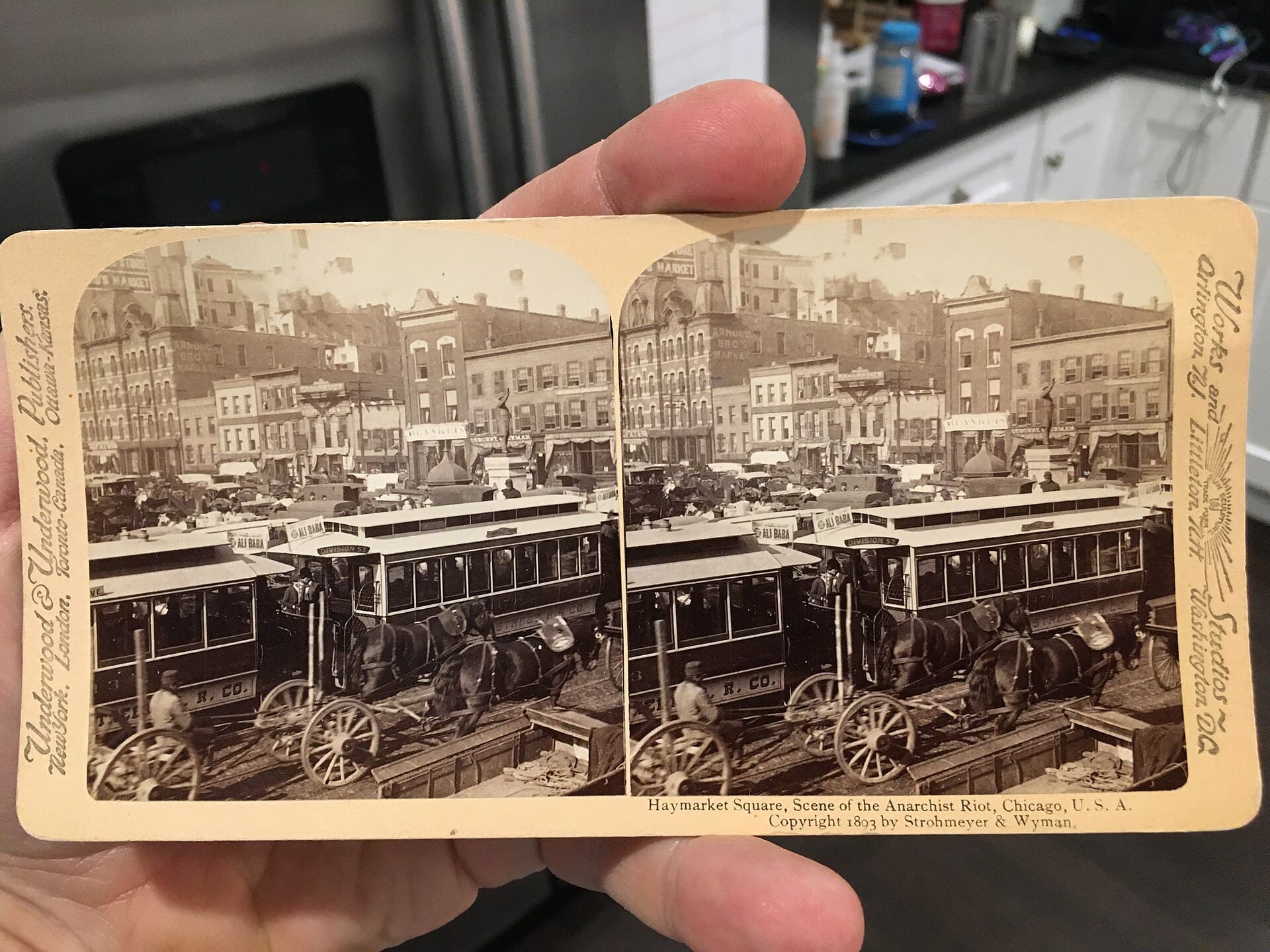
The Chicago Rally That Changed Labor History
On May 1, 1886, Chicago became the epicenter of a burgeoning labor movement advocating for the eight-hour workday. Thousands gathered in Haymarket Square, a site that would soon become synonymous with tragedy and injustice [1]. The atmosphere was charged with hope and determination, but it quickly turned chaotic when a bomb exploded, killing police officers and igniting a violent confrontation [2]. This event marked the beginning of a series of trials that would lead to the execution of several labor activists, forever altering the landscape of labor rights in America and giving birth to May Day as an international workers' holiday [3].
The Context of Labor Struggles in the 1880s
The late 19th century was a period of rapid industrialization in the United States. Factories were booming, but so were the grievances of workers. Long hours, low wages, and unsafe working conditions were rampant [4]. Labor unions began to form, advocating for better conditions and shorter hours. The push for an eight-hour workday gained momentum, with various strikes and protests occurring nationwide. In Chicago, a city known for its labor activism, the call for an eight-hour workday resonated deeply among workers.
The movement gained significant traction in the spring of 1886. On May 1, rallies were organized across the country, with Chicago's event being one of the largest. Organizers aimed to demonstrate solidarity among workers and to demand that employers adhere to the eight-hour workday. The rally at Haymarket Square was intended as a peaceful gathering to support this cause.
The Haymarket Rally: A Gathering of Hope
As the sun set on May 4, 1886, an estimated 3,000 people gathered at Haymarket Square. The crowd was a mix of laborers, immigrants, and activists, united by a common goal. Speeches were made, urging workers to stand firm in their demands. The atmosphere was hopeful, but tensions were simmering beneath the surface. Earlier that day, a confrontation had occurred between strikers and police at the McCormick Reaper Works, resulting in several injuries [5].
As night fell, the rally continued. Speakers called for solidarity and non-violence, but the police were on high alert, having received orders to disperse the crowd. Just as the gathering seemed to be winding down, the situation escalated dramatically. A police contingent arrived, demanding that the crowd disperse. The tension reached a breaking point when someone threw a bomb into the ranks of the police.
The Explosion and Its Immediate Aftermath
The bomb exploded with devastating force, killing several police officers and wounding many others [1]. Chaos erupted as police opened fire on the crowd, leading to further injuries and deaths. In the aftermath, the streets of Chicago were filled with panic and confusion. The violence shocked the nation and led to an immediate crackdown on labor activists [2].
In the days following the bombing, the police launched a massive manhunt for those responsible. The media sensationalized the event, portraying labor activists as dangerous anarchists [3]. This portrayal would have lasting consequences for the individuals involved in the Haymarket Affair.
The Show Trials: Justice or Injustice?
In the wake of the bombing, eight prominent labor leaders were arrested and charged with conspiracy, despite the lack of evidence linking them to the bomb [4]. The trials that followed were marked by bias and a lack of due process. The defendants, many of whom were immigrants and socialists, were portrayed as a threat to public safety. The prosecution relied heavily on inflammatory rhetoric, painting the defendants as anarchists bent on violence.
The trial became a spectacle, drawing national attention. The defendants included well-known figures such as August Spies, Albert Parsons, and Samuel Fielden. They maintained their innocence, arguing that they were being scapegoated for a crime they did not commit. Despite their pleas, the jury found them guilty, and several were sentenced to death.
The trials were widely criticized for their unfairness. Many observers noted that the proceedings were more about punishing labor activism than seeking justice for the bombing. The lack of concrete evidence against the defendants raised questions about the integrity of the judicial process [5].
The Executions and Their Impact
On November 11, 1887, four of the convicted men were executed by hanging. The event sent shockwaves through the labor movement and ignited outrage among workers and activists across the country. The executions were seen as a martyrdom, and the men became symbols of the struggle for workers' rights. Their deaths galvanized the labor movement, leading to increased organizing and solidarity among workers [1].
The Haymarket Affair had a profound impact on the perception of labor activism in the United States. The events were used by both labor leaders and employers to shape public opinion. While some viewed the defendants as martyrs for the cause, others saw them as dangerous radicals. The divide highlighted the growing tensions between labor and capital in America [2].
The Legacy of the Haymarket Affair
The Haymarket Affair left a lasting legacy on the labor movement and the fight for workers' rights. In the years following the events of 1886, May Day emerged as a day of remembrance for the Haymarket martyrs and a celebration of labor solidarity. The first official observance of May Day as International Workers' Day took place in 1890, inspired by the events in Chicago [3].
Labor groups around the world adopted May Day as a day to advocate for workers' rights, drawing attention to issues such as fair wages, safe working conditions, and the right to organize. The legacy of the Haymarket Affair continues to resonate today, as workers around the globe commemorate the struggles and sacrifices of those who fought for labor rights [4].
The Anarchist Connection and the Broader Movement
The Haymarket Affair is often associated with anarchism, a political philosophy that advocates for a stateless society. Many of the defendants were influenced by anarchist ideas, which emphasized direct action and the rejection of authority. This connection contributed to the negative perception of the labor movement in the eyes of the public and authorities [5].
However, the Haymarket Affair was not solely an anarchist event. It represented a broader struggle for workers' rights that included a diverse array of political ideologies. Socialists, trade unionists, and other activists were involved in the movement for an eight-hour workday. The events at Haymarket Square highlighted the complexities of labor activism and the various factions that contributed to the struggle [1].
The Role of Media in Shaping Public Perception
The media played a crucial role in shaping public perception of the Haymarket Affair. Sensationalist reporting fueled fears of anarchism and violence, leading to a backlash against labor activists. Newspapers depicted the defendants as dangerous radicals, further alienating them from mainstream society [2]. This portrayal had lasting consequences for the labor movement, as it created an environment of fear and mistrust.
In the years following the Haymarket Affair, labor leaders worked to counteract the negative image of the movement. They emphasized the importance of peaceful protest and the need for solidarity among workers. Despite these efforts, the stigma associated with the Haymarket Affair lingered, complicating the fight for workers' rights [3].
The Fight for Pardons and Recognition
In the years following the executions, calls for pardons and recognition of the Haymarket martyrs grew louder. Labor activists and sympathizers argued that the trials were unjust and that the men had been wrongfully convicted. Efforts to secure pardons for the surviving defendants gained traction, but it took years for any significant progress to be made [4].
In 1893, Illinois Governor John Peter Altgeld pardoned the three remaining defendants, citing the unfairness of the trials and the lack of evidence against them. This act of clemency was seen as a victory for the labor movement and a recognition of the injustices faced by the Haymarket martyrs. Altgeld's decision was met with both praise and criticism, reflecting the ongoing divisions within society regarding labor rights [5].
May Day: A Global Celebration of Workers' Rights
The legacy of the Haymarket Affair extends beyond the United States. May Day has become an international day of celebration for workers' rights, with events held in countries around the world. The connection to the Haymarket martyrs serves as a reminder of the struggles faced by workers and the ongoing fight for justice and equality [1].
In many countries, May Day is marked by parades, demonstrations, and speeches advocating for workers' rights. The day serves as an opportunity to reflect on the progress made and the challenges that remain. The spirit of solidarity that emerged from the Haymarket Affair continues to inspire labor movements globally [2].
The Continuing Relevance of the Haymarket Affair
The Haymarket Affair remains a significant event in U.S. labor history, symbolizing the struggle for workers' rights and the sacrifices made by those who fought for change. The issues raised during the Haymarket Affair—such as the right to organize, fair wages, and safe working conditions—continue to resonate today [3].
As labor movements face new challenges in the modern era, the lessons of the Haymarket Affair serve as a reminder of the importance of solidarity and activism. The legacy of the Haymarket martyrs lives on, inspiring new generations of workers to advocate for their rights and to remember the sacrifices made by those who came before them [4].
Conclusion: Remembering the Haymarket Martyrs
The events of May 1, 1886, and the subsequent trials and executions of the Haymarket martyrs serve as a powerful reminder of the struggles faced by workers in their fight for rights and dignity. The legacy of the Haymarket Affair continues to shape the labor movement, inspiring activists to advocate for justice and equality in the workplace. As we commemorate May Day each year, we honor the memory of those who sacrificed their lives for the cause of labor rights and reflect on the ongoing fight for a fairer and more just society [5].