
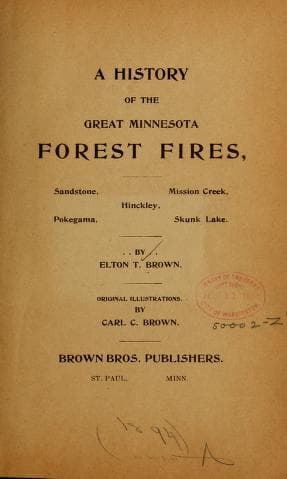
The Hinckley Firestorm of 1894: A Deadly Inferno in Minnesota
On September 1, 1894, a catastrophic firestorm swept through the small town of Hinckley, Minnesota, claiming the lives of hundreds and leaving a lasting scar on the community. The Great Hinckley Fire, fueled by severe drought conditions and high winds, engulfed the surrounding forests and towns, creating a wall of flames that threatened to consume everything in its path. Amidst the chaos, a train engineer named John W. McGowan made a heroic decision to rescue survivors by racing a train through the inferno, providing a lifeline to those fleeing the flames.
Drought Conditions and the Fire's Origins
The summer of 1894 was marked by an unprecedented drought across Minnesota, creating a perfect storm for wildfires. The state had experienced a dry spell for several months, with little to no rainfall. This prolonged drought dried out the underbrush and trees, making them highly flammable. According to the U.S. Forest Service, the combination of dry conditions and high temperatures set the stage for one of the deadliest fire events in U.S. history [3].
As the drought continued, the forests surrounding Hinckley became increasingly vulnerable. The area was primarily composed of pine trees, which are particularly susceptible to fire. By the end of August, the conditions were ripe for disaster. On the morning of September 1, a series of small fires ignited in the region, likely sparked by human activity or lightning strikes. These fires merged into a massive conflagration, fueled by strong winds that spread the flames rapidly [1].
The firestorm's origins can be traced back to a combination of natural and human factors. The dry summer had left the landscape parched, while the increasing number of settlers in the area had led to more human activity, including logging and land clearing. These activities often left behind debris that could easily ignite. The National Weather Service notes that the combination of these factors created a tinderbox environment, where even the smallest spark could lead to disaster [2].
The Path of Destruction: Hinckley and Beyond
As the firestorm approached Hinckley, it became clear that the town was in grave danger. The flames moved with alarming speed, creating a terrifying spectacle as they consumed everything in their path. Eyewitness accounts describe the sky turning black with smoke and ash, and the air filled with the acrid smell of burning wood. The firestorm was not just a local event; it spread across a vast area, affecting nearby towns and communities [2].
The town of Hinckley, with a population of approximately 1,000 residents, was particularly hard hit. As the flames closed in, many residents attempted to flee. Some sought refuge in the nearby Kettle River, while others tried to escape by road. The fire's intensity made it nearly impossible for people to find safe passage. The flames reached temperatures that could ignite clothing and hair, forcing individuals to make desperate choices [5].
The firestorm's path of destruction extended beyond Hinckley itself. Nearby towns such as Sandstone and Brook Park also faced the wrath of the flames. The fire consumed homes, businesses, and entire forests, leaving a trail of devastation in its wake. The Library of Congress documents that the fire ultimately burned over 400,000 acres of land, illustrating the scale of the disaster [4].
The Train Escape: A Race Against Time
In the midst of the chaos, John W. McGowan, the engineer of the Northern Pacific Railway, made a fateful decision. Realizing the imminent danger, he prepared his train to evacuate survivors from Hinckley. The train, a steam locomotive, was one of the few means of escape available. As the fire approached, McGowan and his crew worked quickly to load passengers onto the train, many of whom were terrified and disoriented [1].
The train departed from Hinckley at a time when the flames were just moments away from engulfing the station. McGowan faced a daunting challenge: navigating through a burning forest while ensuring the safety of those on board. As the train raced along the tracks, the heat from the flames was intense, and the smoke made visibility nearly impossible. Eyewitness accounts describe the train as it barreled through the inferno, with flames licking at the sides and embers raining down like fiery snow [5].
Despite the overwhelming odds, McGowan managed to keep the train on course. He later recounted how he had to blow the whistle continuously to warn anyone nearby of the approaching train. The sound echoed through the chaos, providing a glimmer of hope for those who could hear it. The train ultimately reached the safety of the nearby town of Sandstone, where survivors could regroup and find refuge [2].
McGowan's actions during the firestorm have been celebrated as heroic. His quick thinking and bravery saved many lives, and he became a symbol of hope amidst the tragedy. The story of the train escape has been recounted in various historical accounts, emphasizing the importance of courage in the face of disaster [5].
The Aftermath: Casualties and Community Response
The Great Hinckley Fire left a devastating toll on the community. Estimates suggest that between 400 and 1,000 people lost their lives in the fire, making it one of the deadliest wildfires in U.S. history. The exact number of casualties remains uncertain, as many bodies were never recovered or identified. The town of Hinckley itself was nearly destroyed, with most of its buildings reduced to ashes [4].
In the wake of the disaster, the surviving residents faced the daunting task of rebuilding their lives. Local organizations and the state government mobilized to provide assistance to those affected. Relief efforts included food, shelter, and medical care for the injured. The community came together to support one another, demonstrating resilience in the face of tragedy [1].
The aftermath of the fire also saw a significant influx of aid from neighboring communities and organizations. Donations poured in from across the state, with people offering clothing, food, and financial assistance to help those who had lost everything. The response highlighted the strength of community bonds and the willingness of individuals to help one another in times of crisis [4].
The fire also prompted changes in fire management policies and practices. In the years following the Hinckley fire, the U.S. Forest Service began to implement more stringent regulations regarding land management and fire prevention. The lessons learned from this disaster influenced how wildfires were approached in the future, emphasizing the importance of preparedness and response [3].
Recording the Dead: A Community's Grief
In the aftermath of the fire, the task of identifying the victims became a somber priority for the community. Many families were left without closure, as loved ones went missing in the chaos. Local authorities and volunteers worked tirelessly to document the names of the deceased, creating a record of the tragedy. The Library of Congress holds accounts of these efforts, which included collecting testimonies from survivors and compiling lists of those who perished [4].
Memorials were established to honor the victims of the Hinckley fire. One of the most notable is the Hinckley Fire Memorial, which stands as a tribute to those who lost their lives. The memorial serves as a reminder of the community's resilience and the importance of remembering the past. Each year, residents gather to commemorate the anniversary of the fire, reflecting on the lessons learned and the lives lost [1].
The emotional toll of the disaster extended far beyond the immediate loss of life. Survivors grappled with grief and trauma, and many struggled to rebuild their lives in the aftermath of such a devastating event. Community support played a crucial role in helping individuals cope with their losses, as neighbors banded together to provide comfort and assistance [4].
The Legacy of the Great Hinckley Fire
The Great Hinckley Fire of 1894 remains a significant event in Minnesota's history. It serves as a stark reminder of the destructive power of wildfires and the impact of environmental conditions on communities. The fire not only shaped the landscape of the region but also influenced policies regarding forest management and fire safety [3].
In popular culture, the Hinckley fire has been referenced in literature and historical accounts, highlighting the bravery of those who faced the flames and the tragedy of those who did not survive. The story of John W. McGowan and his daring train escape has become a symbol of hope amidst despair, illustrating the human spirit's capacity for courage in the face of overwhelming odds [5].
The legacy of the Hinckley Fire extends into modern discussions about climate change and wildfire management. As climate change continues to affect weather patterns and increase the frequency of droughts, the lessons learned from the Great Hinckley Fire remain relevant today. Communities across the United States are reminded of the importance of preparedness and the need for effective fire management strategies to protect lives and property from the threat of wildfires [2].
In the years following the fire, the state of Minnesota implemented various measures to improve fire safety and prevention. These included better training for firefighters, improved communication systems, and increased funding for fire management programs. The tragedy of the Hinckley Fire served as a catalyst for change, prompting a reevaluation of how wildfires were approached and managed [3].
Remembering the Hinckley Firestorm
The Hinckley firestorm of 1894 was a tragic event that reshaped the community and left a lasting legacy. The bravery of individuals like John W. McGowan, who risked their lives to save others, serves as an enduring testament to the human spirit. As we reflect on this disaster, it is crucial to remember the lessons learned and to honor the memory of those who lost their lives in the flames.
The story of the Great Hinckley Fire is not just a tale of destruction; it is also one of resilience and recovery. The community's ability to come together in the face of adversity speaks to the strength of the human spirit. As new generations learn about this event, it is essential to keep the memory alive, ensuring that the sacrifices made and the lessons learned are never forgotten [1].