
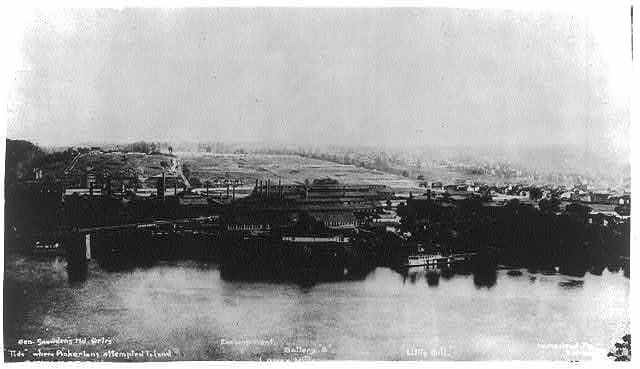
The Homestead Strike of 1892: A Clash on the Monongahela
In the summer of 1892, a violent confrontation erupted at the Carnegie Steel Company's Homestead plant in Pennsylvania. This conflict, known as the Homestead Strike, marked a significant moment in U.S. labor history [1]. Workers, organized under the Amalgamated Association of Iron and Steel Workers, found themselves locked out by management, leading to a bloody clash with the Pinkerton National Detective Agency [4]. The events that unfolded not only highlighted the struggles of labor during the Gilded Age but also set the stage for future labor relations in America.
Background: The Gilded Age and Labor Struggles
The Gilded Age, spanning from the 1870s to about 1900, was a period of rapid industrialization and economic growth in the United States [5]. However, this era was also characterized by stark economic inequality and harsh working conditions for laborers. As factories expanded and profits soared, workers faced long hours, low wages, and dangerous environments [2]. Labor unions began to form in response, seeking to improve conditions and secure better pay.
The rise of industrial giants like Andrew Carnegie and John D. Rockefeller epitomized the era's wealth accumulation, while the working class struggled to make ends meet. The Amalgamated Association of Iron and Steel Workers emerged as a powerful union representing skilled workers in the steel industry. By the early 1890s, the union had successfully negotiated contracts that provided decent wages and reasonable working hours [3]. However, as the steel industry boomed, the demand for profits led to increasing tensions between management and labor, setting the stage for conflict at Homestead.
The Lockout Begins: Carnegie's Strategy
In 1892, Andrew Carnegie, the owner of Carnegie Steel, sought to cut costs and increase productivity at the Homestead plant. He aimed to reduce the influence of the Amalgamated Association, which had successfully negotiated favorable terms for its members. In June of that year, as the union's contract was set to expire, Carnegie and his management team, led by plant manager Henry Clay Frick, decided to lock out the workers.
Frick's strategy was to break the union's power by refusing to negotiate a new contract. Instead, he hired the Pinkerton National Detective Agency to secure the plant and protect strikebreakers who would be brought in to replace the locked-out workers [4]. This decision would have dire consequences, igniting a conflict that would draw national attention. The lockout was not merely a business decision; it was a calculated move to undermine the union's strength and assert management's control over labor conditions.
The Arrival of the Pinkertons: A Battle Ensues
On July 6, 1892, the situation escalated dramatically. As the Pinkerton agents arrived by boat on the Monongahela River, they were met by a large group of striking workers and their supporters. The workers, determined to prevent the Pinkertons from entering the plant, formed a barricade along the riverbank. Tensions ran high as both sides prepared for confrontation.
The Pinkertons, armed and prepared for violence, attempted to land on the shore. A fierce battle broke out, with workers firing upon the agents and the Pinkertons returning fire. The clash resulted in several deaths and injuries on both sides [1]. By the end of the day, the Pinkertons were forced to retreat, and the workers celebrated their temporary victory. However, the violence had only just begun. The skirmish at Homestead became a symbol of the broader struggle between labor and capital, illustrating the lengths to which workers would go to defend their rights.
The Pennsylvania Militia and the Aftermath of the Strike
In response to the violence, Pennsylvania Governor Robert E. Pattison ordered the state militia to intervene. On July 12, the militia arrived in Homestead, effectively taking control of the town. The presence of armed troops escalated tensions further, and the strikers found themselves facing not only the Pinkertons but also the state militia. The workers, who had initially felt empowered by their resistance, now faced overwhelming force.
The strike continued for several months, with the union attempting to maintain solidarity despite the overwhelming pressure from management and the state. However, the tide began to turn against the strikers. The state militia enforced order, and the company began to bring in non-union workers to operate the plant. By November 1892, the strike was effectively broken, and the Amalgamated Association's influence in the steel industry was severely diminished [2]. The defeat at Homestead was a significant setback for organized labor, demonstrating the challenges unions faced in the face of corporate power and government intervention.
The Long-Term Impact of the Homestead Strike
The Homestead Strike had lasting implications for labor relations in the United States. It exposed the lengths to which industrialists would go to suppress union activity and highlighted the violent nature of labor disputes during the Gilded Age [5]. The strike also illustrated the challenges faced by labor organizations in their fight for workers' rights.
In the years following the strike, the Amalgamated Association struggled to regain its footing. The defeat at Homestead marked a turning point in the labor movement, as many unions faced increased hostility from employers and government officials. The strike also contributed to a growing public awareness of labor issues, leading to increased support for workers' rights and eventual reforms in labor laws [4]. The events at Homestead were not isolated; they were part of a broader pattern of labor unrest that characterized the era, including the Pullman Strike of 1894 and the rise of the American Federation of Labor.
The Legacy of the Homestead Strike in American History
The events at Homestead have been studied extensively as a pivotal moment in American labor history. The clash between workers and the Pinkertons became emblematic of the broader struggles faced by laborers during the Gilded Age [3]. It served as a stark reminder of the violent confrontations that often accompanied labor disputes and the lengths to which both sides would go to assert their interests.
The Homestead Strike also played a role in shaping public perception of labor unions. While the strike was initially seen as a victory for the workers, the violent outcomes and the involvement of the militia shifted public opinion. Many began to view unions as disruptive forces rather than protectors of workers' rights. This perception would take decades to change, as labor movements continued to evolve and adapt to the challenges of the industrial age. The strike's legacy was further complicated by the rise of anti-union sentiment, which was fueled by the violence and chaos that accompanied the events at Homestead.
Homestead Today: A National Historic Landmark
Today, the site of the Homestead Strike is preserved as part of the Homestead Grays Historic Site, recognized for its significance in American labor history [3]. The site serves as a reminder of the struggles faced by workers and the ongoing fight for labor rights. Visitors can learn about the events of 1892 and the broader context of labor movements in the United States. The preservation of the site reflects a growing recognition of the importance of labor history in understanding the nation's past.
The legacy of the Homestead Strike continues to resonate in contemporary discussions about labor rights, workplace conditions, and the role of unions in American society. As workers today advocate for better wages and working conditions, the lessons learned from the Homestead Strike remain relevant. The ongoing debates about labor rights, collective bargaining, and the role of government in labor disputes echo the struggles faced by the workers at Homestead.
The Broader Context of Labor Movements in the Gilded Age
The Homestead Strike did not occur in a vacuum; it was part of a larger tapestry of labor unrest during the Gilded Age. Strikes, protests, and labor organizing were common as workers sought to improve their conditions [2]. The period saw significant events such as the Great Railroad Strike of 1877, which was one of the first major nationwide strikes in the United States, and the Haymarket Affair of 1886, which highlighted the tensions between labor and law enforcement.
These events contributed to a growing awareness of labor issues among the public and policymakers. The Homestead Strike, in particular, underscored the violent nature of labor disputes and the willingness of industrialists to use force to maintain control. The involvement of the Pinkertons and the state militia in Homestead was not an isolated incident; it reflected a broader trend of using private security forces and state power to suppress labor movements [5].
The Role of Media in Shaping Public Perception
Media coverage of the Homestead Strike played a crucial role in shaping public perception of labor and management. Newspapers reported extensively on the violence and chaos, often framing the conflict in sensational terms. The portrayal of the strikers as violent and unruly contrasted sharply with the image of the Pinkertons as defenders of order and stability. This framing had lasting effects on public attitudes toward labor unions and their legitimacy [4].
The media's role in the Homestead Strike exemplifies the power of narrative in shaping public opinion. While some outlets sympathized with the workers, others echoed the sentiments of industrialists, portraying unions as threats to social order. This division in media coverage contributed to the polarization of public opinion regarding labor issues, a dynamic that continues to this day.
The Evolution of Labor Rights Post-Homestead
In the aftermath of the Homestead Strike, labor rights continued to evolve in the United States. The defeat of the Amalgamated Association at Homestead did not signal the end of labor organizing; rather, it prompted a reevaluation of strategies among labor leaders. The American Federation of Labor (AFL), which focused on organizing skilled workers and advocating for pragmatic reforms, gained prominence in the years following the strike [2].
The AFL's approach contrasted with the more radical tactics of some earlier labor movements, emphasizing negotiation and collective bargaining over direct confrontation. This shift reflected a recognition of the need for a more sustainable approach to labor relations, one that could navigate the complexities of industrial capitalism. The lessons learned from the Homestead Strike informed labor leaders' strategies as they sought to build solidarity and achieve meaningful reforms.
The Homestead Strike in Popular Culture
The Homestead Strike has also left an indelible mark on American popular culture. It has been depicted in literature, film, and art, serving as a powerful symbol of the struggle for workers' rights [5]. The events at Homestead have inspired numerous works that explore themes of class conflict, solidarity, and the fight for justice.
One notable example is the play "The Steel Strike" by playwright and labor activist John Dos Passos, which dramatizes the events of the strike and its impact on the workers and their families. Such representations have helped to keep the memory of the Homestead Strike alive, ensuring that future generations understand the significance of this pivotal moment in labor history.
Conclusion: The Homestead Strike's Place in Labor History
The Homestead Strike of 1892 was more than just a labor dispute; it was a defining moment in the struggle for workers' rights in the United States. The violent clash between the Amalgamated Association and the Pinkerton agents highlighted the deep divisions between labor and management during the Gilded Age [1]. The aftermath of the strike had lasting effects on labor relations, shaping the future of unions and their role in American society.
As we reflect on the events of Homestead, it is essential to recognize the ongoing challenges faced by workers and the importance of collective action in advocating for rights and protections. The legacy of the Homestead Strike serves as a powerful reminder of the struggles that have shaped the labor movement and the continued fight for justice in the workplace. The lessons learned from this conflict remain relevant as workers today continue to advocate for fair wages, safe working conditions, and the right to organize.