
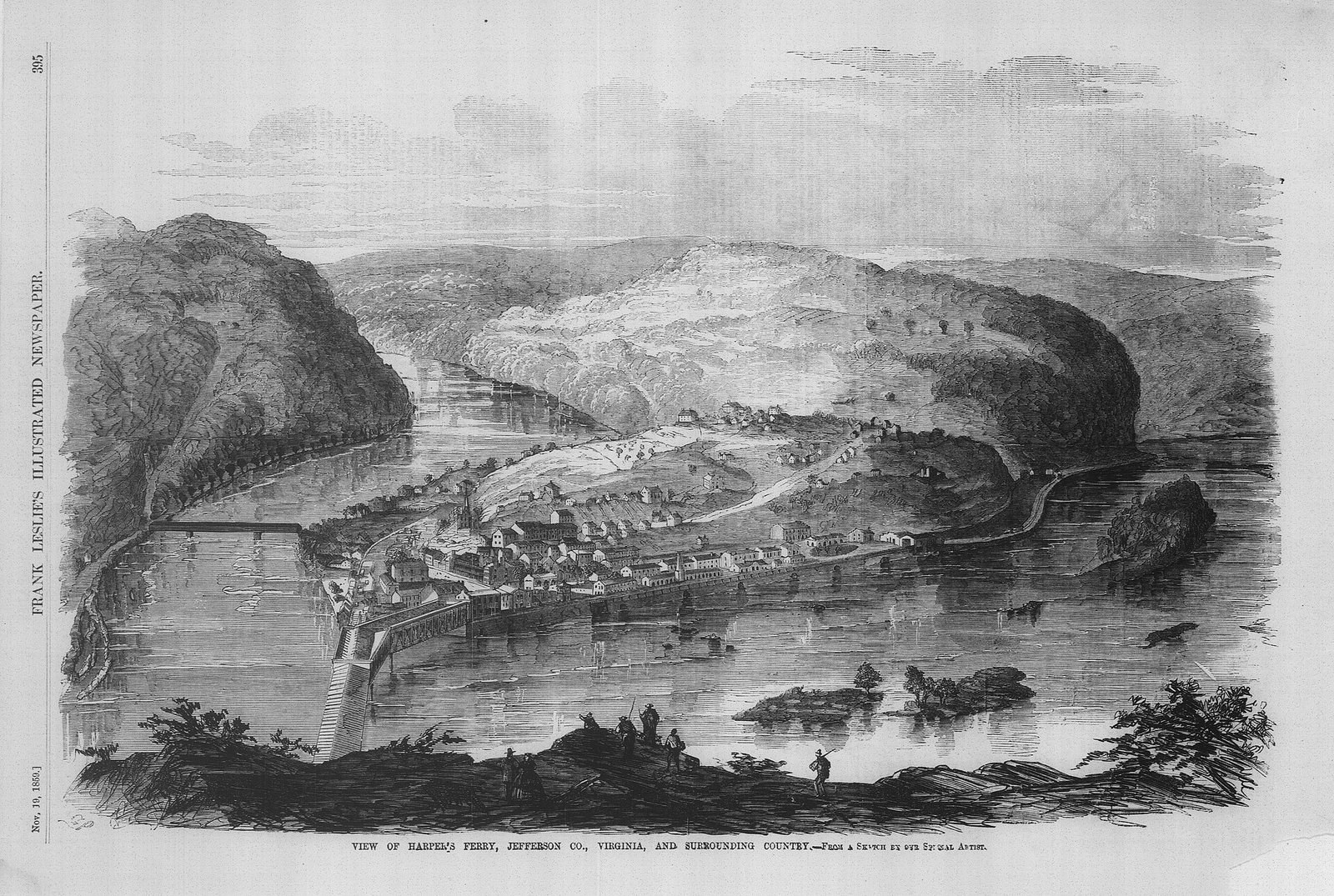
John Brown's Raid at Harpers Ferry: A Prelude to Civil War
On the night of October 16, 1859, John Brown and a small band of followers launched a daring raid on the federal armory in Harpers Ferry, Virginia [1]. This audacious attempt aimed to seize weapons and incite a slave rebellion across the South. Although the raid ended in failure, it electrified both the North and South, setting the stage for the Civil War. Brown's actions and subsequent trial would frame him as either a martyr for abolition or a madman, reflecting the deepening divisions in American society.
The Plan: John Brown’s Vision of Armed Resistance
John Brown, a fervent abolitionist, believed that armed insurrection was the only way to end slavery in the United States [5]. His radical views were shaped by his experiences in the violent conflicts over slavery in Kansas, known as "Bleeding Kansas," where he had already engaged in violent confrontations against pro-slavery forces. By 1859, Brown had devised a plan to raid the federal armory at Harpers Ferry, which he viewed as a strategic location for arming enslaved people and rallying them to revolt.
Brown's plan involved capturing the armory, seizing its weapons, and then using them to liberate enslaved people in the surrounding areas. He envisioned a network of freed slaves and abolitionists joining forces to create a stronghold in the Appalachian Mountains. This would serve as a base for further uprisings against slavery throughout the South. Brown believed that the federal government would eventually support his cause, viewing the raid as a catalyst for a broader uprising against the institution of slavery. His conviction was that the moral imperative to end slavery justified the use of violence, a belief that would resonate with some and horrify others.
The Harpers Ferry Raid: Execution and Immediate Aftermath
On the evening of October 16, Brown and his 21 followers, including several of his sons, crossed the Potomac River into Harpers Ferry [2]. They quickly captured the armory and a nearby rifle factory, taking hostages and securing weapons. The initial phase of the raid went relatively smoothly, but Brown's plans quickly unraveled. Local militia and citizens, alarmed by the unusual activity, began to mobilize against the raiders.
By the morning of October 17, Brown's forces were surrounded by local militia and U.S. Marines, led by Colonel Robert E. Lee [1]. Lee's troops arrived in Harpers Ferry to quell the uprising, and a fierce confrontation ensued. The Marines stormed the armory, and after a brief but intense battle, they captured Brown and most of his men. The raid lasted less than 36 hours, but its implications would reverberate throughout the nation. The failure of the raid not only thwarted Brown's immediate goals but also highlighted the precarious balance of power between pro-slavery and anti-slavery factions.
Robert E. Lee’s Marines: The Response to the Raid
Colonel Robert E. Lee's response to the raid was swift and decisive. As a Virginian and a future Confederate general, Lee understood the gravity of the situation. He recognized that Brown's actions could ignite tensions between the North and South. Lee led a contingent of U.S. Marines to Harpers Ferry, arriving on the morning of October 18 [4]. His forces quickly overwhelmed Brown's small group, leading to the capture of Brown and the deaths of several of his men.
The military response was not just about quelling a rebellion; it was also a demonstration of federal authority. The U.S. government could not afford to appear weak in the face of such a challenge. The raid underscored the fragility of the nation, revealing how deeply divided it had become over the issue of slavery. Lee's actions would later be framed within the larger narrative of the Civil War, as he would eventually lead Confederate forces against the Union. The raid at Harpers Ferry became a flashpoint that illustrated the escalating tensions between the two regions.
The Trial of John Brown: Martyr or Madman?
Following his capture, John Brown was taken to trial in Virginia. The trial began on October 27, 1859, and quickly became a national spectacle [3]. Brown was charged with treason against the Commonwealth of Virginia, murder, and inciting a slave insurrection. His defense was complicated by the fact that he openly admitted to his intentions, viewing his actions as morally justified in the fight against slavery.
Throughout the trial, Brown maintained a defiant demeanor. He used the courtroom as a platform to express his beliefs about slavery and the necessity of armed resistance. His statements garnered sympathy from many in the North, who began to view him as a martyr for the abolitionist cause. Conversely, Southern newspapers and politicians portrayed him as a madman, a terrorist who threatened the very fabric of Southern society. The trial became a battleground for competing narratives about the morality of slavery and the legitimacy of violent resistance.
The trial concluded on November 2, 1859, with Brown found guilty on all counts. He was sentenced to death by hanging, a punishment that would further polarize public opinion. Supporters of Brown rallied to his cause, while opponents used the trial to justify harsher measures against abolitionists. The trial's outcome was not merely a legal verdict; it was a reflection of the broader societal tensions that were reaching a boiling point.
Media Framing: The North and South React
The media played a crucial role in shaping public perception of John Brown and the Harpers Ferry raid. Northern newspapers largely framed Brown as a heroic figure, a martyr who sacrificed himself for the cause of freedom [5]. Publications like the New York Tribune and the Boston Commonwealth highlighted his bravery and commitment to ending slavery. They portrayed the raid as a necessary act of resistance against an immoral institution.
In contrast, Southern newspapers condemned Brown as a fanatic and a criminal. The Richmond Enquirer and other outlets emphasized the threat he posed to Southern society, depicting him as a dangerous radical whose actions justified the need for strict measures against abolitionists. They argued that Brown's raid was proof that the North was intent on inciting violence and chaos in the South. This media framing deepened the divide between the North and South, contributing to the growing tensions that would ultimately lead to the Civil War.
The differing portrayals of Brown in the media also reflected the broader ideological battles of the time. In the North, Brown was increasingly seen as a symbol of moral courage, while in the South, he was viewed as a harbinger of violence and chaos. This polarization in public opinion was indicative of the larger societal rifts that were forming, as both sides prepared for the inevitable conflict.
The Execution: A Martyrdom That Ignited a Movement
On December 2, 1859, John Brown was executed by hanging in Charles Town, Virginia [2]. His last words were a powerful testament to his beliefs: "I am now quite certain that the crimes of this guilty land will never be purged away but with blood." This statement resonated with many in the North, further solidifying his status as a martyr for the abolitionist cause. Brown's execution was not merely the end of his life; it became a rallying point for those who opposed slavery.
Brown's execution sparked a wave of protests and memorials across the North. Abolitionists held vigils and rallies, honoring his sacrifice and calling for an end to slavery. His actions at Harpers Ferry became a rallying cry for those who believed in armed resistance against the institution of slavery. The raid and its aftermath galvanized the abolitionist movement, leading to increased support for anti-slavery candidates and organizations. Brown's legacy was cemented as a symbol of the struggle for freedom, inspiring others to take up the cause.
Conversely, Brown's execution also intensified fears in the South. Many white Southerners viewed his actions as a direct threat to their way of life. The raid and its violent conclusion heightened tensions and led to a crackdown on abolitionist activities in Southern states. Brown's legacy became a flashpoint in the ongoing conflict over slavery, illustrating how deeply entrenched the divisions had become. The fear of further insurrections loomed large, prompting Southern states to bolster their defenses against perceived threats from the North.
The Legacy of John Brown and the Harpers Ferry Raid
The Harpers Ferry raid and John Brown's subsequent trial and execution had lasting implications for the United States. The event underscored the growing rift between the North and South, highlighting the moral and political complexities surrounding slavery [5]. Brown's actions and the national response to them foreshadowed the violent conflict that would erupt in the Civil War just a few years later. The raid served as a stark reminder of the lengths to which individuals would go in pursuit of their beliefs, and it raised critical questions about the morality of armed resistance.
In the years following the raid, Brown's legacy continued to evolve. He became a symbol of resistance for abolitionists and a cautionary tale for those who supported slavery. His actions prompted discussions about the morality of armed resistance and the lengths to which individuals would go to fight for their beliefs. The raid at Harpers Ferry remains a pivotal moment in American history, illustrating the deep-seated conflicts that would ultimately lead to the Civil War.
Moreover, the raid and its aftermath influenced subsequent abolitionist movements and strategies. Many activists began to reconsider their approaches to fighting slavery, with some advocating for more militant tactics in light of Brown's example. The raid also prompted a reevaluation of the federal government's role in addressing the issue of slavery, as the events at Harpers Ferry exposed the limitations of existing policies and the urgent need for action.
The Inevitable March Toward Civil War
John Brown's raid at Harpers Ferry was more than just a failed uprising; it was a catalyst that made the Civil War feel inevitable. The raid exposed the fractures within American society and highlighted the moral dilemmas surrounding slavery. Brown's trial and execution further polarized public opinion, setting the stage for the violent conflict that would soon engulf the nation.
As the country moved closer to war, the legacy of John Brown continued to resonate. His actions at Harpers Ferry became emblematic of the struggle for freedom and justice, a struggle that would ultimately define the nation. The events of October 1859 were not just a moment in time but a harbinger of the tumultuous years to come. The raid served as a precursor to the larger conflict that would engulf the nation, illustrating the deep-seated divisions that had formed over the issue of slavery.
In the years that followed, the memory of John Brown would be invoked by both sides of the conflict. Abolitionists would continue to celebrate his legacy as a martyr, while pro-slavery advocates would use his actions to justify their fears and defenses against Northern aggression. The story of John Brown and the raid at Harpers Ferry would become a critical part of the narrative surrounding the Civil War, illustrating the complexities of morality, resistance, and the fight for justice in a deeply divided nation.