
The Oklahoma City Bombing: A Day of Terror in 1995
On April 19, 1995, a truck bomb exploded outside the Alfred P. Murrah Federal Building in Oklahoma City, Oklahoma, killing 168 people and injuring over 600 others [1]. This devastating act of domestic terrorism remains one of the deadliest attacks on U.S. soil. The explosion occurred at 9:02 AM, shattering the peace of a typical spring morning and forever altering the lives of countless individuals and families. The attack was not just a local tragedy; it sent shockwaves across the nation, forcing Americans to confront the reality of domestic terrorism.
The bomb, composed of a mixture of ammonium nitrate fertilizer and fuel oil, was detonated by Timothy McVeigh, a former U.S. Army soldier. McVeigh's motivations were rooted in his extreme anti-government beliefs, which had been fueled by events such as the Waco siege in 1993 and the Ruby Ridge incident in 1992. He viewed the federal government as an oppressive force and believed that violent action was necessary to combat it. The attack was meticulously planned, with McVeigh choosing the Murrah Building due to its status as a federal facility and its proximity to a daycare center, which tragically contributed to the high casualty count [2].
The Planning and Execution of the Attack
Timothy McVeigh was not alone in his actions; he was joined by Terry Nichols, who assisted in the planning and logistics of the bombing. The two men had met through a network of anti-government extremists, and their shared ideology fueled their commitment to the attack. In the months leading up to the bombing, McVeigh rented a storage unit in Junction City, Kansas, where he assembled the bomb components. He also acquired a yellow Ryder truck, which would serve as the delivery vehicle for the explosive device [3].
On the morning of the bombing, McVeigh parked the truck in front of the Murrah Building and lit the fuse. He then fled the scene on foot, heading toward a nearby motel. The explosion was catastrophic, resulting in the complete destruction of the building's north side and causing extensive damage to surrounding structures. The blast was felt miles away, and the aftermath revealed a scene of utter devastation. Rescue workers and first responders rushed to the site, searching for survivors amid the rubble [1]. The destruction was so extensive that it took weeks to clear the debris and account for all victims.
The immediate impact of the bombing was profound. Among the 168 people killed were 19 children, many of whom were in the daycare center located on the second floor of the Murrah Building. The loss of innocent lives shocked the nation and brought attention to the growing threat of domestic terrorism [2]. The sheer scale of the tragedy prompted a national conversation about the motivations behind such violence and the need for a comprehensive response to domestic extremism.
The Immediate Aftermath and Response
In the immediate aftermath of the bombing, the city of Oklahoma City was thrown into chaos. Emergency services worked tirelessly to rescue survivors and recover the deceased. The destruction was so extensive that it took weeks to clear the debris and account for all victims. The psychological toll on the community was immense, with many residents grappling with grief and trauma. Memorial services were held, and support networks were established to help those affected by the tragedy [3].
The federal government responded swiftly to the attack. President Bill Clinton addressed the nation, condemning the bombing and vowing to bring those responsible to justice. The FBI launched an extensive investigation, which would become one of the largest in U.S. history. Investigators quickly identified McVeigh as a suspect, aided by eyewitness accounts and surveillance footage that captured the truck before the explosion [1]. The investigation was not only focused on McVeigh but also on the broader network of individuals who shared his extremist views.
As the investigation unfolded, it became clear that McVeigh's actions were not isolated. They were part of a growing trend of domestic terrorism fueled by anti-government sentiment and extremist ideologies. The FBI's investigation revealed connections to various militia groups and other radical organizations, highlighting the need for a coordinated response to this emerging threat [4]. The bombing served as a wake-up call for law enforcement agencies, prompting them to take the threat of homegrown terrorism seriously.
The Investigation and Arrest of Timothy McVeigh
Timothy McVeigh was arrested just 90 minutes after the bombing. He was pulled over by an Oklahoma State Trooper for driving without a license plate. During the traffic stop, McVeigh was found to be in possession of a firearm, which led to his arrest. As authorities began to piece together the evidence linking him to the bombing, they discovered his anti-government beliefs and connections to extremist groups [3]. The speed of his arrest underscored the effectiveness of law enforcement in responding to the crisis.
The investigation revealed that McVeigh had been influenced by various radical ideologies, including those espoused by the militia movement. His actions were not isolated; they were part of a broader trend of domestic terrorism that had been gaining traction in the United States during the 1990s. The FBI's investigation also uncovered the involvement of Terry Nichols, who was arrested shortly after McVeigh. Nichols was charged with conspiracy to use a weapon of mass destruction and eight counts of involuntary manslaughter for the deaths of federal law enforcement personnel [4].
As the investigation progressed, authorities uncovered a network of individuals who had supported McVeigh and Nichols in their planning. This included people who had provided logistical support, as well as those who had shared their extremist beliefs. The investigation highlighted the importance of monitoring and addressing the rise of domestic extremist groups, which had been largely overlooked prior to the bombing [5].
The Trial of Timothy McVeigh
The trial of Timothy McVeigh began in 1997 and was held in Denver, Colorado, due to concerns about the potential for an impartial jury in Oklahoma City. The prosecution presented a strong case, relying on forensic evidence, eyewitness testimonies, and McVeigh's own statements. The defense argued that McVeigh was a misguided patriot who believed he was acting in defense of his country, but this argument failed to resonate with the jury [5]. The trial was a painful reminder of the tragedy that had unfolded just two years earlier, and it drew significant media attention.
On June 2, 1997, McVeigh was found guilty on all counts and sentenced to death. The verdict was met with relief by many, as it signified a measure of justice for the victims and their families. McVeigh's execution took place on June 11, 2001, making him the first federal prisoner to be executed in the United States since 1963. His death did not erase the pain felt by the victims' families, nor did it end the conversation about domestic terrorism in America [4]. The trial and subsequent execution sparked debates about the death penalty, the effectiveness of the justice system, and the broader implications of domestic terrorism.
The trial also served as a platform for victims' families to share their stories and seek closure. Many family members attended the proceedings, and their testimonies highlighted the profound impact of the bombing on their lives. The emotional weight of the trial underscored the need for support systems for those affected by acts of terrorism and violence [3]. The media coverage of the trial brought national attention to the issue of domestic terrorism, prompting discussions about prevention and intervention strategies.
The Impact on National Policy and Security
The Oklahoma City bombing had profound implications for national security and law enforcement. In the wake of the attack, the federal government recognized the need to address the growing threat of domestic terrorism. The bombing prompted a reevaluation of security measures at federal buildings and other potential targets. The Department of Justice established the Anti-Terrorism Task Force, which aimed to improve coordination among federal, state, and local law enforcement agencies in combating domestic terrorism [4].
Additionally, the bombing led to the passage of the Antiterrorism and Effective Death Penalty Act of 1996. This legislation aimed to enhance the government's ability to prevent and respond to acts of terrorism. It included provisions for expedited deportation of non-citizens involved in terrorist activities and increased penalties for those convicted of terrorism-related offenses. The act also aimed to streamline the appeals process for death penalty cases, reflecting a growing urgency to address the threat posed by domestic extremists [3].
The bombing also influenced the way law enforcement agencies approached intelligence gathering and community engagement. In the years following the attack, there was a concerted effort to build relationships with local communities to identify and address potential threats. This included outreach programs aimed at educating the public about the signs of radicalization and the importance of reporting suspicious activities [5]. The lessons learned from Oklahoma City continue to inform counter-terrorism strategies and community outreach efforts aimed at preventing radicalization.
The Oklahoma City National Memorial
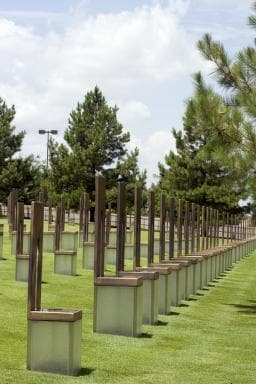
In honor of the victims of the bombing, the Oklahoma City National Memorial was established at the site of the Murrah Building. The memorial was dedicated on April 19, 2000, five years after the attack. It serves as a place of reflection and remembrance for the lives lost that day. The design of the memorial includes the Reflecting Pool, the Field of Empty Chairs, and the Survivor Tree, each symbolizing different aspects of the tragedy and resilience of the community [2].
The Field of Empty Chairs consists of 168 chairs, each representing a victim of the bombing. The chairs are arranged by age, with smaller chairs representing the children who lost their lives. The Survivor Tree, an American elm that withstood the blast, stands as a symbol of strength and survival. The memorial has become a site of pilgrimage for those seeking to honor the victims and learn about the impact of domestic terrorism [5]. The design elements of the memorial serve as poignant reminders of the lives lost and the enduring spirit of the community.
The Oklahoma City National Memorial also includes the Memorial Museum, which provides an in-depth look at the events leading up to the bombing, the attack itself, and its aftermath. The museum features exhibits that educate visitors about the dangers of extremism and the importance of tolerance and understanding in a diverse society [2]. The museum's educational initiatives aim to foster dialogue about the impact of violence and the need for a collective commitment to preventing future tragedies.
The memorial and museum have become integral parts of the community, serving not only as a tribute to the victims but also as a resource for education and awareness. They host various events, including memorial services and educational programs, aimed at promoting understanding and healing. The legacy of the Oklahoma City bombing continues to resonate, reminding visitors of the importance of compassion and vigilance in the face of hatred [3].
The Legacy of the Oklahoma City Bombing
The Oklahoma City bombing remains a pivotal moment in U.S. history, highlighting the dangers of domestic terrorism and the need for vigilance against extremist ideologies. It served as a wake-up call for law enforcement agencies, prompting them to take the threat of homegrown terrorism seriously. The attack also sparked discussions about the role of government in addressing grievances and the fine line between free speech and incitement to violence [4].
In the years following the bombing, the United States has witnessed a rise in domestic terrorism, with various groups espousing extremist views. The lessons learned from Oklahoma City continue to inform counter-terrorism strategies and community outreach efforts aimed at preventing radicalization. The bombing also led to increased awareness of the psychological impact of such tragedies on survivors and families of victims, prompting the development of support systems and resources for those affected [5].
The legacy of the Oklahoma City bombing is a reminder of the fragility of peace and the importance of fostering a society that values dialogue and understanding over violence. As the nation continues to grapple with issues of extremism and division, the memory of April 19, 1995, serves as a call to action for individuals and communities to stand against hatred and work towards a more inclusive future. The ongoing discussions about domestic terrorism reflect a commitment to learning from the past and ensuring that such tragedies are not repeated.
In conclusion, the Oklahoma City bombing was not just an isolated incident; it was a significant event that reshaped the landscape of American security and public consciousness. The impact of that day continues to be felt, as communities and law enforcement agencies strive to prevent future acts of violence and promote a culture of understanding and resilience. The story of Oklahoma City is one of tragedy, but also of hope and determination to build a safer society for all.