
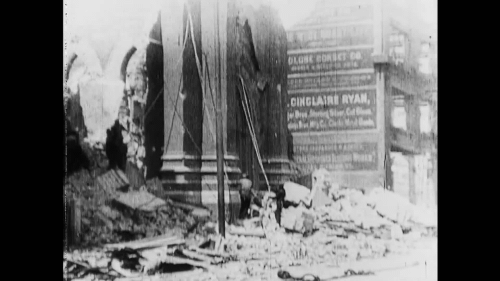
On April 18, 1906, at 5:12 AM, the ground beneath San Francisco trembled violently for less than a minute. This seismic event, known as the 1906 San Francisco earthquake, registered an estimated magnitude of 7.9. The quake itself caused significant destruction, but it was the fires that erupted in the aftermath that would devastate the city and reshape its future. Over the course of several days, flames consumed entire neighborhoods, leading to one of the deadliest disasters in U.S. history.
The Earthquake: A City Shaken
The 1906 San Francisco earthquake struck along the San Andreas Fault, a major fault line that runs through California. The quake was felt as far away as Oregon and Nevada, but its epicenter was located near the city itself. Buildings crumbled, streets buckled, and gas lines ruptured, igniting fires that would soon spiral out of control. The immediate impact was catastrophic, with estimates of the death toll ranging from 3,000 to 6,000 people, making it one of the deadliest earthquakes in U.S. history [1][3].
In the wake of the earthquake, the city was left in chaos. Emergency services were overwhelmed, and many residents were left to fend for themselves. The destruction was so extensive that the city’s infrastructure was nearly paralyzed. Firefighters struggled to contain the blazes that erupted throughout the city, with many of their efforts hampered by broken water mains and the sheer scale of the disaster [2][5]. The earthquake's intensity was such that it caused significant damage to buildings constructed with inadequate materials, leading to a reevaluation of construction practices in the years that followed [4].
The Firestorm: Flames Spread Across the City
The earthquake itself was devastating, but the fires that followed transformed the disaster into a catastrophe. Within hours, flames engulfed large portions of the city. The fires were fueled by the debris from collapsed buildings and ruptured gas lines, and strong winds helped to spread the flames rapidly. By the time the fires were finally extinguished, it was estimated that over 80% of San Francisco had been destroyed [1][4]. The firestorm was so intense that it created its own weather patterns, with fire whirls and pyrocumulus clouds forming above the city.
The firestorm lasted for several days, with firefighters unable to contain the flames. Many residents were forced to flee their homes, seeking refuge in makeshift camps set up in parks and open spaces. The situation was dire, with limited food, water, and medical supplies available to those displaced by the disaster. The city’s population, which had been around 400,000 before the earthquake, was drastically reduced as thousands fled or perished in the flames [3][5]. The sheer scale of the destruction led to a humanitarian crisis, with survivors facing not only the loss of their homes but also the loss of their livelihoods.
The Human Toll: Death and Displacement
The human cost of the 1906 San Francisco earthquake and the subsequent fires was staggering. While exact numbers remain elusive, it is widely accepted that at least 3,000 people lost their lives. Many of the deceased were never identified, as the fires consumed bodies and left little trace. The city’s morgues were overwhelmed, and mass graves were dug to accommodate the dead [2][3]. The emotional toll on survivors was profound, as families searched for lost loved ones amid the ruins.
Displacement was another significant consequence of the disaster. Approximately 250,000 people, nearly two-thirds of the city’s population, were left homeless. Makeshift tent cities sprang up in parks and open spaces, where survivors struggled to rebuild their lives amid the ruins. The city’s infrastructure was in shambles, and the recovery process would take years [1][4]. Many residents faced not only the challenge of finding shelter but also the daunting task of securing employment in a city that had been largely reduced to ashes.
The Response: Local and National Efforts
In the immediate aftermath of the earthquake and fires, local and national responses were initiated to address the crisis. The federal government, under President Theodore Roosevelt, offered assistance to the city. Relief efforts were coordinated by the Red Cross, led by Clara Barton, who mobilized resources to provide food, shelter, and medical care to those affected by the disaster [2][5]. The Red Cross's involvement marked a significant moment in the history of disaster relief, as it showcased the importance of organized humanitarian efforts in times of crisis.
The city’s response was hampered by the sheer scale of the destruction. Local officials struggled to maintain order amid the chaos, and there were reports of looting and violence as desperate residents sought to survive. The military was called in to help restore order, and martial law was declared in an effort to control the situation [3][4]. This military presence was controversial, as it raised questions about civil liberties and the balance between security and freedom during emergencies.
The Rebuilding Process: A City Remade
The rebuilding of San Francisco began almost immediately after the fires were extinguished. The city faced the monumental task of reconstructing homes, businesses, and infrastructure. Architects and planners took this opportunity to design a modern city that would be more resilient to future earthquakes. The reconstruction efforts were characterized by a focus on fireproof materials and improved urban planning [1][5]. This period saw the introduction of new architectural styles, including the Beaux-Arts and Mission Revival styles, which would come to define the city’s aesthetic.
One of the most significant changes was the establishment of stricter building codes. The city adopted new regulations that mandated the use of steel frames and reinforced concrete in construction. These measures aimed to reduce the risk of future earthquakes causing similar devastation [2][4]. The lessons learned from the 1906 disaster would inform building practices across the country, as cities began to recognize the importance of earthquake preparedness.
The rebuilding process also had a profound impact on the city’s demographics. Many residents who had been displaced chose not to return, leading to a shift in the population. The city became a melting pot of cultures, as new immigrants arrived to fill the void left by those who had fled or perished [3][5]. This influx of new residents contributed to the city’s vibrant cultural landscape, as diverse communities brought their traditions and customs to San Francisco.
The Legacy of the 1906 San Francisco Earthquake
The legacy of the 1906 San Francisco earthquake extends far beyond the immediate destruction it caused. The disaster prompted significant advancements in earthquake science and engineering. Researchers began to study seismic activity more rigorously, leading to a better understanding of how earthquakes occur and how to mitigate their effects [1][4]. The establishment of the Seismological Society of America in 1906 was a direct response to the disaster, as scientists sought to improve seismic research and public awareness.
In addition, the disaster had lasting implications for disaster preparedness and response in the United States. The federal government recognized the need for a coordinated approach to disaster relief, leading to the establishment of agencies focused on emergency management and disaster response. The lessons learned from the 1906 earthquake would influence policies and practices for decades to come [2][3]. The Federal Emergency Management Agency (FEMA), established in 1979, can trace its roots back to the need for organized disaster response highlighted by the 1906 disaster.
Cultural Reflections: Art and Literature
The 1906 San Francisco earthquake also left an indelible mark on American culture. Artists, writers, and filmmakers have drawn inspiration from the disaster, reflecting on its impact on the city and its residents. Literature from the period often explored themes of loss, resilience, and the human spirit in the face of adversity [5]. The earthquake became a symbol of both destruction and renewal, capturing the imagination of artists and writers alike.
One notable example is the work of author Jack London, who wrote about the earthquake in his short story "The Scarlet Plague." The narrative captures the chaos and devastation of the event while also delving into the broader implications for society. Similarly, artists like Diego Rivera depicted the aftermath of the earthquake in their works, highlighting the resilience of the human spirit amid destruction [2][5]. The disaster also inspired numerous poems, essays, and plays that grappled with the themes of survival and rebirth.
Commemoration and Remembrance: Annual Events
Today, the memory of the 1906 San Francisco earthquake is preserved through various commemorative events and memorials. Each year, on April 18, the city holds ceremonies to honor the victims and reflect on the lessons learned from the disaster. These events serve as a reminder of the resilience of the city and its people, as well as the importance of preparedness in the face of natural disasters [1][3]. The annual observance includes moments of silence, speeches from city officials, and community gatherings that foster a sense of unity among residents.
In addition to annual ceremonies, several historical sites and museums in San Francisco commemorate the earthquake. The San Francisco Maritime National Historical Park, for example, offers exhibits that explore the city’s history, including the impact of the earthquake and fire. The city also maintains memorials and plaques throughout its neighborhoods, ensuring that the memory of the disaster endures [4][5]. These sites serve not only as reminders of the past but also as educational resources for future generations.
A City Transformed: Lessons for the Future
The 1906 San Francisco earthquake and the fires that followed were pivotal events in U.S. history. The disaster not only reshaped the physical landscape of San Francisco but also transformed the city’s social fabric and governance. The lessons learned from this catastrophe continue to influence disaster preparedness and urban planning today. The emphasis on building codes and emergency response systems has become a model for other cities prone to natural disasters.
As we reflect on the events of April 18, 1906, it is essential to recognize the resilience of the human spirit and the capacity for recovery and rebuilding. The story of San Francisco is one of loss and renewal, a testament to the enduring strength of a city that rose from the ashes of destruction. The earthquake serves as a reminder of the power of nature and the importance of community in overcoming adversity.