
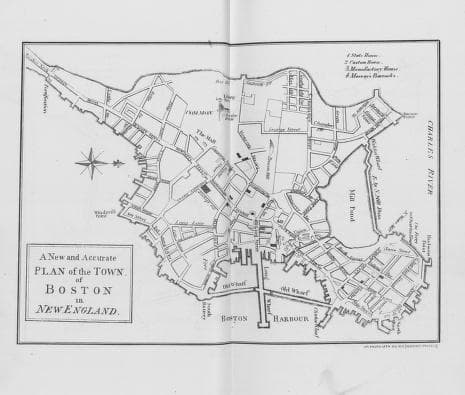
On March 5, 1770, a group of British soldiers opened fire on a crowd of colonists on King Street in Boston, Massachusetts. This tragic event, known as the Boston Massacre, resulted in the deaths of five men and became a pivotal moment in American history. The incident not only heightened tensions between the American colonies and Britain but also served as a powerful propaganda tool for those advocating for independence. The aftermath saw the event immortalized through art and rhetoric, most notably by Paul Revere's famous engraving, which depicted the soldiers as ruthless aggressors and the colonists as innocent victims.
The Events Leading Up to the Boston Massacre
Tensions had been escalating in Boston for years prior to the massacre. Following the imposition of the Townshend Acts in 1767, which placed duties on imported goods, many colonists grew increasingly resentful of British rule. The presence of British troops in Boston, intended to enforce order, only exacerbated the situation. By early 1770, the streets of Boston were rife with hostility, as soldiers and colonists frequently clashed over issues of taxation and representation. The British military presence was seen not as a protective force but as an occupying army, leading to a volatile atmosphere in the city [1][3].
On the evening of March 5, a confrontation began when a group of colonists, including a man named Edward Garrick, began taunting a British sentry stationed outside the Custom House. The crowd grew larger, and tensions escalated as more soldiers arrived on the scene. Witnesses reported that the crowd hurled insults and snowballs at the soldiers, who were visibly agitated. In the chaos, the soldiers felt threatened and, after a series of provocations, one soldier fired into the crowd, followed by others. The result was a tragic loss of life, with five men killed and several others wounded [1][2].
The victims of the Boston Massacre were not just random individuals; they represented a cross-section of the colonial population. Crispus Attucks, an African American sailor, was among the first to fall. His death has since become emblematic of the struggle for freedom and equality in America. Alongside Attucks were Samuel Gray, James Caldwell, Patrick Carr, and Christopher Seider, each of whom had their own stories and backgrounds. Their deaths would be used to rally support for the revolutionary cause, transforming them into martyrs for liberty [1][4].
Eyewitness Accounts of the Shooting
Eyewitness accounts of the Boston Massacre vary, but they all share a common theme: the chaos and confusion of that fateful night. Some witnesses described the crowd as aggressive, while others portrayed the soldiers as overly eager to use their weapons. A man named Samuel Adams, who would later become a prominent revolutionary leader, claimed that the soldiers acted without provocation, while others suggested that the colonists had instigated the violence [2][5].
The conflicting narratives surrounding the event highlight the complexities of the situation. Some witnesses, like John Adams, who was not present but later analyzed the events, suggested that the soldiers were acting in self-defense, provoked by the crowd's hostility. This dichotomy of perspectives illustrates the charged atmosphere of the time and the differing interpretations of the same event. The Boston Massacre was not merely a straightforward case of oppression; it was a moment that encapsulated the broader struggle for rights and representation in the colonies [2][5].
One of the most notable eyewitnesses was Crispus Attucks, whose identity as a man of African descent added another layer to the narrative. His death, along with those of the other victims, became a rallying point for abolitionists and civil rights advocates in later years. Attucks has since become a symbol of the struggle for freedom and equality in America. His legacy, along with that of the other victims, would be invoked in various contexts throughout American history, emphasizing the ongoing fight against oppression and injustice [1][3].
The Aftermath: Trials and Defense by John Adams
In the wake of the massacre, public outrage was palpable. The British soldiers involved were arrested and charged with murder. The trials that followed were highly publicized and drew significant attention. The defense of the soldiers was taken on by none other than John Adams, a future president and founding father. Adams believed in the right to a fair trial, even for those who had committed acts of violence against his fellow colonists. His decision to defend the soldiers was controversial, as many viewed the British troops as oppressors and the embodiment of colonial tyranny [4][5].
During the trial, Adams argued that the soldiers acted in self-defense, claiming that they had been provoked by the crowd. He emphasized that the soldiers were not the true villains of the story; rather, they were victims of the circumstances created by the colonial unrest. This defense was rooted in Adams's belief in the rule of law and the importance of justice, even for those on the opposing side. Ultimately, two of the soldiers were found guilty of manslaughter and were branded on the thumb as punishment, while the others were acquitted [4][5].
The trials served to further inflame public sentiment against British rule, as many colonists viewed the soldiers' actions as emblematic of the larger struggle for independence. The legal proceedings highlighted the deep divisions within colonial society, as some colonists rallied around the soldiers while others condemned their actions. This division foreshadowed the broader conflicts that would erupt in the years leading up to the American Revolution [2][4].
Paul Revere's Engraving: Turning Tragedy into Propaganda
The Boston Massacre quickly became a rallying point for those advocating for independence from Britain. One of the most significant contributions to this cause came from Paul Revere, who created an engraving that depicted the event. Revere's artwork portrayed the British soldiers as brutal aggressors firing into a peaceful crowd, a stark contrast to the chaotic reality of the night. The engraving was not merely an illustration of a tragic event; it was a piece of propaganda designed to evoke outrage and rally support for the revolutionary cause [2][5].
Revere's engraving was widely circulated and played a crucial role in shaping public perception of the massacre. It appeared in newspapers and pamphlets, reaching a wide audience and solidifying the event's place in the revolutionary narrative. The power of visual imagery in shaping public opinion cannot be overstated, and Revere's work exemplified how art could be used as a tool for political mobilization. The engraving depicted the soldiers as merciless and the colonists as innocent victims, effectively framing the narrative in a way that would galvanize support for independence [1][2].
The impact of Revere's engraving extended beyond its immediate context. It became a symbol of the revolutionary spirit, encapsulating the anger and frustration felt by many colonists toward British rule. The image was used in various forms of media, reinforcing the idea that the Boston Massacre was not just an isolated incident but part of a larger struggle for freedom and justice. This narrative would resonate throughout the colonies, contributing to the growing sentiment for independence [5].
The Boston Massacre's Legacy in Revolutionary Rhetoric
The Boston Massacre became a cornerstone of revolutionary rhetoric in the years leading up to the American Revolution. It was invoked in speeches, writings, and propaganda efforts as a symbol of British tyranny. The phrase "no taxation without representation" gained traction, as the massacre was framed as a direct consequence of oppressive British policies. The event was used to illustrate the dangers of unchecked power and the need for a government that represented the will of the people [1][3].
In the years following the massacre, the event was commemorated through various means, including public memorials and annual observances. The memory of the five men who lost their lives became intertwined with the broader struggle for independence, serving as a reminder of the sacrifices made by colonists in their fight against British rule. The Boston Massacre Day, observed annually, became an occasion for public demonstrations and speeches, reinforcing the narrative of resistance against tyranny [2][4].
The Boston Massacre also played a significant role in shaping the identity of the emerging nation. It was a moment that united colonists from different backgrounds and regions, as they rallied around a shared cause. The narrative of the massacre helped to foster a sense of American identity, one that was rooted in the ideals of liberty and justice. The event became a symbol of the collective struggle for rights and freedoms, serving as a touchstone for future generations [1][3].
The Role of the Boston Massacre in the Road to Independence
The Boston Massacre was not an isolated incident; it was part of a larger pattern of colonial resistance against British authority. In the years that followed, the event would be referenced in various contexts, including the Boston Tea Party in 1773 and the First Continental Congress in 1774. The massacre served as a catalyst for further actions against British rule, as colonists sought to assert their rights and freedoms. The growing unrest culminated in the outbreak of the American Revolutionary War in 1775, with the Boston Massacre serving as a stark reminder of the consequences of oppression [2][4].
The event highlighted the deep divisions between the colonies and Britain, illustrating the growing discontent with British policies. It underscored the need for a unified response to British aggression, paving the way for collaborative efforts among the colonies. The Boston Massacre became a rallying cry for those advocating for independence, emphasizing the urgency of the situation and the necessity of collective action [1][3].
In the years following the revolution, the legacy of the Boston Massacre continued to resonate. It became a symbol of the struggle for civil rights and liberties, inspiring future generations to fight against oppression. The sacrifices made by the victims of the massacre were honored in various ways, including the establishment of memorials and the incorporation of their stories into the national narrative. The Boston Massacre remains a powerful reminder of the importance of standing up against tyranny and advocating for justice [2][4].
The Boston Massacre's Enduring Impact on American History
The Boston Massacre of 1770 was a tragic event that had far-reaching consequences for the American colonies. The deaths of five men on King Street became a rallying cry for those seeking independence from British rule. Through the efforts of individuals like Paul Revere and John Adams, the massacre was transformed into a powerful symbol of resistance and a catalyst for change.
The event's legacy endures to this day, serving as a reminder of the sacrifices made in the pursuit of freedom and justice. The Boston Massacre is not merely a historical footnote; it is a testament to the power of collective action and the importance of standing up against tyranny. As America continues to grapple with issues of rights and representation, the lessons of the Boston Massacre remain relevant, reminding us of the ongoing struggle for liberty and equality [1][5].
The Boston Massacre also serves as a case study in the use of propaganda and public sentiment in shaping historical narratives. The ways in which the event was portrayed in the media and through art had a profound impact on public opinion and mobilization efforts. The ability of leaders like Revere and Adams to frame the narrative around the massacre highlights the importance of communication in times of crisis and conflict. As we reflect on this pivotal moment in American history, it is essential to recognize the complexities of the event and its lasting implications for the nation.