
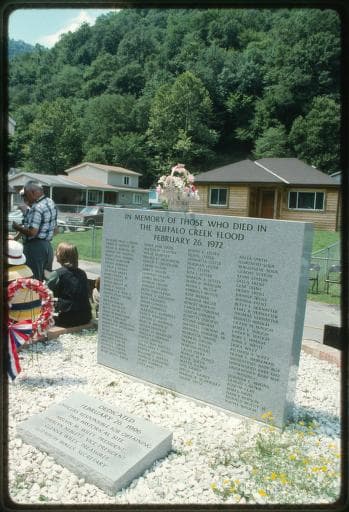
The Buffalo Creek Flood: A Coal-Waste Catastrophe in West Virginia
On February 26, 1972, a catastrophic failure of a coal-waste dam in West Virginia unleashed a torrent of water and sludge that devastated the Buffalo Creek Valley. The disaster, known as the Buffalo Creek flood, resulted in the deaths of 125 people and the destruction of 16 towns in a matter of minutes. This tragic event not only highlighted the dangers of coal mining waste management but also led to significant changes in regulations governing such facilities.
The Setting: Buffalo Creek Valley, West Virginia
Buffalo Creek is a small, winding waterway located in Logan County, West Virginia. The valley is surrounded by steep hills and has a history deeply intertwined with coal mining. In the early 1970s, the area was home to several coal mines, which generated substantial amounts of waste material. This waste, known as slurry, was often stored in large impoundments, or dams, constructed to contain the toxic byproducts of coal processing.
The dam that failed on that fateful day was owned by Pittston Coal Company. It was one of several slurry impoundments built to manage the waste produced by the nearby coal mines. These dams were constructed with little oversight, and their safety was often taken for granted. The Buffalo Creek dam, in particular, had been a source of concern for local residents, who had witnessed signs of instability in the months leading up to the disaster. Reports of cracks and seepage had been noted, but no significant action was taken to address these issues, reflecting a broader pattern of negligence in the industry [1][3].
The Day of the Disaster: February 26, 1972
On the morning of February 26, heavy rainfall saturated the region, causing the water levels in the slurry impoundment to rise dangerously high. The dam, which had been poorly constructed and inadequately maintained, could not withstand the pressure. At approximately 8:00 AM, the dam failed, releasing a massive wall of water and coal slurry that surged down the valley.
Survivors described the scene as apocalyptic. One resident recalled seeing "a black wall of water" rushing toward their home, carrying debris and destruction in its wake. The floodwaters swept away houses, cars, and entire communities, leaving devastation in their path. In just a few minutes, the flood transformed the landscape, erasing entire towns and claiming lives. The speed and ferocity of the floodwaters were shocking; it was reported that the wave reached heights of up to 30 feet in some areas, obliterating everything in its path [2][5].
The Human Toll: Lives Lost and Communities Destroyed
The immediate aftermath of the Buffalo Creek flood was catastrophic. In total, 125 people lost their lives, and thousands were left homeless. Entire communities were wiped off the map, with towns like Buffalo, Man, and Logan suffering the most significant losses. The floodwaters not only destroyed homes but also claimed the lives of many residents who were unable to escape in time. The sheer scale of the disaster was overwhelming, with entire families lost and communities shattered.
Survivors faced unimaginable challenges in the wake of the disaster. Many were left without basic necessities, and the emotional toll of losing loved ones weighed heavily on the community. The local infrastructure was devastated, and the recovery process would take years. In the days following the flood, rescue and recovery efforts were hampered by the sheer scale of the destruction. Emergency services struggled to reach those in need, and the full extent of the disaster became apparent only gradually. The local hospitals were overwhelmed with casualties, and many survivors were left to fend for themselves in the immediate aftermath [4].
Survivor Testimonies: Voices from the Valley
Survivor accounts provide a haunting glimpse into the chaos and terror experienced during the Buffalo Creek flood. Many described the moments leading up to the dam's failure, noting the ominous sounds of cracking and rumbling that filled the air. One survivor recounted how they had just finished breakfast when they heard a loud noise, followed by the rushing water that engulfed their home. The memories of that day remain vivid for many, as they recall the frantic moments of trying to escape the oncoming disaster.
Another survivor, who lost several family members in the flood, recalled the frantic attempts to escape. "We ran for our lives," they said, "but the water was everywhere. It was like a nightmare." These personal stories highlight the human cost of the disaster and the lasting impact it had on the community. The emotional scars left by the flood were profound, with many survivors experiencing long-term psychological effects, including post-traumatic stress disorder (PTSD) [5].
In the months and years following the flood, survivors faced not only the physical destruction of their homes but also the emotional scars left by the tragedy. Many struggled with grief and trauma, and the community had to come together to support one another in the face of overwhelming loss. Community meetings were held to provide support and share resources, as residents worked to rebuild their lives amidst the ruins of their former homes [3].
The Response: Investigations and Accountability
In the wake of the Buffalo Creek flood, investigations were launched to determine the cause of the dam failure and to hold those responsible accountable. The U.S. Army Corps of Engineers and the West Virginia Department of Natural Resources conducted inquiries into the disaster. Their findings revealed significant deficiencies in the design and maintenance of the dam, as well as a lack of regulatory oversight. The investigations uncovered that the dam had been built on a foundation of loose soil, which contributed to its instability [1][2].
Pittston Coal Company faced scrutiny for its role in the disaster. The company had a history of safety violations and had been cited for inadequate maintenance of its slurry impoundments. The investigations concluded that the dam's failure was a result of both structural weaknesses and poor management practices. In 1973, a federal grand jury indicted Pittston Coal on charges of involuntary manslaughter, but the company ultimately reached a settlement that did not result in significant penalties. This lack of accountability sparked outrage among survivors and community members, who felt that justice had not been served [4][5].
The aftermath of the investigations also led to a broader discussion about corporate responsibility and the need for stricter regulations in the mining industry. Many advocates called for reforms to ensure that companies could not evade accountability for negligence that led to such disasters [3].
Regulatory Changes: The Aftermath of the Buffalo Creek Flood
The Buffalo Creek flood served as a wake-up call for regulators and policymakers regarding the safety of coal-waste dams. In the years following the disaster, significant changes were made to the regulations governing the construction and maintenance of such facilities. The federal government implemented stricter safety standards for slurry impoundments, and states began to adopt more rigorous oversight measures.
The Mine Safety and Health Administration (MSHA) played a crucial role in these regulatory changes. Established in 1977, MSHA aimed to improve safety conditions in the mining industry and prevent future disasters like the Buffalo Creek flood. The agency focused on enforcing compliance with safety regulations and conducting inspections of mining operations across the country. These efforts included increased training for mine operators and stricter penalties for violations [2][4].
In addition to regulatory changes, the Buffalo Creek flood prompted increased public awareness of the dangers associated with coal mining waste. Environmental groups and community activists began to advocate for stronger protections for residents living near coal mines and slurry impoundments. The disaster highlighted the need for greater transparency and accountability in the mining industry. Public forums and discussions emerged, allowing community members to voice their concerns and push for legislative changes [1][5].
The Legacy of the Buffalo Creek Flood
The Buffalo Creek flood remains a significant event in the history of coal mining in West Virginia. It serves as a stark reminder of the potential dangers associated with poorly managed waste facilities. The disaster not only claimed lives but also reshaped the regulatory landscape for coal mining operations. The lessons learned from this tragedy have influenced policies and practices in the mining industry, emphasizing the importance of safety and environmental stewardship.
In the years since the flood, the affected communities have worked to rebuild and recover. Memorials have been established to honor the victims, and efforts have been made to ensure that such a tragedy is never repeated. The Buffalo Creek flood is a testament to the resilience of the human spirit and the importance of advocating for safety and accountability in industries that impact public health. Community organizations have emerged to support ongoing recovery efforts and to ensure that the voices of survivors are heard in discussions about mining regulations [3][4].
The flood also sparked a broader conversation about the environmental impacts of coal mining. As awareness of the dangers associated with coal waste grew, many began to advocate for alternative energy sources and more sustainable practices within the energy sector. The Buffalo Creek disaster became a pivotal moment in the fight for environmental justice, highlighting the need for systemic change in how energy is produced and managed [2][5].
A Call for Continued Vigilance
While significant progress has been made in the regulation of coal-waste dams since the Buffalo Creek flood, the lessons learned from this tragedy remain relevant today. As the mining industry continues to evolve, it is essential to remain vigilant in ensuring the safety of communities living near these facilities. The Buffalo Creek disaster serves as a reminder that the consequences of negligence can be catastrophic, and it is the responsibility of both industry and government to prioritize the safety of the public.
The stories of the survivors and the memories of those lost in the flood should not be forgotten. They serve as a call to action for continued advocacy and reform in the mining industry, ensuring that the mistakes of the past are not repeated. The Buffalo Creek flood is not just a historical event; it is a continuing narrative about the fight for justice, safety, and accountability in the face of corporate negligence.
As communities across the United States grapple with similar issues related to mining and waste management, the Buffalo Creek flood remains a critical case study. It underscores the importance of regulatory oversight, community engagement, and the need for a collective commitment to preventing future disasters. The legacy of the Buffalo Creek flood is a reminder that vigilance and advocacy are essential in protecting both people and the environment from the dangers of industrial practices.