
The Chicago Race Riot of 1919: A Beach Line, a Drowning, and a City on Fire
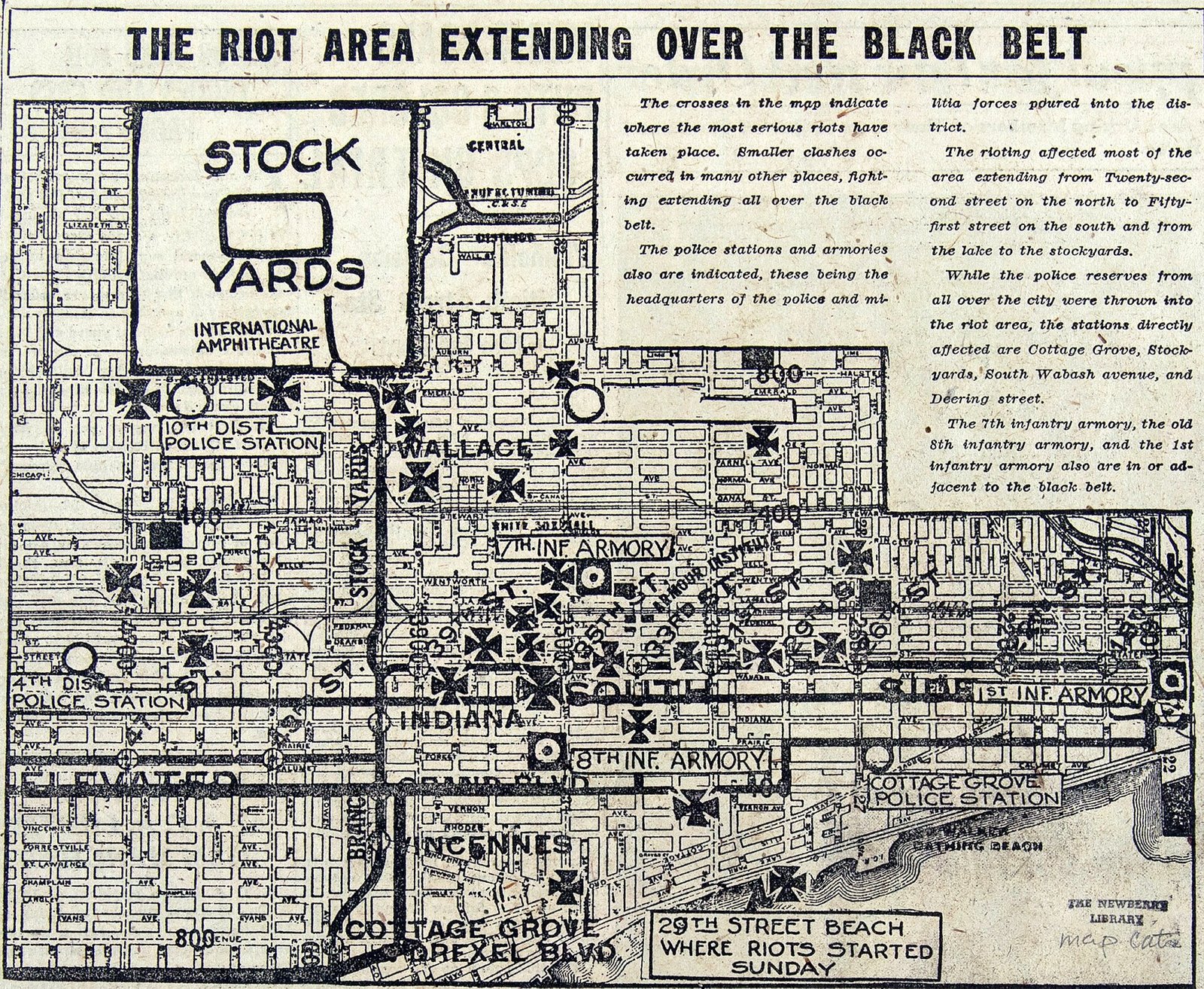
On July 27, 1919, a tragic incident at the 29th Street Beach in Chicago ignited one of the most violent racial confrontations in American history. A Black teenager named Eugene Williams drifted across an unofficial color line while swimming, leading to a confrontation with white beachgoers. This seemingly minor event spiraled into a full-scale race riot that lasted for several days, resulting in numerous deaths, injuries, and extensive property damage. The aftermath of the Chicago Race Riot of 1919 would prompt investigations and discussions about race relations in the United States, culminating in the establishment of the Chicago Commission on Race Relations.
The Context of Red Summer
The summer of 1919 is often referred to as the "Red Summer," a term that reflects the widespread racial violence that erupted across the United States during this period. Following World War I, many African Americans migrated to northern cities, including Chicago, in search of better economic opportunities and living conditions. However, this influx led to increased competition for jobs and housing, exacerbating racial tensions. The 1919 Chicago race riot was one of the most significant events of this tumultuous summer, which saw riots in over three dozen cities, including Washington D.C., Omaha, and Knoxville, among others [2].
In Chicago, the Great Migration had transformed neighborhoods, with Black residents moving into traditionally white areas. The city's racial segregation was enforced through both social customs and unwritten rules, particularly in public spaces like beaches. The 29th Street Beach, located on the South Side, became a focal point for these tensions, as it was one of the few beaches accessible to Black residents. The beach was informally divided by a color line, and crossing it was seen as a provocation by some white residents.
The Incident at 29th Street Beach
On that fateful day in July, Eugene Williams and his friends were swimming at the beach when he accidentally drifted beyond the unofficial boundary that separated white and Black bathers. As he floated on his raft, a group of white men began to harass him, leading to a confrontation. Witnesses reported that one of the white men threw stones at Williams, causing him to drown. His body was later recovered, but the incident had already set off a chain reaction of violence.
News of Williams' death spread quickly, igniting anger among the Black community. On the evening of July 27, a group of Black residents gathered near the beach to demand justice for Eugene. In response, a mob of white residents formed, leading to violent clashes between the two groups. The situation escalated rapidly, with both sides engaging in brutal attacks. The police, who were present, often sided with the white mob, further inflaming tensions [1].
Days of Violence and Destruction
The violence that erupted in the days following the initial incident was chaotic and deadly. Over the course of the riot, which lasted until August 3, 1919, at least 38 people were killed, and hundreds more were injured. The majority of the fatalities were Black residents, highlighting the racial disparities in the violence. Property damage was extensive, with thousands of homes and businesses destroyed, particularly in Black neighborhoods [4].
The police response to the violence was widely criticized. Officers were often slow to intervene, and when they did, they frequently arrested Black individuals rather than addressing the actions of the white mobs. Reports indicated that police officers were more likely to assist white residents than to protect Black citizens from violence. This biased response contributed to the perception that the authorities were complicit in the violence, further deepening the divide between the communities [3].
The Aftermath and the Chicago Commission on Race Relations
In the wake of the riot, public outcry led to calls for an investigation into the causes and consequences of the violence. The Chicago Commission on Race Relations was established to examine the events surrounding the riot and to recommend policies to improve race relations in the city. The commission's findings revealed the deep-seated racial tensions that had fueled the violence and highlighted the need for systemic changes to address issues of discrimination and inequality [3].
The commission's report, released in 1922, emphasized the importance of education and community engagement in fostering better relations between Black and white residents. It called for the establishment of recreational facilities accessible to all races and advocated for fair housing policies. However, many of the recommendations were not implemented, and racial tensions continued to simmer in Chicago and across the nation.
The Legacy of the Chicago Race Riot of 1919
The Chicago Race Riot of 1919 remains a significant event in American history, illustrating the complexities of race relations in the United States. The violence and destruction that occurred during those days in July served as a stark reminder of the deep-seated racism that persisted in society. The riot also highlighted the urgent need for reform in policing and community relations, issues that continue to resonate today.
In the years following the riot, Chicago's Black community worked tirelessly to rebuild and advocate for their rights. Organizations such as the NAACP and the Urban League emerged to address the systemic inequalities faced by African Americans. The legacy of the Chicago Race Riot can be seen in the ongoing struggle for civil rights, as activists continue to fight against racial discrimination and violence.
The Role of Media in Shaping Public Perception
The media played a crucial role in shaping public perception of the Chicago Race Riot. Newspapers reported extensively on the violence, often framing the narrative in ways that perpetuated racial stereotypes. Coverage frequently depicted Black residents as aggressors, while downplaying the actions of white mobs. This biased reporting contributed to a narrative that justified the violence and reinforced existing prejudices.
In the aftermath of the riot, the media's portrayal of the events influenced public opinion and policy discussions. Some journalists called for greater accountability for law enforcement and highlighted the need for reforms to address racial inequality. However, the sensationalism of the coverage also fueled further tensions, as both communities grappled with the fallout from the violence [5].
The Impact on Chicago's Neighborhoods
The Chicago Race Riot had a lasting impact on the city's neighborhoods, particularly in terms of segregation and housing. In the years following the riot, many white residents fled the affected areas, leading to increased segregation in housing patterns. Black residents, seeking safety and community, often found themselves confined to specific neighborhoods, further entrenching the racial divide in the city.
The violence also led to a shift in the demographics of certain neighborhoods, as Black residents moved into previously white areas. This migration often met with resistance, leading to further tensions and conflicts over housing and resources. The legacy of the riot can still be seen in Chicago's neighborhoods today, where issues of segregation and inequality persist [4].
The Chicago Race Riot in Historical Context
The Chicago Race Riot of 1919 was not an isolated incident but rather part of a broader pattern of racial violence in the United States. The events of that summer were influenced by a combination of factors, including economic competition, social unrest, and the lingering effects of World War I. The riot can be understood within the context of the Great Migration, as African Americans sought to escape the oppressive conditions of the Jim Crow South and build new lives in northern cities.
The Red Summer of 1919 was marked by a series of violent confrontations, with Chicago being one of the most notable examples. The racial tensions that erupted during this period were fueled by fears of economic displacement and cultural change, as white residents grappled with the demographic shifts occurring in their communities. The Chicago Race Riot serves as a critical moment in understanding the complexities of race relations in the United States and the ongoing struggle for equality and justice.
Continuing the Conversation on Race Relations
The legacy of the Chicago Race Riot of 1919 continues to resonate in contemporary discussions about race relations in the United States. The issues of systemic racism, police violence, and economic inequality remain pressing concerns for many communities. The events of that summer serve as a reminder of the importance of acknowledging and addressing the historical roots of these issues.
In recent years, movements such as Black Lives Matter have brought renewed attention to the ongoing struggles faced by African Americans. Activists continue to advocate for reforms in policing, housing, and education, seeking to address the systemic inequalities that persist in society. The lessons learned from the Chicago Race Riot of 1919 can inform contemporary efforts to promote justice and equality for all.
Conclusion: Remembering Eugene Williams and the Chicago Race Riot
The Chicago Race Riot of 1919 was a tragic event that claimed lives and left scars on the community. Eugene Williams, the young boy whose drowning sparked the violence, became a symbol of the racial injustices that plagued the nation. His story, along with the events of that summer, serves as a reminder of the ongoing struggle for civil rights and the need for continued advocacy for racial equality.
As we reflect on the Chicago Race Riot and its aftermath, it is essential to remember the lessons learned from this dark chapter in history. By acknowledging the past and working towards a more equitable future, we can honor the memory of those who suffered and strive to create a society where justice and equality prevail for all.