
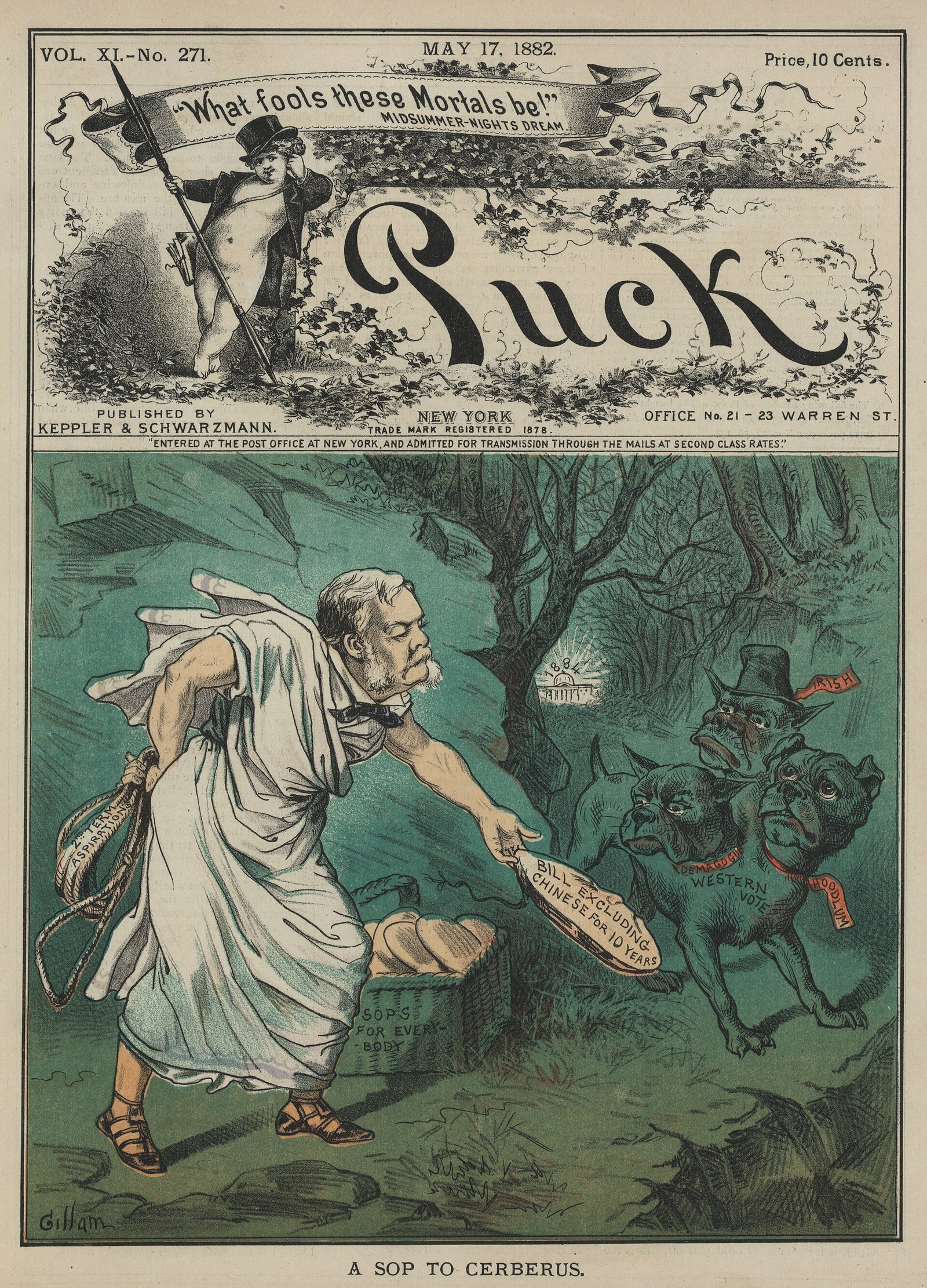
The Chinese Exclusion Act of 1882: A Landmark in Immigration Restriction
On May 6, 1882, the United States Congress enacted the Chinese Exclusion Act, a law that prohibited Chinese laborers from immigrating to the U.S. for ten years. This legislation marked a significant turning point in American immigration policy as it was the first major law to suspend immigration based on nationality. The Act was born out of a complex mix of economic competition, racial prejudice, and political maneuvering, particularly on the West Coast, where anti-Chinese sentiment was rampant.
The Chinese Exclusion Act was not an isolated event; it reflected broader patterns of immigration restriction that would continue to evolve throughout U.S. history. The Act's terms, enforcement mechanisms, and subsequent extensions reveal much about the racial dynamics and labor politics of the time. Additionally, the eventual repeal of the Act in 1943, during World War II, highlights the shifting attitudes toward Chinese immigrants and their contributions to American society.
The Context of Anti-Chinese Sentiment in the 19th Century
The roots of the Chinese Exclusion Act can be traced back to the mid-19th century, a period marked by significant Chinese immigration to the United States. Many Chinese immigrants arrived during the California Gold Rush, which began in 1848, seeking fortune and opportunity. By the 1860s, Chinese laborers were integral to the construction of the Transcontinental Railroad, a monumental project that connected the East and West coasts of the United States.
However, as economic conditions fluctuated and competition for jobs intensified, particularly during economic downturns, resentment toward Chinese immigrants grew. White laborers often blamed Chinese workers for lowering wages and taking jobs that they believed should belong to Americans. This animosity was fueled by racial stereotypes that portrayed Chinese individuals as unassimilable and inferior.
In the 1870s, anti-Chinese sentiment reached a boiling point. Riots erupted in various cities, most notably in San Francisco, where the Workingmen's Party, led by Denis Kearney, actively campaigned against Chinese immigration. Kearney's rhetoric emphasized the need to protect American jobs and culture from what he described as the "Chinese menace." These sentiments culminated in the push for federal legislation to restrict Chinese immigration. The growing hostility was not just a local phenomenon; it resonated across the nation, influencing public opinion and political discourse.
The Passage of the Chinese Exclusion Act
The Chinese Exclusion Act was introduced in Congress amid growing pressure from labor unions and political groups advocating for immigration restrictions. The Act was initially intended to last for ten years, but it laid the groundwork for future immigration laws that would target various ethnic groups. The legislation passed with overwhelming support, reflecting the prevailing attitudes of the time.
The Act specifically barred "skilled and unskilled laborers and Chinese employed in mining" from entering the United States. It also established a system of documentation for Chinese immigrants already residing in the country, requiring them to obtain certificates of residence to avoid deportation. This marked a significant shift in immigration policy, as it was the first time the U.S. government explicitly restricted immigration based on race and nationality [1][2].
The passage of the Act was not merely a legislative act; it was a reflection of the societal norms and values of the time. The law was supported by a coalition of politicians who capitalized on the prevailing anti-Chinese sentiment, framing the exclusion as a necessary measure for national security and economic stability. This framing resonated with a public that was increasingly anxious about job competition and economic uncertainty.
Enforcement and the Bureaucratic Machinery
The enforcement of the Chinese Exclusion Act was complex and often arbitrary. The law required Chinese immigrants to carry identification papers, which were often difficult to obtain. Many faced discrimination and hostility from immigration officials, who had broad discretion in interpreting the law. The process for obtaining certificates of residence was fraught with challenges, leading to widespread confusion and fear among the Chinese community.
Immigration stations, such as Angel Island in San Francisco Bay, became notorious for their harsh treatment of Chinese immigrants. Opened in 1910, Angel Island served as the primary processing center for Asian immigrants, and many were detained for long periods while their cases were reviewed. The conditions at Angel Island were often deplorable, with detainees facing overcrowding, inadequate food, and limited access to legal representation. The experience at Angel Island starkly contrasted with the more lenient treatment of European immigrants arriving at Ellis Island on the East Coast [4].
The bureaucratic machinery established to enforce the Exclusion Act was often overwhelmed and ill-equipped to handle the influx of cases. Many Chinese immigrants found themselves caught in a web of legal and administrative obstacles, leading to prolonged detentions and uncertainty about their futures. This environment of fear and suspicion not only affected the individuals detained but also reverberated throughout Chinese communities across the United States, creating a climate of mistrust and anxiety.
Extensions of the Chinese Exclusion Act
In 1892, the Chinese Exclusion Act was extended for another ten years through the Geary Act. This extension not only continued the ban on Chinese laborers but also introduced additional restrictions. It required Chinese residents to register with the government and carry identification at all times. Failure to comply could result in deportation. The Geary Act further entrenched the discriminatory practices that had emerged since the original Exclusion Act.
The restrictions continued into the early 20th century, with the Act being renewed and expanded in 1902, making the exclusion of Chinese laborers permanent. This marked a significant moment in U.S. immigration history, as it set a precedent for future laws that would similarly target other immigrant groups based on race and nationality. The Chinese Exclusion Act effectively institutionalized racial discrimination in U.S. immigration policy, influencing the development of restrictive immigration laws for decades to come [2][3].
The Geary Act's introduction of mandatory registration and identification for Chinese residents was particularly impactful. It created a system of surveillance and control that further marginalized Chinese communities. Those who could not provide the necessary documentation faced deportation, while those who complied lived under constant threat of being uprooted from their homes. This environment of fear and uncertainty contributed to the social isolation of Chinese immigrants and reinforced their status as outsiders in American society.
The Impact on Chinese Communities
The Chinese Exclusion Act had devastating effects on Chinese communities in the United States. Families were separated as men who had come to work were unable to bring their wives and children to join them. The law contributed to the growth of "bachelor societies," where single men lived in isolation, often facing discrimination and violence from their neighbors.
Despite these challenges, Chinese communities found ways to adapt and survive. They established mutual aid societies, businesses, and cultural organizations to support one another. These institutions played a crucial role in preserving Chinese culture and identity in the face of adversity. However, the stigma associated with being Chinese in America persisted, leading to social and economic marginalization.
The creation of mutual aid societies was a significant response to the challenges posed by the Exclusion Act. These organizations provided essential services, including financial assistance, healthcare, and legal support, helping to foster a sense of community among Chinese immigrants. They also served as a platform for cultural preservation, allowing Chinese Americans to maintain their traditions and heritage despite the pressures to assimilate.
However, the broader societal context remained hostile. Discrimination against Chinese individuals was pervasive, manifesting in both overt acts of violence and more subtle forms of exclusion. This environment of hostility not only impacted the daily lives of Chinese immigrants but also shaped their long-term prospects in the United States, limiting their opportunities for advancement and integration.
The Road to Repeal: Changing Attitudes During World War II
The repeal of the Chinese Exclusion Act did not occur until 1943, during World War II, when the United States sought to strengthen its alliance with China against Japan. The geopolitical landscape shifted dramatically, and the contributions of Chinese Americans to the war effort became increasingly recognized.
In response to changing attitudes, Congress passed the Magnuson Act, which formally repealed the Chinese Exclusion Act. This legislation allowed a limited number of Chinese immigrants to enter the United States and provided a pathway to citizenship for those already residing in the country. However, the quota for Chinese immigrants was set at a mere 105 per year, reflecting the lingering prejudices that continued to shape U.S. immigration policy [1][5].
The repeal of the Chinese Exclusion Act marked a significant milestone in the fight for civil rights and equality for Asian Americans. It opened the door for further reforms in immigration policy, although it would take decades for the U.S. to fully dismantle the discriminatory practices that had been established in the late 19th and early 20th centuries. The Magnuson Act was a crucial step, but it was only the beginning of a long struggle for Asian American rights.
The war effort also played a critical role in reshaping public perceptions of Chinese Americans. As they served in various capacities, both on the battlefield and in support roles, their contributions began to challenge the prevailing stereotypes that had fueled discrimination. This shift in perception was instrumental in laying the groundwork for future civil rights advancements.
Legacy of the Chinese Exclusion Act
The Chinese Exclusion Act serves as a stark reminder of the racial and ethnic discrimination that has been a recurring theme in American immigration policy. Its legacy is evident in the ongoing debates about immigration reform and the treatment of immigrant communities in the United States. The Act laid the groundwork for a series of restrictive immigration laws that would target various groups, reinforcing the idea that race could be a determining factor in who could enter the country.
In contemporary discussions about immigration, the Chinese Exclusion Act is often cited as a cautionary tale about the dangers of racial prejudice and exclusionary policies. The Act's historical significance continues to resonate, reminding us of the importance of inclusivity and the need to confront the biases that persist in society.
The legacy of the Exclusion Act is also reflected in the ongoing struggles of Asian Americans for recognition and equality. The Act not only shaped immigration policy but also influenced societal attitudes toward Asian communities, creating a framework of exclusion that would take generations to dismantle. The fight for civil rights and social justice for Asian Americans continues to be informed by the historical injustices of the past.
The Enduring Impact of the Chinese Exclusion Act
The Chinese Exclusion Act of 1882 was a watershed moment in U.S. history, marking the first time that immigration was restricted based on race and nationality. Its passage reflected the deep-seated racial prejudices of the time and set a precedent for future immigration laws that would continue to discriminate against various ethnic groups. The Act's enforcement mechanisms and extensions further entrenched these discriminatory practices, leading to significant social and economic consequences for Chinese communities in the United States.
The eventual repeal of the Act in 1943, while a step forward, highlighted the ongoing challenges faced by Asian Americans in their quest for equality and recognition. The legacy of the Chinese Exclusion Act serves as a reminder of the importance of understanding our history and the need for policies that promote inclusivity rather than exclusion.
As the United States grapples with contemporary immigration issues, the lessons learned from the Chinese Exclusion Act remain relevant. The historical narrative surrounding this legislation underscores the need for vigilance against discrimination and the importance of advocating for fair and just immigration policies that honor the contributions of all individuals, regardless of their background.