
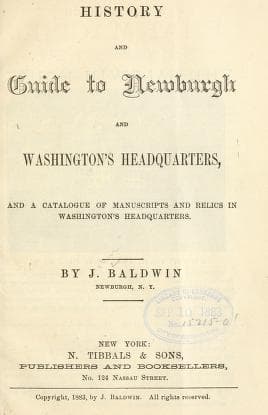
The Newburgh Conspiracy: A Near Mutiny in 1783
In the spring of 1783, the Continental Army faced a crisis that threatened to unravel the very fabric of the fledgling United States. Officers stationed in Newburgh, New York, were on the brink of mutiny due to unpaid wages and a lack of support from Congress. This unrest culminated in a series of anonymous letters that called for defiance against the Continental Congress. However, a powerful speech by General George Washington ultimately quelled the rebellion and restored order among the ranks.
Background: The Continental Army's Struggles
The Continental Army was formed in 1775 to fight against British rule during the American Revolutionary War. By 1783, the war was effectively over, but the army was still facing significant challenges. Soldiers had not been paid for months, and many officers were struggling to support their families. The government, still in its infancy, was unable to provide the necessary funds to meet its obligations to the military. This financial instability created a breeding ground for discontent among the ranks [4].
The Continental Congress had been slow to respond to the army's needs. The Articles of Confederation, which served as the first constitution of the United States, did not grant Congress the power to levy taxes. As a result, the government relied on voluntary contributions from the states, which were often insufficient. By early 1783, many officers felt betrayed and abandoned, leading to a growing sense of frustration and anger [2]. The situation was exacerbated by the fact that many soldiers had made personal sacrifices during the war. They had left their families and homes, enduring hardships and dangers on the battlefield. The promise of compensation for their service was a significant motivating factor for many. When Congress failed to deliver on these promises, the officers began to feel that their sacrifices had been in vain [3].
The Continental Army's struggles were not merely financial; they were also deeply personal. Many officers had invested years of their lives in the fight for independence, often at great personal cost. The lack of pay and recognition from Congress felt like a betrayal, igniting a fire of resentment that threatened to boil over into open rebellion. The officers' loyalty to the cause was being tested, and the government’s inability to meet its obligations only deepened their disillusionment [4].
The Anonymous Letters: A Call to Action
In March 1783, a group of disgruntled officers began circulating anonymous letters that outlined their grievances and proposed a radical course of action. The letters called for a meeting of the officers to discuss their situation and consider a united response against Congress. The authors of these letters argued that the government had failed to uphold its promises and that the army deserved better treatment [1].
The letters suggested that if Congress did not meet their demands, the officers would take matters into their own hands. Some even hinted at the possibility of a coup, threatening to use their military power to force Congress to comply. This was a dangerous proposition, as it could have led to a complete breakdown of authority and the potential for civil conflict. The idea of a military coup was particularly alarming given the recent history of the Revolutionary War, where the army had fought for freedom from tyranny [3].
The discontent among the officers was not limited to financial grievances. Many felt that their sacrifices had been overlooked and that their contributions to the war effort were not being recognized. This sense of betrayal fueled the desire for action, and the anonymous letters served as a rallying cry for those who felt marginalized by the government [4]. The letters spread quickly among the ranks, igniting discussions about the army's future and the potential for drastic measures if their demands were not met.
Washington's Newburgh Address: A Turning Point
As tensions escalated, General George Washington became aware of the growing unrest among his officers. He understood the gravity of the situation and the potential consequences of a mutiny. On March 15, 1783, Washington called a meeting at Newburgh to address the officers directly. His speech would become known as the Newburgh Address [1].
In his address, Washington acknowledged the officers' frustrations and the difficulties they faced. He expressed empathy for their plight but emphasized the importance of maintaining discipline and loyalty to the nation. Washington urged the officers to remember their duty to the country and to uphold the principles for which they had fought. He reminded them that their actions would set a precedent for future generations [2].
Washington's speech was powerful and heartfelt. He appealed to the officers' sense of honor and patriotism, urging them to resist the temptation to resort to violence. He argued that a mutiny would not only undermine the hard-won victory of the Revolution but also jeopardize the future of the United States. His words resonated deeply with the officers, many of whom had fought alongside him for years [3].
One of the most poignant moments in Washington's address came when he pulled out a letter from Congress, which he struggled to read due to his failing eyesight. This act symbolized the connection between the military and the civilian government, reinforcing the idea that the army must respect the authority of Congress, even in times of hardship. Washington's vulnerability in that moment humanized him and further endeared him to the officers [5].
The impact of Washington's address was immediate and profound. The officers, moved by his words and the gravity of the situation, began to reconsider their stance. Washington's ability to connect with them on a personal level, combined with his unwavering commitment to the principles of democracy, helped to defuse the situation and restore order among the ranks [2].
The Aftermath: Congress Responds
Following Washington's address, the mood among the officers shifted dramatically. The threat of mutiny dissipated, and the officers chose to remain loyal to the cause. Washington's leadership played a crucial role in averting a crisis that could have had dire consequences for the young nation [2].
In the wake of the Newburgh Conspiracy, Congress recognized the need to address the grievances of the Continental Army. The situation prompted a renewed focus on military pay and benefits. In June 1783, Congress finally approved a plan to pay the officers and soldiers, albeit with significant delays. The government also began to explore options for providing pensions to veterans, a move that would help secure the loyalty of the military in the future [4].
Despite these efforts, the financial instability of the new government persisted. The inability to adequately fund the military remained a pressing issue, leading to ongoing tensions between the states and Congress. The Newburgh Conspiracy highlighted the fragility of the new nation and the challenges it faced in establishing a stable government [3].
The aftermath of the Newburgh Conspiracy also revealed the importance of strong leadership in times of crisis. Washington's ability to unite the officers and steer the nation away from a potential disaster demonstrated the critical role that effective communication and moral authority play in governance. His actions set a precedent for future leaders, emphasizing the need for integrity and accountability in public service [5].
Moreover, the events surrounding the Newburgh Conspiracy prompted discussions about the structure of the government itself. The weaknesses exposed by the crisis contributed to a growing consensus that the Articles of Confederation were inadequate for governing the new nation. This realization would eventually lead to the Constitutional Convention in 1787, where the U.S. Constitution was drafted to create a stronger federal government capable of addressing the needs of its citizens and military [2].
The Legacy of the Newburgh Conspiracy
The Newburgh Conspiracy serves as a critical moment in American history, illustrating the delicate balance between military power and civilian authority. Washington's decisive leadership not only prevented a potential coup but also reinforced the principle that the military must remain subordinate to civilian governance. This principle would become a cornerstone of American democracy [2].
The events at Newburgh also underscored the importance of addressing the needs of veterans and active-duty military personnel. The challenges faced by the Continental Army in 1783 foreshadowed future struggles for military pay and benefits in the United States. The legacy of the Newburgh Conspiracy continues to resonate today as discussions about military compensation and support for veterans remain relevant [4].
Moreover, the Newburgh Conspiracy highlighted the limitations of the Articles of Confederation and the urgent need for a stronger federal government. The inability of Congress to meet the financial obligations to the military was a significant factor that contributed to the eventual drafting of the U.S. Constitution in 1787. The crisis at Newburgh served as a wake-up call for the nation, emphasizing the need for a more robust framework to govern the United States [3].
In conclusion, the Newburgh Conspiracy was a pivotal moment that tested the resolve of the Continental Army and the leadership of George Washington. Through his powerful address, Washington was able to unite the officers and steer the nation away from a potential crisis. The events of 1783 serve as a reminder of the challenges faced by the early United States and the importance of strong leadership in times of turmoil. The lessons learned from this episode continue to inform discussions about military governance and civil-military relations in contemporary America [5].
The Newburgh Conspiracy not only shaped the immediate future of the Continental Army but also set a precedent for how military grievances would be addressed in the years to come. The commitment to resolving issues through dialogue rather than force became a hallmark of American governance. Washington's actions during this crisis exemplified the qualities of a leader who understood the importance of unity and the rule of law, principles that remain vital to the American political landscape today.