
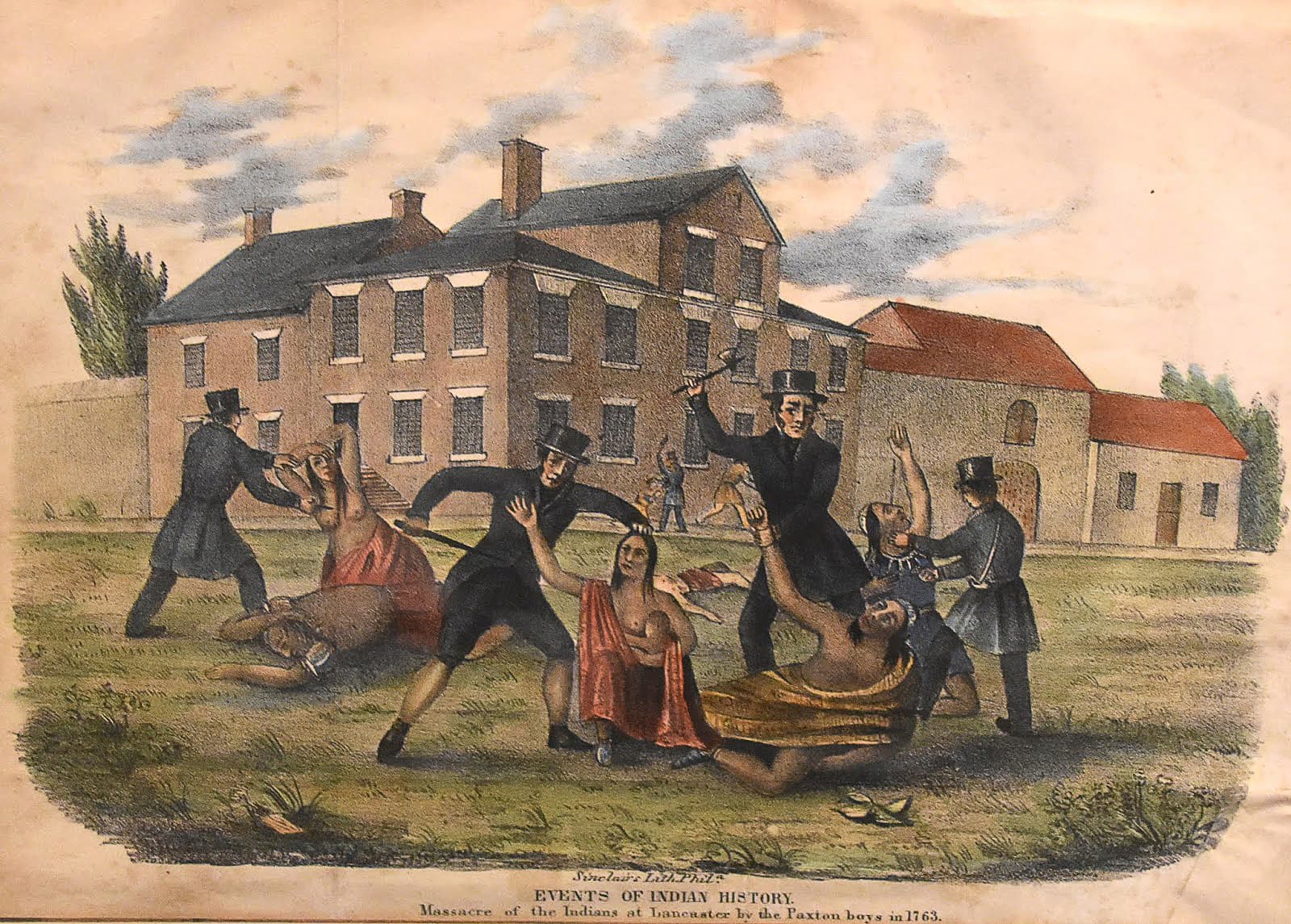
The Conestoga Massacre: A Prelude to the Paxton Boys' March on Philadelphia
In December 1763, a group of armed settlers known as the Paxton Boys descended upon the Conestoga Indian Town in Lancaster County, Pennsylvania. Their mission was brutal: to kill the remaining Conestoga people, a small group of Native Americans who had sought refuge and protection from colonial violence. This massacre, which resulted in the deaths of at least twenty Conestoga individuals, set off a chain of events that would nearly ignite civil war in Pennsylvania. The Paxton Boys, fueled by a mix of frontier grievances and racial animosity, marched on Philadelphia, demanding action against Native Americans and challenging colonial authorities. Their actions not only exposed deep divisions within colonial society but also prompted a significant response from prominent figures like Benjamin Franklin, who sought to maintain order and protect the city from potential violence [1][3].
The Context of Colonial Pennsylvania in 1763
To understand the motivations behind the Paxton Boys and the Conestoga massacre, it is essential to consider the broader context of colonial Pennsylvania in the 1760s. The region was marked by a complex relationship between European settlers and Native American tribes. Following the French and Indian War, tensions escalated as settlers encroached on Native lands, leading to conflicts and violence. The Conestoga people, who had historically been relatively peaceful and cooperative with the settlers, found themselves increasingly vulnerable amid this rising tide of aggression. The aftermath of the war left many settlers feeling insecure and emboldened, leading to a surge in violent encounters with Native Americans across the frontier [1][2][5].
The Paxton Boys emerged from a group of Scots-Irish settlers in the backcountry, who felt abandoned by the colonial government in Philadelphia. They believed that the government failed to protect them from Native American attacks, which had become more frequent as settlers pushed westward. The massacre of the Conestoga people was seen by the Paxton Boys as a necessary act of self-defense, a misguided justification that would have dire consequences for Pennsylvania's political landscape. The settlers' grievances were compounded by a sense of betrayal; they felt that their sacrifices during the French and Indian War had gone unrecognized, and their safety was not prioritized by the colonial authorities [3][4].
The Conestoga Massacre: A Brutal Act of Violence
On the night of December 14, 1763, the Paxton Boys launched their attack on the Conestoga Indian Town. Armed with rifles and a thirst for vengeance, they broke into the homes of the Conestoga people, killing men, women, and children indiscriminately. The massacre was swift and brutal, with the attackers showing no mercy. By the end of the night, at least twenty Conestoga individuals were dead, and their homes were set ablaze. This act of violence shocked many in Pennsylvania, including those who had previously held sympathetic views toward the settlers. The brutality of the massacre raised questions about the morality of the Paxton Boys' actions and the extent to which colonial society would tolerate such violence against Native Americans [1][2][5].
The massacre was not an isolated incident but rather a culmination of growing tensions between settlers and Native Americans. The Conestoga people had been living in relative peace, having established a town that was recognized by the colonial government. However, the increasing encroachment of settlers into their territory, coupled with the fallout from the French and Indian War, created an environment ripe for violence. The Paxton Boys' actions were fueled by a belief that they were acting in defense of their families and communities, but this justification masked a deeper undercurrent of racial animosity and a desire for retribution against those they viewed as enemies [3][4].
The Aftermath of the Conestoga Massacre
In the wake of the massacre, the colonial government faced immense pressure to respond. The brutal nature of the attack shocked many, including influential figures like Benjamin Franklin, who condemned the violence. Franklin, who had long advocated for peaceful relations between settlers and Native Americans, recognized that the massacre threatened to destabilize the already fragile peace in Pennsylvania. He called for a public inquiry into the events surrounding the massacre, emphasizing the need for justice and accountability [3][4].
The massacre also prompted a wave of fear among Native American communities in the region. Many tribes, already wary of settler encroachment, now faced the reality that their safety was not guaranteed. The Conestoga people had sought refuge, but their tragic fate served as a grim reminder of the dangers they faced. The massacre fueled further violence and retaliation, as other Native American groups sought to defend themselves against settler aggression [1][2][5].
The March on Philadelphia: A Show of Force
Following the massacre, the Paxton Boys did not retreat into the shadows. Instead, emboldened by their actions, they organized a march on Philadelphia in early January 1764. Their goal was to confront the colonial government directly and demand action against Native Americans. The march was a show of force, intended to demonstrate their dissatisfaction with the government's handling of frontier issues and to rally support for their cause. The Paxton Boys believed that their violent actions had been justified and sought to gain legitimacy for their grievances [1][3].
As the Paxton Boys approached Philadelphia, the colonial government took notice. The city was on high alert, fearing that the march could lead to further violence. Benjamin Franklin and other leaders in the city worked to negotiate with the Paxton Boys, hoping to prevent a confrontation. Franklin understood that the situation was precarious; if the march turned violent, it could lead to a breakdown of order in the city and further escalate tensions between settlers and Native Americans [3][4].
The Colonial Government's Response
In response to the growing unrest, the colonial government organized a meeting with the Paxton Boys. Franklin and other leaders sought to address their grievances while also emphasizing the need for peace. The government acknowledged the settlers' fears and frustrations but condemned the massacre as an unacceptable act of violence. Franklin argued that the government had a responsibility to protect both settlers and Native Americans, advocating for a more balanced approach to frontier relations [3][4].
The meeting between the Paxton Boys and colonial leaders was tense. The settlers expressed their anger over the perceived neglect from the government and their desire for protection against Native American attacks. They demanded that the government take a more aggressive stance against Native tribes, viewing any conciliatory approach as a sign of weakness. Franklin, however, argued for a more diplomatic solution, urging the settlers to consider the long-term consequences of their actions. He emphasized that violence would only lead to further bloodshed and instability [1][3].
Despite Franklin's efforts, the meeting did not resolve the underlying tensions. The Paxton Boys remained dissatisfied with the government's response, feeling that their grievances had not been adequately addressed. The march on Philadelphia highlighted the deep divisions within colonial society, as settlers and Native Americans found themselves increasingly at odds. The massacre and subsequent march served as a catalyst for broader discussions about frontier violence, colonial governance, and the treatment of Native Americans [2][5].
The Legacy of the Paxton Boys and the Conestoga Massacre
The Conestoga massacre and the actions of the Paxton Boys had lasting implications for Pennsylvania and the broader colonial landscape. The events exposed the fragility of the relationship between settlers and Native Americans, revealing deep-seated fears and animosities that would continue to shape interactions for years to come. The massacre also prompted a reevaluation of colonial policies regarding Native American relations, as leaders like Franklin sought to promote a more conciliatory approach [1][3][4].
In the years following the massacre, the legacy of the Paxton Boys continued to resonate. Their actions became emblematic of the broader tensions that characterized colonial America, as settlers grappled with issues of land, security, and identity. The violence of the Conestoga massacre served as a reminder of the consequences of unchecked aggression and the need for a more nuanced understanding of the complexities of frontier life [2][5].
The Paxton Boys' march on Philadelphia also highlighted the challenges faced by colonial authorities in maintaining order and addressing the grievances of settlers. The colonial government struggled to balance the demands of the settlers with the need to protect Native American communities. This tension would persist throughout the colonial period, ultimately contributing to the larger conflicts that would arise in the years leading up to the American Revolution [3][4].
Conclusion: A Turning Point in Colonial Pennsylvania
The Conestoga massacre and the subsequent actions of the Paxton Boys marked a significant turning point in colonial Pennsylvania. The events underscored the deep divisions within society and the challenges of governance in a rapidly changing landscape. As settlers pushed westward and tensions escalated, the legacy of the Paxton Boys would continue to shape discussions about violence, justice, and the treatment of Native Americans in the years to come. The massacre served as a stark reminder of the consequences of fear and hatred, and the need for a more compassionate approach to the complexities of colonial life [1][2][5].