
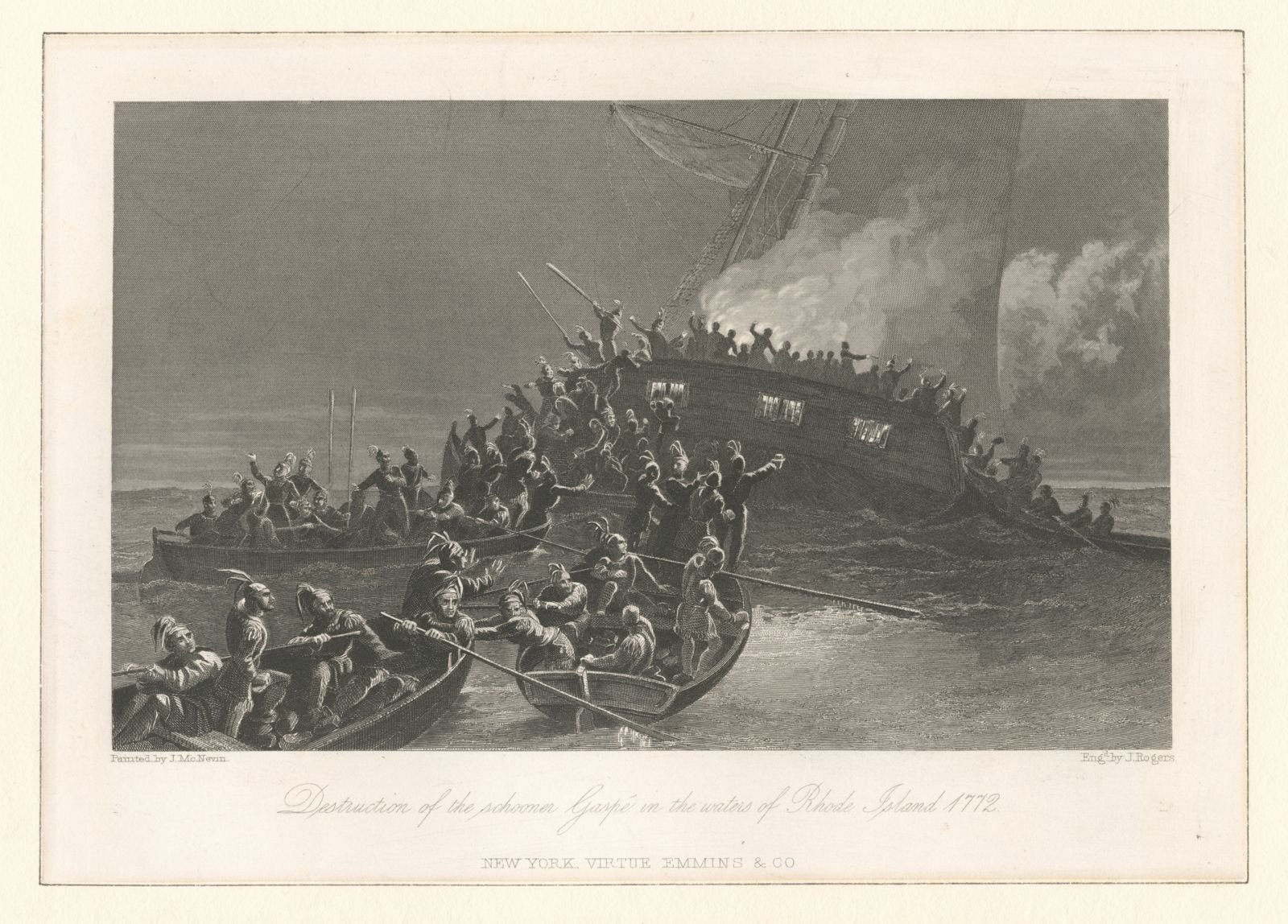
On June 9, 1772, the British customs schooner HMS Gaspee ran aground on a sandbar off the coast of Rhode Island while pursuing a suspected smuggler. This grounding not only marked a pivotal moment for the Gaspee but also set the stage for a significant act of rebellion against British authority in the American colonies [1].
The Gaspee was tasked with enforcing trade regulations and preventing smuggling, which was rampant in the colonies. On that fateful day, she was chasing the packet boat Hannah, suspected of carrying contraband. In her eagerness to intercept the vessel, the Gaspee's captain, Lieutenant William Dudingston, failed to navigate the treacherous waters properly. The ship struck the sandbar near what is now known as Gaspee Point, rendering her immobile and vulnerable to attack. This incident was not just a navigational error; it was a catalyst for colonial resistance against British rule [2].
The grounding of the Gaspee was significant because it provided an opportunity for local patriots to act against British oppression. The ship's crew, realizing their predicament, could not call for immediate help. The following night, a group of Rhode Island colonists, led by prominent figures like John Brown, took advantage of the situation. They boarded the grounded vessel, overpowered the crew, and set the Gaspee ablaze. This act of defiance was one of the first organized acts of rebellion against British authority in the colonies and would later be seen as a precursor to the American Revolution [3].
The burning of the Gaspee was not just an isolated incident; it had broader implications. It galvanized colonial opposition to British policies and encouraged other acts of resistance. The event was widely discussed and celebrated among colonists, further fueling the revolutionary spirit that would culminate in the fight for independence just a few years later. The Gaspee affair became a symbol of the growing tensions between Britain and its American colonies, illustrating how a single event could ignite a larger movement [1].
In retrospect, the grounding of HMS Gaspee on that June day was more than a navigational mishap; it was a turning point that highlighted the colonists' willingness to resist British control and laid the groundwork for the revolutionary fervor that would soon sweep the nation [2].