
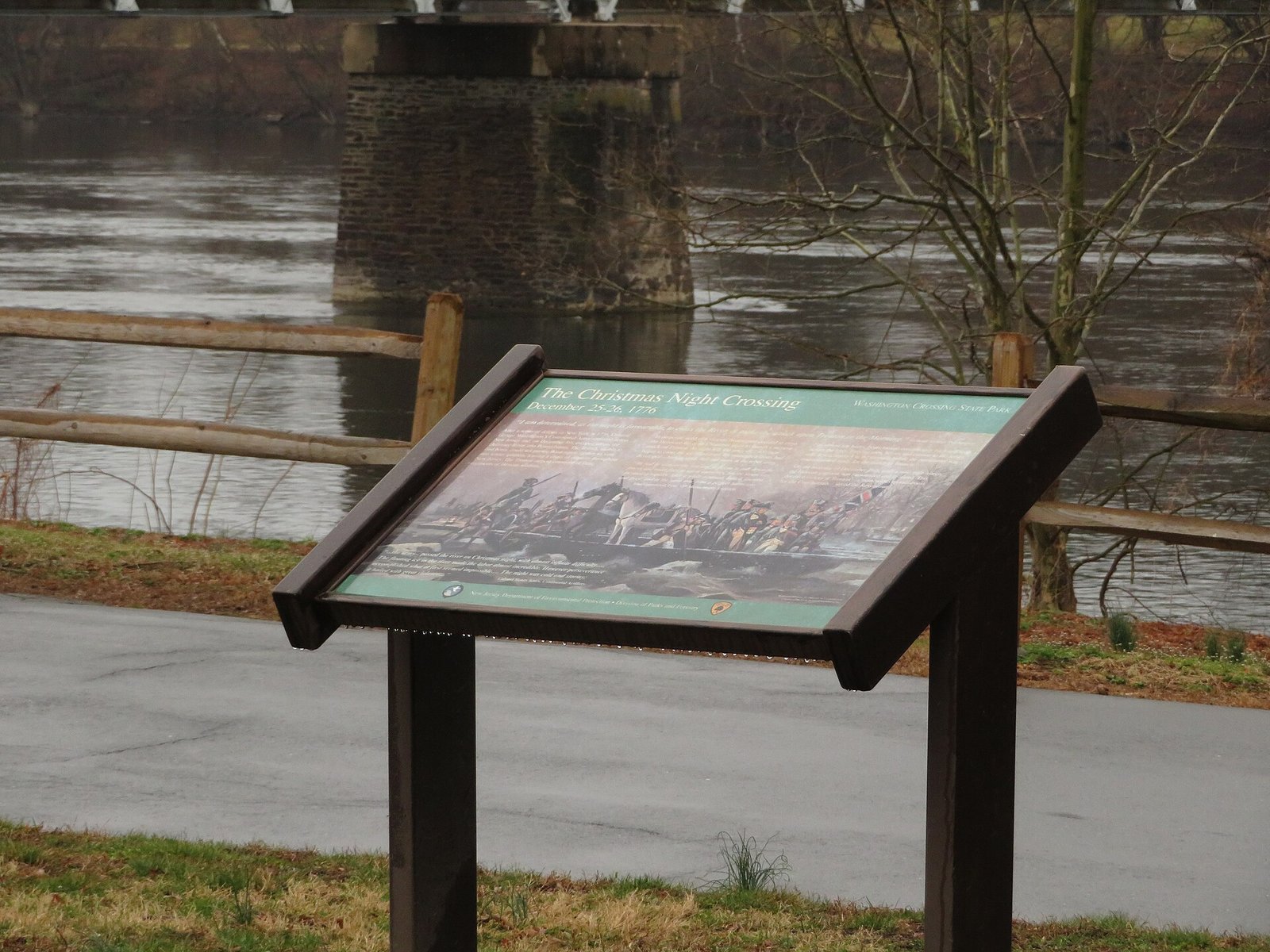
On Christmas night in 1776, General George Washington led his beleaguered Continental Army across the icy Delaware River. This daring maneuver took place amidst a fierce nor’easter, with the goal of launching a surprise attack on the Hessian forces stationed in Trenton, New Jersey. The successful crossing and subsequent assault on December 26 would prove pivotal in revitalizing the American Revolution, which had suffered a series of defeats throughout the year [1]. The events of that night would not only change the course of the war but also solidify Washington's reputation as a leader capable of inspiring hope in the face of despair.
The Context of Washington’s Gamble
By late 1776, the American Revolutionary War had not been kind to the Continental Army. After a string of defeats, including the loss of New York City and the retreat through New Jersey, morale was at a low point [2]. Washington's troops dwindled in number, with many soldiers' enlistments set to expire at the end of the year. The situation was dire; without a significant victory, the cause for independence seemed increasingly hopeless.
Washington understood that a bold action was necessary to turn the tide. The British had taken control of New York and were advancing into New Jersey, while the Hessians, German mercenaries fighting for the British, occupied Trenton [3]. Washington believed that a surprise attack would not only inflict damage on the enemy but also reinvigorate his troops and the American public’s support for the war effort. The need for a decisive victory was palpable, and Washington felt the weight of history on his shoulders as he contemplated his next move.
The Decision to Cross the Delaware
On December 25, 1776, Washington gathered his officers to discuss the plan. The weather was harsh, with snow and sleet falling heavily, creating a treacherous environment. The Delaware River was filled with ice, making navigation perilous. Despite these challenges, Washington was resolute. He knew that waiting for better conditions would mean losing the element of surprise.
The decision to cross the river was not made lightly. Washington had to consider the risks involved. If the crossing failed, it could lead to disastrous consequences for the Continental Army. However, the potential rewards outweighed the dangers. Washington's strategy hinged on the element of surprise, and he believed that the stormy weather would work to his advantage, obscuring his movements from the enemy. The Hessians, accustomed to a more predictable battlefield, would not expect an attack under such conditions [4].
The Role of Durham Boats and Marblehead Sailors
To execute this audacious plan, Washington relied on a fleet of Durham boats, specially designed for navigating the icy waters of the Delaware. These boats were flat-bottomed and could carry a significant number of troops and supplies. The Continental Army had only a limited number of these boats, which made the logistics of the crossing even more challenging. Each boat could carry about 10 to 12 men, and the army had to make multiple trips to ferry everyone across [5].
Assisting Washington were the Marblehead sailors from Massachusetts, skilled mariners who had volunteered to serve in the Continental Navy. These sailors were instrumental in the crossing, braving the frigid waters and treacherous conditions. Their expertise in navigation and rowing was crucial to ferrying the troops across the river. The combination of Durham boats and the Marblehead sailors made the crossing possible, despite the severe weather. The sailors faced their own risks, as the icy waters threatened to capsize their vessels at any moment.
As night fell on Christmas, Washington's troops assembled along the riverbank, bundled in their winter gear. The crossing began around 11 PM, with Washington leading the way. The icy winds whipped through the air as the soldiers boarded the boats, their breath visible in the frigid temperatures. The journey across the river was fraught with danger, as ice floes threatened to capsize the boats. Yet, the determination of the soldiers and the skill of the sailors prevailed, and one by one, the boats made their way across the icy expanse.
The Challenges of the Crossing
The crossing of the Delaware was not merely a logistical challenge; it was a test of endurance and resolve. The soldiers faced freezing temperatures, biting winds, and the constant threat of capsizing. Many men suffered from frostbite and exhaustion as they navigated the icy waters. The storm intensified, making visibility nearly impossible. The conditions were so severe that some historians have likened the crossing to a near-miraculous feat of endurance [1].
Despite these hardships, Washington's leadership inspired his men. He moved among them, offering encouragement and support. The crossing took several hours, and by the time the last of the troops reached the New Jersey shore, it was nearing dawn. The soldiers were cold, weary, and anxious, but they had successfully crossed the river. The successful navigation of the icy waters was a testament to their determination and Washington's ability to rally his troops in the face of adversity.
The Dawn Attack on Trenton
As the first light of dawn broke on December 26, Washington's army prepared to march toward Trenton. The element of surprise was still intact, but time was of the essence. The Hessians, caught off guard by the storm and the unexpected assault, were still recovering from their Christmas celebrations. Washington's forces, numbering around 2,400 men, advanced toward the town. The soldiers were exhausted, but the prospect of victory fueled their resolve.
The march to Trenton was swift, but the soldiers were still fatigued from the crossing. Washington divided his forces into two columns to maximize the chances of success. As they approached Trenton, the soldiers could see the Hessian encampment. The Hessians, led by Colonel Johann Rall, were unprepared for an attack, having underestimated the resolve of the Continental Army. The element of surprise was crucial, and Washington's timing was impeccable [3].
At approximately 8 AM, Washington's troops launched their assault on the Hessian forces. The surprise attack was met with confusion among the Hessians, who struggled to organize a defense. The Continental Army quickly overwhelmed the enemy, leading to a decisive victory. The battle lasted only about an hour, resulting in the capture of nearly 1,000 Hessian soldiers and significant supplies. The victory was not just a tactical success; it was a psychological boost for the Continental Army and the American cause [2].
The Aftermath of the Battle of Trenton
The victory at Trenton was a turning point for the Continental Army and the American Revolution. It not only boosted the morale of Washington's troops but also reinvigorated support for the revolutionary cause among the American populace. News of the victory spread quickly, inspiring enlistments and renewed commitment to the fight for independence. The triumph at Trenton was celebrated across the colonies, and many who had been hesitant to support the war were now emboldened by the success [5].
In the aftermath, Washington did not rest on his laurels. He recognized the importance of maintaining momentum. Following the victory at Trenton, he planned a subsequent attack on the British forces in Princeton. This series of engagements would further solidify the Continental Army's position and demonstrate Washington's strategic acumen. The victories at Trenton and Princeton marked a significant shift in the war's momentum. They demonstrated that the Continental Army could achieve success against professional British and Hessian troops [4].
The victories also helped to secure crucial support from France, which would play a vital role in the eventual American victory. The French government, witnessing the renewed vigor of the American forces, began to reconsider its stance on supporting the revolutionaries. The events of December 1776 laid the groundwork for future alliances that would prove essential in the fight against British rule.
The Significance of Washington’s Crossing
Washington’s daring crossing of the Delaware on Christmas night 1776 was not merely a tactical maneuver; it was a bold statement of resilience and determination. The successful attack on Trenton revitalized the revolutionary cause at a time when hope was waning. It showcased Washington's leadership and ability to inspire his troops under the most challenging circumstances. The crossing became a symbol of American perseverance, illustrating that even in the face of overwhelming odds, victory was possible [1].
The crossing and subsequent victory also highlighted the importance of adaptability in warfare. Washington's willingness to take risks and innovate in the face of adversity set a precedent for future military strategies. The use of Durham boats and the collaboration with the Marblehead sailors exemplified the resourcefulness that would become a hallmark of the Continental Army. Washington's ability to think outside the box and leverage the strengths of his forces was crucial to his success [5].
In the broader context of the American Revolution, the events of December 25-26, 1776, served as a catalyst for change. The victories at Trenton and Princeton reinvigorated the revolutionary spirit and laid the groundwork for future successes. Washington's crossing of the Delaware became a symbol of American resilience and determination, embodying the spirit of a nation fighting for its independence. The narrative of the crossing has been retold countless times, becoming an integral part of American folklore [2].
Legacy of the Crossing
The legacy of Washington's crossing of the Delaware extends far beyond the immediate military successes. It has become an iconic moment in American history, representing the struggle for independence and the courage of those who fought for it. The image of Washington standing resolutely in the boat, leading his men across the icy waters, has been immortalized in art and popular culture. Emanuel Leutze's famous painting, "Washington Crossing the Delaware," captures the spirit of that night and has become a symbol of American tenacity [4].
Today, Washington Crossing Historic Park in Pennsylvania commemorates this pivotal event. The park serves as a reminder of the sacrifices made by the Continental Army and the significance of their struggle for freedom. Visitors can explore the site, learn about the history of the crossing, and reflect on the enduring legacy of the American Revolution. The park hosts reenactments and educational programs that keep the memory of this historic event alive for future generations [1].
The crossing also serves as a lesson in leadership and the importance of taking calculated risks. Washington's ability to inspire his troops and make bold decisions in the face of adversity continues to resonate with leaders today. The events of that Christmas night in 1776 remind us that even in the darkest of times, hope and determination can lead to remarkable outcomes. Washington's crossing has become a touchstone for discussions about leadership, courage, and the power of collective action [5].
The Enduring Impact of Washington’s Crossing
Washington's crossing of the Delaware on Christmas night 1776 was a defining moment in the American Revolutionary War. It turned the tide of the conflict, revitalized the Continental Army, and inspired a nation. The successful attack on Trenton demonstrated the power of leadership, resilience, and the willingness to take risks. The events of that night would echo through history, shaping the narrative of the American struggle for independence [2].
As we reflect on this historic event, it is essential to recognize the sacrifices made by those who fought for independence. Their bravery and determination laid the foundation for the freedoms we enjoy today. The crossing of the Delaware remains a powerful symbol of the American spirit, reminding us that even in the face of overwhelming odds, victory is possible through courage and perseverance. The legacy of Washington's crossing continues to inspire generations, serving as a reminder of the enduring values of liberty and resilience [1].