
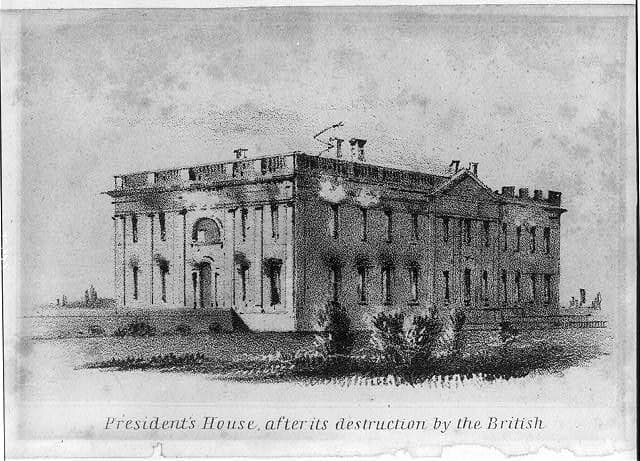
The British Burn Washington: The 1814 Attack on the U.S. Capital
On August 24, 1814, British troops stormed into Washington, D.C., during the War of 1812, setting fire to several key government buildings, including the White House and the Capitol. This audacious attack marked a significant moment in American history, showcasing the vulnerability of the young nation and its capital. The British aimed to retaliate against American actions in Canada and to weaken the morale of the U.S. government by targeting its heart. The burning of Washington was not just a military maneuver; it was a psychological blow designed to shake the foundations of American resolve [1][2].
The Context of the War of 1812
The War of 1812, which lasted from 1812 to 1815, was rooted in various grievances between the United States and Great Britain. Tensions had been escalating due to British interference with American shipping and the impressment of American sailors into the Royal Navy. The British were seizing American merchant ships and forcing sailors into service, which incited public outrage and calls for war. Additionally, the U.S. sought to expand its territory, particularly into Canada, which further inflamed hostilities. The British, already engaged in a protracted conflict with Napoleon in Europe, found themselves stretched thin but still determined to assert their dominance in North America [3].
In 1814, the British strategy shifted. They aimed to divide and conquer by launching attacks on American territory, particularly targeting Washington, D.C. The British believed that capturing the capital would demoralize the American public and government, potentially leading to a swift end to the war. The decision to burn Washington was not merely an act of vengeance; it was a calculated military strategy intended to send a message to the American leadership [1].
The British Advance on Washington
In the summer of 1814, British forces, led by Major General Robert Ross, landed in the Chesapeake Bay. They quickly moved inland, capturing the American fortifications at Bladensburg, Maryland, on August 24. The American defenders, numbering around 6,000, were poorly organized and suffered from a lack of leadership. The British, with about 4,500 troops, easily overwhelmed them, leading to a hasty retreat by American forces. The American troops were not only outnumbered but also demoralized, having faced a series of setbacks in the war leading up to this point [2][3].
With little resistance, the British marched into Washington, D.C. The city was largely unprepared for an attack of this magnitude. Many government officials had fled, and the remaining citizens were caught off guard. The British troops began their assault on key government buildings, including the White House, which at the time was known as the Executive Mansion. The lack of a coherent defense strategy allowed the British to advance without significant opposition, underscoring the disarray within the American military leadership [4].
The Burning of the White House and Capitol
The British forces set fire to the White House, which had been recently rebuilt after being damaged during the War of 1812. The flames consumed the building, leaving only charred remnants. The Capitol, housing the U.S. Congress, also fell victim to the flames. The British troops targeted these buildings to symbolize their dominance and to disrupt the functioning of the American government. The destruction of these iconic structures was intended to send a clear message: the British could strike at the heart of American democracy [1][4].
Dolley Madison, the First Lady at the time, played a crucial role in the events of that day. As the British approached, she famously refused to leave the White House without saving a portrait of George Washington. She and her household staff managed to escape just before the British arrived, taking with them important documents and valuables. Her actions became legendary, symbolizing the resilience of American spirit in the face of adversity. Dolley’s bravery and quick thinking ensured that a piece of American history was preserved, even as the physical structures around her were reduced to ashes [4].
The British troops also set fire to other government buildings, including the Treasury and the War Department. The destruction was extensive, and the flames lit up the night sky, visible for miles around. The attack was not just a military victory for the British; it was a psychological blow to the American populace, who watched in horror as their capital burned [1][2].
The Storm That Saved Washington
As the British troops celebrated their victory, an unexpected storm swept through the area. High winds and heavy rain began to pour down, helping to extinguish the flames that had engulfed the White House and the Capitol. The storm was so severe that it caused significant damage to the British camp, forcing them to abandon their plans for further attacks on the city. This natural intervention was seen by many Americans as a sign of divine intervention, preserving what remained of their capital. The storm not only extinguished the fires but also disrupted the British forces, who were unprepared for such a sudden change in weather [1][2].
The tempestuous weather forced the British to retreat, marking a turning point in the conflict. Although they had succeeded in burning key government buildings, the storm prevented them from consolidating their gains or launching further assaults. This unexpected turn of events allowed the American government to regroup and begin planning for the future, despite the devastation that had occurred [1].
The Aftermath of the Burning
The burning of Washington had profound implications for the United States. The attack exposed the vulnerabilities of the young nation and highlighted the need for a stronger military and better defenses. In the wake of the destruction, Congress convened to discuss the future of the nation and the war effort. The attack galvanized American resolve, leading to increased recruitment and a more unified front against the British. Citizens rallied around the flag, and the sense of national identity began to solidify in the face of external threats [3].
In the months following the burning, the U.S. government worked to rebuild the capital. The White House was reconstructed, and the Capitol was restored to its former glory. The rebuilding efforts were not just about restoring physical structures; they were also about reaffirming the nation's commitment to its ideals and sovereignty. The reconstruction of these buildings became a symbol of resilience and determination, demonstrating that the United States would not be easily defeated [4].
The attack also prompted a reevaluation of national defense strategies. The U.S. military began to focus on strengthening the capital's defenses, ensuring that such an attack would not happen again. The events of 1814 served as a catalyst for change, leading to a more organized and prepared military response in the years to come. The lessons learned from the burning of Washington would influence military strategy and national security policy for decades [1][3].
The Legacy of the Burning of the White House
The burning of the White House became a defining moment in American history. It served as a rallying point for the American people, inspiring them to stand firm against foreign aggression. The event also contributed to the development of national symbols, such as the Star-Spangled Banner, which was penned by Francis Scott Key during the bombardment of Fort McHenry later that year. The song captured the spirit of resilience and determination that emerged from the ashes of destruction [5].
The attack on Washington also had long-term effects on U.S.-British relations. While the war continued for another year, the burning of the capital ultimately led to a peace treaty in 1815. The Treaty of Ghent restored the status quo ante bellum, meaning that no territory changed hands, but it did foster a sense of national identity and unity among Americans. The war, and particularly the burning of Washington, helped to solidify a collective American identity that transcended regional differences [3][5].
In the years following the war, the memory of the burning of Washington became a powerful symbol of American resilience. It was commemorated in various forms, from literature to public discourse, reinforcing the idea that the nation could withstand external threats and emerge stronger. The narrative of the burning was woven into the fabric of American identity, serving as a reminder of the sacrifices made to protect the nation [1][5].
The Rebuilding of Washington, D.C.
In the aftermath of the burning, Washington, D.C., underwent a significant transformation. The reconstruction of the White House was completed in 1817, with President James Monroe becoming the first to live in the rebuilt residence. The Capitol was also restored, with the iconic dome being completed in the 1860s. The rebuilding efforts were not just about restoring what was lost; they were about creating a stronger, more resilient capital that could withstand future challenges. The new White House was designed to be more fire-resistant, incorporating lessons learned from the attack [4].
The city also saw improvements in infrastructure and defense. The U.S. military began to focus on strengthening the capital's defenses, ensuring that such an attack would not happen again. The events of 1814 served as a catalyst for change, leading to a more organized and prepared military response in the years to come. The establishment of a more robust military presence in Washington was part of a broader effort to enhance national security and protect the capital from future threats [1][3].
Moreover, the rebuilding of Washington, D.C., reflected a renewed commitment to the ideals of democracy and governance. The restoration of the Capitol and the White House symbolized the resilience of the American spirit and the determination to uphold the principles of liberty and justice. These buildings became not just functional spaces but also powerful symbols of the nation's identity and aspirations [4].
The Impact on American Identity
The burning of the White House and the subsequent events of the War of 1812 played a crucial role in shaping American identity. The resilience shown by the American people in the face of adversity fostered a sense of nationalism that would grow in the years following the war. The Star-Spangled Banner, which celebrated the defense of Fort McHenry, became a symbol of American pride and unity. The song resonated deeply with citizens, encapsulating the spirit of perseverance that characterized the nation [5].
Moreover, the attack on Washington highlighted the importance of protecting national symbols and institutions. The memory of the burning served as a reminder of the fragility of democracy and the need for vigilance in safeguarding it. This sentiment would resonate throughout American history, influencing future generations and their understanding of national security. The events of 1814 underscored the idea that the nation must remain vigilant against threats, both foreign and domestic, to preserve its democratic ideals [3][5].
The legacy of the burning of Washington also extended to the realm of public memory and commemoration. The event was memorialized in various forms, from literature to public monuments, reinforcing its significance in the national narrative. The story of Dolley Madison saving George Washington's portrait became a symbol of courage and sacrifice, embodying the spirit of the American people during a time of crisis. This narrative was passed down through generations, contributing to the collective memory of the nation [1][4].
Remembering the Burning of the White House
The burning of the White House in 1814 remains a significant event in U.S. history. It was a moment that tested the resolve of a young nation and ultimately contributed to its growth and identity. The actions of the British forces, the bravery of individuals like Dolley Madison, and the unexpected storm that extinguished the flames all played a role in shaping the narrative of resilience and determination that defines the United States.
As we reflect on this event, it is essential to remember the lessons learned and the spirit of unity that emerged from the ashes of destruction. The burning of Washington serves as a reminder of the challenges faced by the nation and the enduring strength of its people. The legacy of this event continues to influence American identity and the collective memory of the nation, reminding us of the importance of perseverance in the face of adversity [1][3][5].